

South Africa records 5,590 murders in three months
Firoz Cachalia links gang violence to apartheid-era spatial exclusion, stressing that affected communities need development alongside policing.
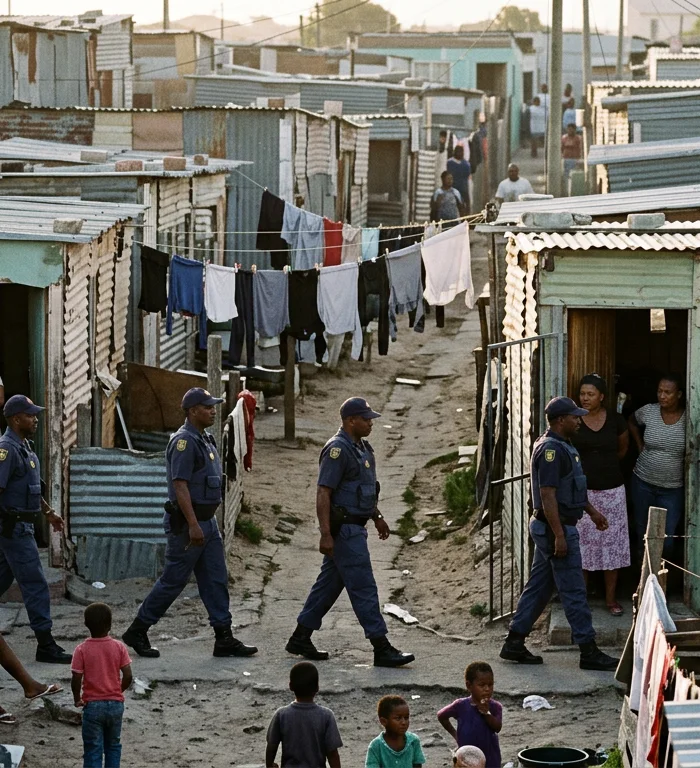
South Africa’s police service reported 5,590 murders from July through September in official crime statistics released on Nov. 20, Daily Maverick reported.
The tally rose from 5,427 in the previous three months but fell from 5,794 in July-September 2025, leaving an average of 60 people killed daily.
The figures place violent crime back at the centre of South Africa’s policing debate, even as the latest quarterly murder count was lower than a year earlier. The South African Police Service also recorded 261 gang-related murders, including 208 in the Western Cape.
Acting Police Minister Firoz Cachalia used the release to argue that enforcement alone would not address the social geography of gang violence. “It is not about blaming apartheid,” Cachalia said on Friday. “But it is also important not to pretend we didn’t have that history… In this country, your chances in life are based on where you are born.”
Cachalia said communities exposed to gang violence had suffered from “the legacy of spatial apartheid, marginalisation, exclusion, lack of opportunity and poor service delivery for generations.” He told parliamentarians the areas most affected needed opportunity and public services, not only larger security deployments.
The police statistics also showed 15 police officers were killed during the July-September period, eight fewer than in the previous three months. Based on the figures, the Eastern Cape had the highest risk of being killed, followed by the Western Cape and Gauteng; Gauteng recorded the most murders linked to robberies.
The release came as the national police service faces what the government has called a reset. Daily Maverick reported that the process followed July 2025 allegations by KwaZulu-Natal Police Commissioner Nhlanhla Mkhwanazi that a cartel had infiltrated the criminal justice system, politics and police; the Madlanga Commission of Inquiry was appointed to investigate.
Cachalia also referred to parliamentary debate over Operation Prosper, a deployment in which the government has described soldiers as working with police to combat crime, illegal mining and gangsterism. He said he understood criticism of the operation, while arguing that the framing of gang violence had overlooked deeper structural causes.
More stories
- Monrovia mayor-designate seeks $14.5m city budget
- Iran's attacks hit 25 tankers near Strait of Hormuz
- Russia strikes Ukraine as Odesa faces electricity strain
- Bahrain reports two injuries after Iranian aerial attacks
- Baltic responders fight Sparta II fire after drone strike
- Estonia to close 5 Russia road crossings for six months
- Baird seeks 2 trade bills to ease Ethiopia-Eritrea tensions
- Indonesia seeks Google explanation for 19,372 YouTube removals
- Canada signs Turkey partnership to widen global trade options
- Iran threatens Gulf infrastructure if air strikes resume
Latest news
- Rwanda faces budget strain from 85% electricity access push
- ICE arrests at Seattle airport draw protests and scrutiny
- AI doubts leave Asian stocks facing a new investment test
- EU rejects COP31 deal as fossil fuel divisions block pact
- Deal Sheet: Fortis shutdown costs over 400 jobs
- Germany to pay about $11 a month into child pension accounts
- Laura Brand curbs prison messages after YouTube dispute
- Nigeria's family-planning budget falls 97%