

Russian Foreign Minister Lavrov to visit Tehran for de-escalation talks
Foreign Minister Sergey Lavrov will meet Iranian officials in Tehran to discuss regional stability amid rising maritime volatility in the Strait of Hormuz.
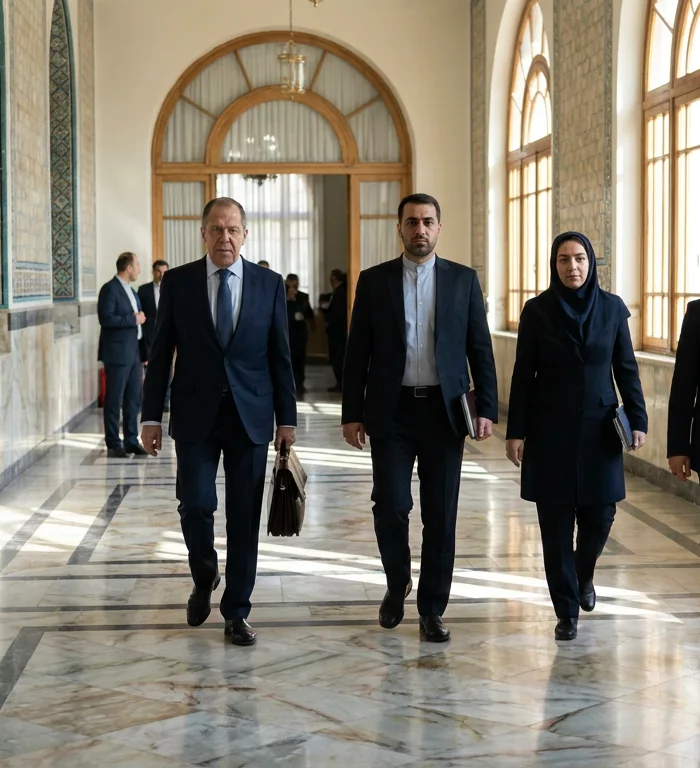
Diplomatic pivot in Tehran
Russian Foreign Minister Sergey Lavrov is set to travel to Tehran for high-level meetings with his Iranian counterpart. The visit marks a strategic effort by Moscow to position itself as a central mediator in the escalating tensions across West Asia.
The diplomatic push arrives as the Kremlin attempts to navigate a complex balancing act. Moscow maintains a deepening defense procurement partnership with Iran, which has intensified since 2022, while simultaneously preserving economic and security ties with Gulf Arab states that view Tehran’s regional influence as a primary threat.
The regional security landscape Relations between the Islamic Republic and Gulf monarchies Relations between the Islamic Republic and Gulf monarchies, including Saudi Arabia and the United Arab Emirates, remain fragile despite recent attempts at normalization. The Islamic Revolutionary Guard Corps (IRGC) continues to exert pressure on maritime traffic, placing the Strait of Hormuz at the center of global energy security concerns. Moscow’s influence over IRGC-affiliated proxy operations remains a key open question for regional observers. While Moscow has relied heavily on Iranian drone and missile support for its military operations, Gulf Cooperation Council (GCC) members are looking for clear indicators of whether the Kremlin will exercise its leverage to restrain these activities. Economic and global spillover Stability in the Strait of Hormuz is essential for global energy markets, as a significant portion of daily crude oil production flows through the waterway. Any disruption linked to regional proxies directly impacts insurance premiums and transit costs for global shipping firms.
Tehran Russian Foreign Minister
For Moscow, the visit serves as a platform to project influence in a theater where Western diplomatic presence has faced significant resistance. Success in de-escalating maritime incidents could grant Russia broader leverage in upcoming negotiations with the GCC regarding defense and economic cooperation agreements.
Strategic neutrality under pressure
The core uncertainty remains whether the current diplomatic engagement can yield structural changes on the ground or if it serves primarily as a rhetorical exercise.
If the visit results in a measurable reduction in maritime harassment, it would underscore the strength of the Moscow-Tehran security alliance as a functional diplomatic tool.
Conversely, a sustained or increased pace of maritime incidents following the delegation's departure would signal the limits of Russian influence over Tehran’s security apparatus. Observers are closely watching for any post-visit shifts in the operational tempo of the IRGC within the Gulf waters.
More stories
- Germans oppose Ukraine aid as poll shows support slipping
- Kim Jong-un receives 10 envoys after constitutional shift
- Ukraine claims Libya strike sinks Russian naval corvette
- COP31 climate talks collapse over fossil fuels and funds
- Russian military faces 1,087 recorded suicides in Ukraine war
- US faces China, Russia in Africa minerals contest
- Bangladesh faces 1,147 deaths in measles outbreak
- Washington and Moscow in Talks on Data Centers, Nuclear Energy, Putin’s Envoy Claims
- Dubai Airport Weighs Underground Infrastructure for Security
- Houthi Forces Reportedly Secure Yemen’s Red Sea Coastline
Latest news
- Trump prepares tariffs on China and other major exporters
- New-car buyers pay record average $50,087 in October
- Banks face ECB reserve debate over liquidity and profits
- Investors see Anthropic debut gains fade below $83 a share
- Iraq orders federal control over Kurdish-area oilfields
- Nvidia shares retreat as AI rally cools before PCE data
- Macy’s parade faces balloon limits as storm winds approach