

Bangladesh faces 1,147 deaths in measles outbreak
WHO data cited by The Straits Times show 202,000 suspected cases since mid-March, exposing gaps after first-dose coverage dropped to 90% in 2025.
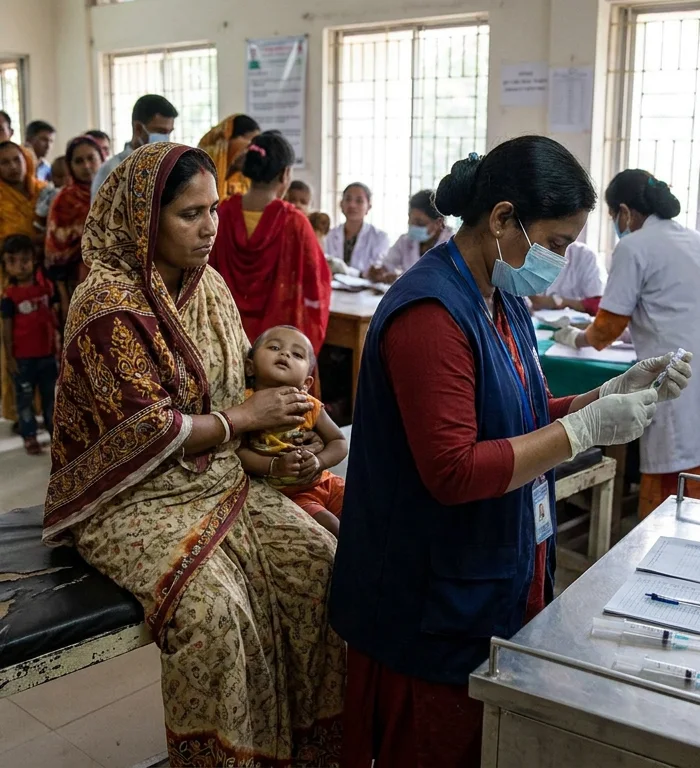
Bangladesh reported 202,000 suspected measles cases and 1,147 deaths from mid-March to Oct. 9, the World Health Organization said in a news report published on Saturday.
The toll gives Bangladesh more suspected cases than any other country this year, after first-dose measles vaccine coverage fell to 90% in 2025 from 96% in 2024, according to WHO and UNICEF estimates cited in the report.
Of the suspected cases, 22,000 were confirmed by laboratory testing, the WHO said. Children under five accounted for 94% of reported deaths, according to the agency.
"This is a real warning to every country," said Mark Jit, a WHO vaccine adviser and professor at the School of Global Public Health at New York University. Preventing outbreaks through immunisation was easier, cheaper and safer than emergency response, he said.
Bangladesh had come close to the WHO’s 95% vaccination coverage threshold, the level the agency says is needed to prevent outbreaks. Its first-dose coverage was estimated at 96% in 2024, while second-dose coverage was 93%, according to WHO and UNICEF figures cited in the report.
That position weakened in 2025. WHO and UNICEF estimated first-dose coverage fell to 90%, while second-dose coverage dropped to 86%, below the 95% benchmark for herd immunity, the level at which enough people are protected to slow transmission.
The report linked the deterioration to a routine vaccination programme that faltered in 2025. It also cited political turmoil after protests ended 15 years of rule by Prime Minister Sheikh Hasina, health-worker strikes, delayed vaccine orders and disrupted follow-up shots.
A Reuters review of WHO documents and interviews with more than a dozen scientists, health workers and officials found that Bangladesh’s emergency response was weakened by incomplete data, limited preparation and outreach that failed to reach enough parents, according to the report.
Bangladesh moved quickly after the outbreak began, and nearly 20 million children were vaccinated in April and May under an emergency programme, the report said. The government said it had reached every child in the target group, from six months to five years old.
A later routine health intervention in June suggested the measles campaign had missed millions of children: its target list for the same age group contained 4 million more children than the emergency programme. "There is a gap," Ziauddin Hyder, special assistant on health affairs to Prime Minister Tarique Rahman, told Reuters on Sept. 14.
Hyder blamed vaccine hesitancy among parents and illnesses that kept children away. In September, he said the government was doing everything it could to stop the outbreak. The government did not respond to further questions sent in October for the article.
Health Minister Sardar Md. Sakhawat Husain said in May that the emergency drive had brought cases in hotspots "almost to zero" and that the outbreak was under control, according to the report. By September, Bangladesh was reporting an average of 1,198 new measles cases a day, the highest level since May.
Measles generally kills two or three people per 1,000 cases, the WHO says, but the risk can be higher in poorer countries because of factors including malnutrition. In Bangladesh, experts cited in the report said access to vaccination and public awareness were larger obstacles than hesitancy.
Source: news report, The Straits Times/Reuters, Oct. 17, 2026
More stories
- Egypt offers Saudi defense help, seeks parliament's role
- Magyar puts Hungary's euro plans before first budget test
- Israeli settlers attack West Bank olive harvest, hurt two
- Zelenskyy says Starshield limits weaken Ukraine defenses
- Macua's Rutledge challenges mining boom after R1 trillion profit
- WHO backs Kenya Ebola response after second case
- Washington and Moscow in Talks on Data Centers, Nuclear Energy, Putin’s Envoy Claims
- Starshield limits disrupt Ukraine drones, officials say
- Pentagon cuts target 20% reduction in top brass by 2027
- Bessent says Iran sanctions close most external flights
Latest news
- Wall squats may lower blood pressure after four weeks
- 8-hour eating windows beat controls by 5 pounds in TRE trials
- Researchers link diabetic ulcers to stalled immune repair
- Loneliness and isolation linked to 5.8 fewer healthy years
- Weiss warns of breast cancer care gap after treatment
- CoreWeave gains ARK backing as borrowing concerns persist
- DeepSeek updates AI model as speed and cost rivalry grows
- CoreWeave bond yields hit 15% as AI funding doubts deepen