Platner Crisis Threatens Democrats’ Maine Senate Hopes as Withdrawal Deadline Nears
Graham Platner’s Maine Senate campaign is threatening to become a major liability for Democrats after a sexual-assault allegation and earlier controversies…
Lauren Collins ·
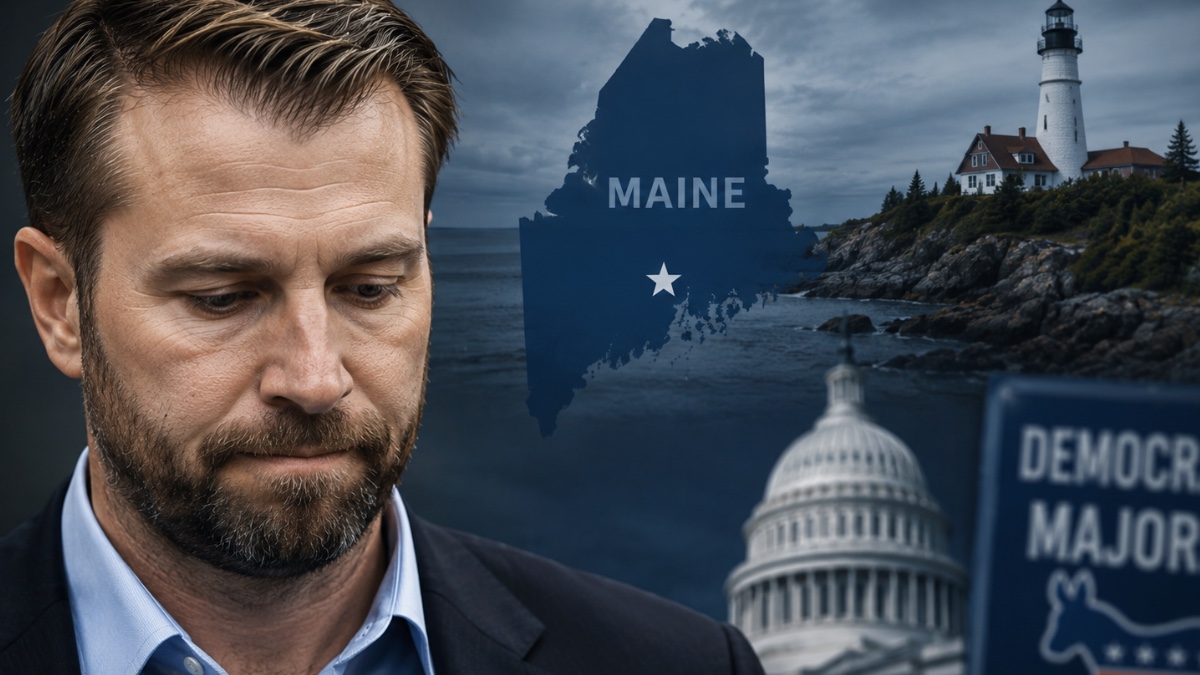
Democrat Graham Platner’s Senate campaign in Maine is facing its sharpest crisis yet after a former girlfriend accused him of sexual assault, putting party leaders under pressure to salvage one of their most important 2026 pickup opportunities.
Platner, a Marine veteran and oyster farmer who won the Democratic nomination to challenge Republican Sen. Susan Collins, has denied the allegation. But the accusation has prompted more Democrats to call for him to leave the race, with Senate Democratic Leader Chuck Schumer among those urging him to withdraw before a Maine ballot deadline next week.
The race carries national weight because Republicans hold a 53-47 Senate majority, leaving Democrats needing a net gain of at least four seats to take control. Maine has been viewed as one of the party’s clearest openings: Collins is a Republican incumbent in a state that has often leaned Democratic in federal races, making the seat central to any Democratic path back to power in Washington.
Platner’s candidacy had already been strained by earlier controversies, including offensive past Reddit posts, scrutiny of his treatment of women and a tattoo resembling a Nazi symbol, which he later covered up. Those issues created doubts about his viability but did not stop him from winning the nomination.
The new allegation has changed the political math. Democrats who once saw Platner as an outsider candidate with working-class appeal now face a narrower question: whether keeping him on the ballot would turn a winnable race against Collins into a broader referendum on the party’s judgment.
A Limited Escape Route
Maine law gives Democrats a limited escape route. If a primary nominee withdraws by 5 p.m. on July 13, the party can select a replacement for the November ballot, with a follow-up deadline later in July to name the new candidate. That provision has become the center of urgent discussions among Democrats trying to avoid a prolonged intraparty fight.
Several possible replacements are already being discussed, including former Maine CDC director Nirav Shah, Secretary of State Shenna Bellows and former state Senate President Troy Jackson. Each would bring different strengths: Shah with public-health credibility, Bellows with statewide office experience and Jackson with a labor-aligned profile that could appeal to Platner’s progressive supporters.
The risk for Democrats is that replacing Platner may solve one problem while creating another. A candidate chosen by party officials after the primary could face criticism from voters who backed Platner and from Republicans eager to portray the process as closed-door politics. Democrats in Maine have said they want an open and transparent process if a replacement becomes necessary.
Republicans Exploit the Turmoil
Republicans are already moving to exploit the turmoil. Collins, a longtime incumbent with a reputation for political durability, benefits if Democrats remain divided or spend the summer defending their nominee rather than attacking her voting record. GOP-aligned groups had already been spending heavily in the race before the latest crisis, while Platner’s campaign warned it was being outspent.
For national Democrats, the stakes reach beyond Maine. Their 2026 Senate map requires both offense and discipline: flipping Republican-held seats while protecting vulnerable Democratic incumbents in states such as Georgia and Michigan. A collapse in Maine would make that path substantially harder.
The Platner episode also reflects a wider tension inside Democratic politics. After years of criticism that the party relies too heavily on polished insiders, Platner offered a different model: military service, rural identity and a blunt populist message aimed at voters frustrated with Washington. That profile helped him stand out. It also made the fallout more damaging once questions about his past became central to the race.
The immediate question is whether Platner exits before the statutory deadline. He has said he is reflecting on his path forward, while continuing to deny the allegation against him.
If he withdraws quickly, Democrats may still have time to consolidate behind a new nominee and keep the focus on Collins. If he stays, the party could enter the fall with a damaged candidate in one of the few races it cannot afford to lose.