Pennsylvania measles outbreak adds 55 cases in two days
Pennsylvania’s measles outbreak grew by 55 cases in two days, lifting its 2026 total to 890 as officials expand MMR vaccine clinics.
Mateo Fernandez ·
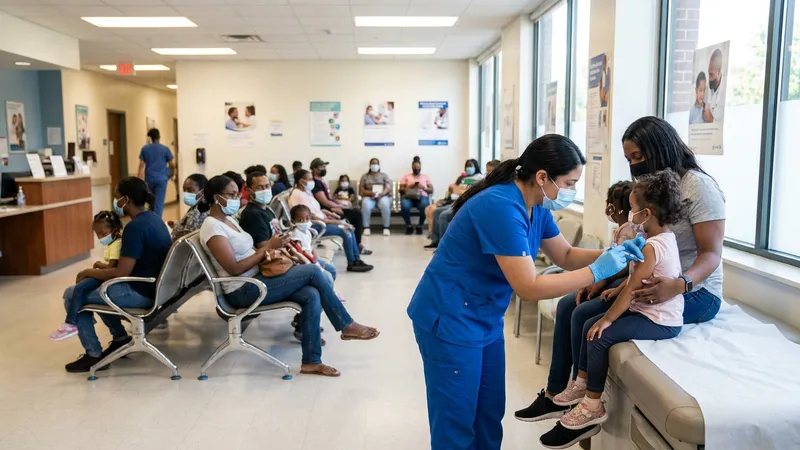
Pennsylvania’s measles outbreak grew by 55 cases in two days, taking the state’s 2026 total to 890 across 39 counties.
The Pennsylvania Department of Health said Friday that the 890 confirmed cases include 173 hospitalizations and four measles-associated deaths this year. Fewer than 1% of reported cases were among vaccinated people, while 31% involved residents younger than 18, according to state data.
The age profile shapes the response because nearly one-third of confirmed cases are among minors, a group tied to schools, childcare settings and household contacts. The vaccination data also point health workers toward unvaccinated residents, who account for nearly all reported cases.
Lancaster accounts for 359 cases
Lancaster County has recorded 359 positive cases, the highest county tally in the state data and compared with 890 confirmed cases statewide. The department said the outbreak began in late April and has since spread through affected communities across the state.
The county concentration gives state teams a starting point for clinics, but the 39-county footprint shows the outbreak is no longer a single-locality problem. For schools, pediatric practices and emergency departments, the practical task is identifying exposures quickly enough to isolate infectious patients.
State officials are pairing surveillance with outreach through residents, community groups and healthcare providers. The department said its effort centers on access to fact-based information and the measles, mumps and rubella vaccine.
Pop-up clinics deliver 5,300 shots
Since late April, state health center staff have administered more than 5,300 MMR vaccinations at 165 pop-up clinics in affected communities, the department said. Across Pennsylvania this year, those staff have given more than 7,900 MMR doses, with additional clinics scheduled according to local demand.
The department said healthcare providers have also seen more interest from residents seeking MMR vaccinations. It described full vaccination as the best protection against measles and said the MMR vaccine provides 97% lifetime protection.
The US Centers for Disease Control and Prevention advises two MMR doses for the strongest protection against measles. State officials said death from measles is rare, occurring in one to three patients per 1,000 cases.
Federal tally excludes two deaths
The federal data picture is less settled. In August, the CDC said it was reviewing additional information after two Pennsylvania measles-associated deaths were left out of its national tally.
President Trump’s health secretary, Robert F Kennedy Jr, has separately questioned the Pennsylvania death reports on social media, writing that they "may even have been altogether fabricated" for political reasons. The state update did not change its own count of four measles-associated deaths.
CDC data put confirmed US measles cases at more than 3,659 as of September 24, compared with 2,289 for all of 2025. The disease was declared eliminated from the US in 2000, but recent outbreaks have clustered in under-vaccinated communities.
Measles spreads through coughing and sneezing, and the CDC says the virus can remain in the air for up to two hours after an infected person leaves. Symptoms usually start seven to 14 days after infection and can include high fever, cough, runny nose, red eyes and a rash that moves down the body.
Clinics set containment path
If the clinic pace lifts MMR coverage in exposed communities, state officials would have a clearer path to slowing new infections before additional hospitalizations. That path would also support national surveillance by reducing the number of cases that must be reconciled across state and federal counts.
If cases keep appearing faster than vaccination outreach reaches under-immunized groups, Pennsylvania may need more pop-up clinics, school-level communication and targeted contact tracing. The pressure would fall first on local health departments and healthcare providers, then on other states monitoring whether the outbreak crosses county and state lines.