Guinea-Bissau health officials report seven confirmed mpox cases
Children represent half of the 46 suspected mpox cases in Guinea-Bissau as health officials struggle to contain the nation's first recorded outbreak of the…
Amina Diallo ·
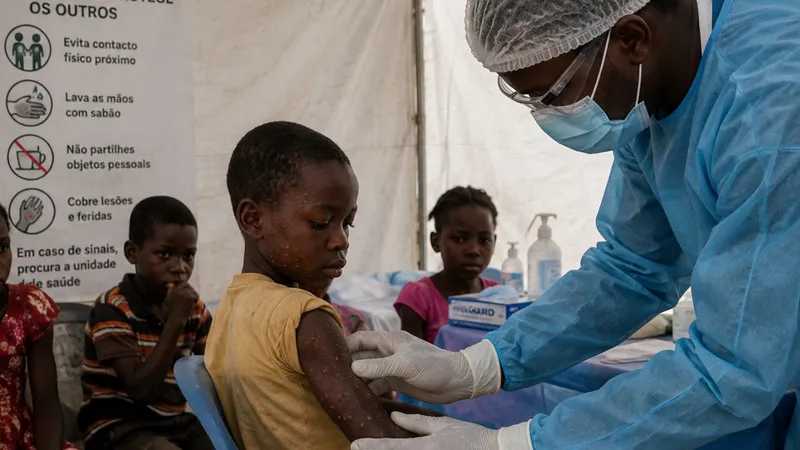
Health officials in Guinea-Bissau have reported 46 suspected cases of mpox since declaring an epidemic on July 4, with children accounting for 50 percent of all identified infections in the nation’s first recorded outbreak of the virus.
Out of the total suspected cases, seven have been confirmed through testing, with most centered in the capital’s Bissau autonomous sector. Transmission has occurred primarily through close contact, and the continuous recording of intermittent cases over several weeks signals ongoing community spread that is likely circulating undetected due to fragile epidemiological monitoring networks.
Diagnostic Bottlenecks and Cross-Border Spread Risks
Containment operations are heavily hampered by systemic logistical constraints across the country. Frequent national electricity shortages and a lack of specialized laboratory equipment have slowed diagnostic testing, creating significant delays in identifying positive cases and raising the risk of unmonitored transmission across borders.
Although no deaths have been linked to the outbreak to date, the broader regional risk remains elevated. Robust population movement across international borders, combined with the presence of matching Clade variants in neighboring nations, threatens to expand the geographic scope of the outbreak if local containment measures fail to keep pace.
Pediatric Vulnerability Ahead of September Term
The high percentage of pediatric infections has raised urgent concerns as primary schools prepare to reopen in September. Without rapid intervention and targeted containment protocols, health experts warn of a potential surge in pediatric cases that could severely strain Guinea-Bissau’s limited medical facilities and trigger localized movement restrictions, impacting both formal education and informal economic activities.
In response, government health agencies and international organizations are prioritizing frontline staff training and conducting door-to-door public education initiatives to curb transmission. Authorities hope that mobilizing multilateral support to protect vulnerable pediatric populations will help secure the resources needed to modernize the country’s long-neglected public health surveillance infrastructure.
The unfolding health crisis in Guinea-Bissau is likely to prompt urgent requests for emergency international aid to shore up diagnostic capabilities ahead of the upcoming academic term. If pediatric transmission accelerates once classrooms reopen, local authorities could be forced to enact movement restrictions, threatening to disrupt informal economic activities that support vulnerable households. Furthermore, weak surveillance and permeable borders present a tangible risk of regional spillover into neighboring states, which may lead to heightened health screenings and cross-border trade frictions. Past epidemiological patterns across Sub-Saharan Africa illustrate that infrastructural vulnerabilities—particularly unreliable power and limited laboratory capacity—frequently transform localized outbreaks into protracted regional public health challenges. However, the crisis could also serve as a vital catalyst for multilateral partners to modernize the country's public health infrastructure and strengthen regional disease surveillance. Ultimately, the near-term outlook depends on whether international emergency support can bridge critical diagnostic gaps before undetected community transmission severely strains the nation's healthcare system.