

Park questions provider fees in 244 bn-peso PhilHealth push
The Rappler opinion article backs higher public financing while warning that provider costs, political incentives and patient transitions remain unresolved.
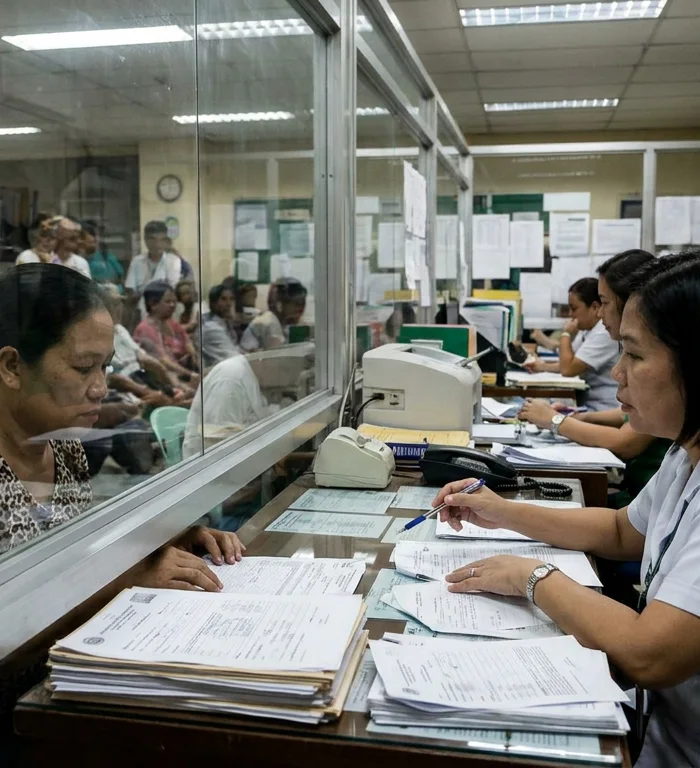
Jaemin Park questioned whether Philippine medical groups seeking a 244 billion-peso 2027 PhilHealth budget should also consider lower provider fees, in a Rappler opinion article published Oct. 19.
The financing fight matters because more than 70 health organizations want Congress to raise PhilHealth's proposed 2027 allocation from about 74 billion pesos to 244 billion pesos, Park said. They also seek to redirect resources from the Medical Assistance to Indigent and Financially Incapacitated Patients program, or MAIFIP, and release 311 billion pesos in withheld health-related earmarks.
PhilHealth is the Philippines' state health insurer, while MAIFIP is a public program for indigent and financially incapacitated patients. Park said in the opinion article, “Healthcare should be a right, not a political favor.”
Park, identified by Rappler as an adjunct professor at the University of the Philippines College of Public Health, said the proposals address real financing problems but may not fully account for political incentives. He wrote that a lawmaker helping settle a 300,000-peso hospital bill can gain more visible political value than backing a larger PhilHealth allocation.
The article also raised the risk of patients losing support if MAIFIP funding is shifted before PhilHealth can reliably cover the same needs. Park said any transition would need automatic eligibility, predictable benefits, transparent processing and clear responsibility for uncovered costs.
Park extended the critique to healthcare providers, asking whether medical associations could propose lower or waived professional fees for indigent patients receiving publicly funded care. He also asked whether specialists could accept standardized fees for some procedures.
The opinion article argued that universal healthcare financing cannot rely only on redistribution. Park compared the information technology and business process management sector's more than $40 billion in 2025 export revenue with about $8 billion appropriated across the government's health sector for 2026, saying healthcare could also become a growth industry.
Park linked that argument to the Philippines' April 2026 entry into Pax Silica, a U.S.-led initiative on artificial intelligence, semiconductors and advanced technology supply chains. He said medical-related industries have been identified among potential activities for a planned New Clark City hub, but the article did not report a congressional timetable or responses from medical associations to the fee proposals.
Source: opinion article, Rappler, Oct. 19, 2026
More stories
- Germans oppose Ukraine aid as poll shows support slipping
- Kim Jong-un receives 10 envoys after constitutional shift
- Ukraine claims Libya strike sinks Russian naval corvette
- COP31 climate talks collapse over fossil fuels and funds
- Russian military faces 1,087 recorded suicides in Ukraine war
- US faces China, Russia in Africa minerals contest
- UAE tops MENA disaster-readiness trust at 87%
- Rubio urges Ukraine peace as leaders' meeting stays open
- Greenland deal expands U.S. military role in Arctic pact
- Indonesia budget plan keeps 2.85% deficit target alive
Latest news
- Trump prepares tariffs on China and other major exporters
- New-car buyers pay record average $50,087 in October
- Banks face ECB reserve debate over liquidity and profits
- Investors see Anthropic debut gains fade below $83 a share
- Iraq orders federal control over Kurdish-area oilfields
- Nvidia shares retreat as AI rally cools before PCE data
- Macy’s parade faces balloon limits as storm winds approach