Indonesia budget plan keeps 2.85% deficit target alive
Indonesia budget policy stayed on its 2.85% deficit path as Suahasil Nazara moved to reassure markets after becoming finance minister.
Lauren Collins ·
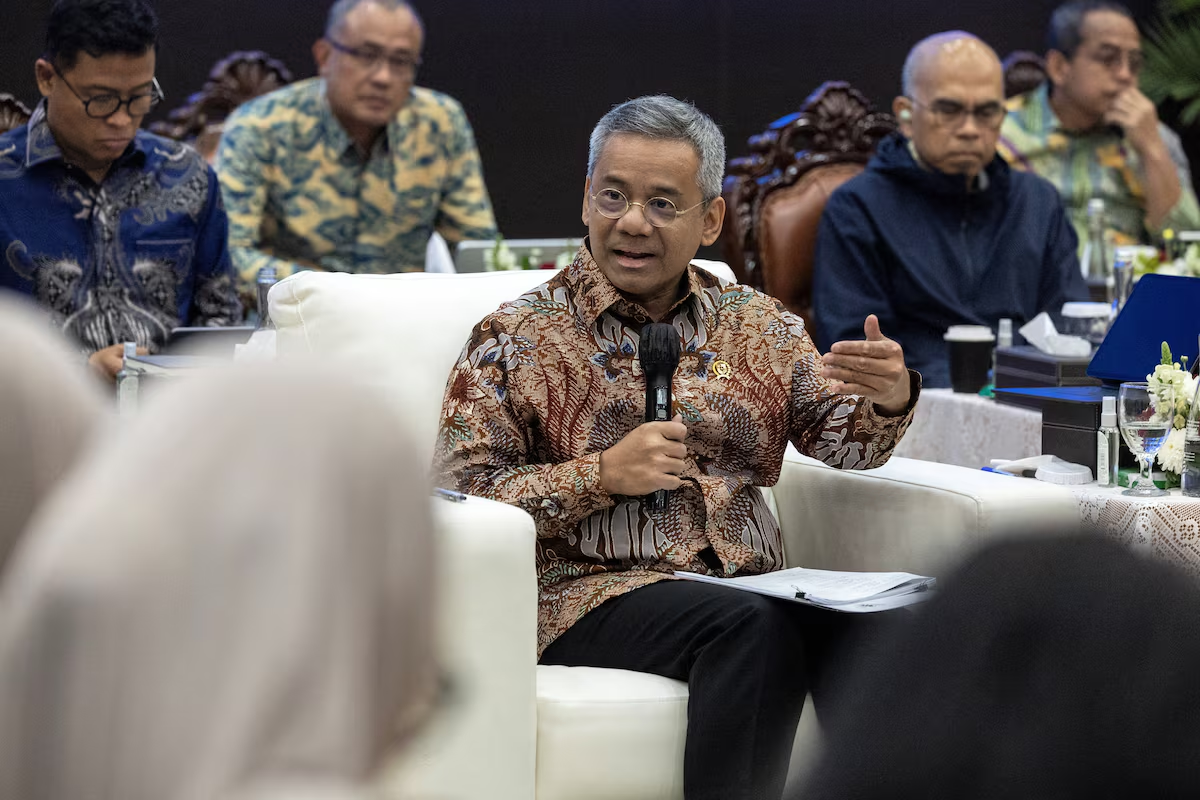
Indonesia budget plans kept a 2.85% deficit outlook as Suahasil Nazara sought to reassure investors after taking over the finance ministry.
Suahasil used his first press conference on Friday to say the 2026 deficit baseline remained below the 3% of GDP ceiling set in law. His message followed President Prabowo Subianto's dismissal of Purbaya Yudhi Sadewa earlier this week and Suahasil's elevation from deputy minister to finance minister.
Suahasil keeps the 3% ceiling
The change makes Suahasil Indonesia's third finance minister in less than two years, a turnover that placed fiscal discipline at the center of his opening appearance. He said any debate over possible changes to fiscal rules should be handled constructively, after parliament discussed the issue on Thursday.
"The state budget must remain credible," Suahasil said. He also said the government would work to raise revenue, make spending more effective and productive, and keep the deficit managed in a sound and controlled way.
The Finance Ministry's baseline for the full 2026 deficit stayed at 2.85% of GDP, compared with the legal cap of 3%. For January through August, the budget shortfall reached 240.1 trillion rupiah ($13.55 billion), equal to 0.93% of GDP, Suahasil said, using an exchange rate of 17,725 rupiah per dollar.
Subsidies lift August spending
Revenue reached 2,055.6 trillion rupiah by the end of August, up 25.4% from the same period a year earlier, according to the minister. Spending was higher at 2,295.7 trillion rupiah, up 17.1% year over year, leaving the budget still within the government's stated path for 2026.
Subsidies accounted for 331.4 trillion rupiah of outlays, a 52.1% increase from the same period last year, which the ministry linked to the cost of subsidizing imported fuel. Spending on Prabowo's program to feed students and pregnant women reached 134.2 trillion rupiah through August, against a 229 trillion rupiah allocation expected for all of 2026.
Tax refunds are another pressure point for the ministry's credibility with companies and households. Suahasil pledged to return overpayments in line with regulations, after tax office data showed refunds at 191.82 trillion rupiah through August, down 37% from a year earlier following more audits requested under Purbaya.
State bank cash stays parked
Suahasil also kept one of Purbaya's more unusual liquidity policies: placing government funds at state-owned commercial banks rather than only at the central bank. He said the government would maintain at least 200 trillion rupiah in those banks until July 2027, compared with no earlier withdrawal plan announced at the briefing.
The policy was intended to support bank liquidity and improve growth prospects, according to the ministry's explanation. Suahasil said any withdrawal would be communicated clearly, making the timing of changes important for lenders, bond investors and monetary authorities watching liquidity in Southeast Asia's largest economy.
The ministry also faces an unresolved decision over a China-funded bullet train project whose current state-firm owners have faced financial strain. A ministry official said due diligence was still under way on a plan to transfer the majority stake to the government, including work to calculate the stake's valuation, after Purbaya had set a September 15 target for the process.
If the 2.85% deficit path holds, Indonesia can point to continuity while global interest rates remain high, and state banks would keep a liquidity buffer through mid-2027. If subsidies rise faster than revenue or refund delays persist, the Finance Ministry may face tougher spending choices, while banks, transport companies and government bond investors would watch for changes in cash placement and project financing.