Paper leaks force India education minister out of office
Paper leaks drove India's education minister from office after youth protests escalated, forcing Modi's government into a public retreat.
Lauren Collins ·
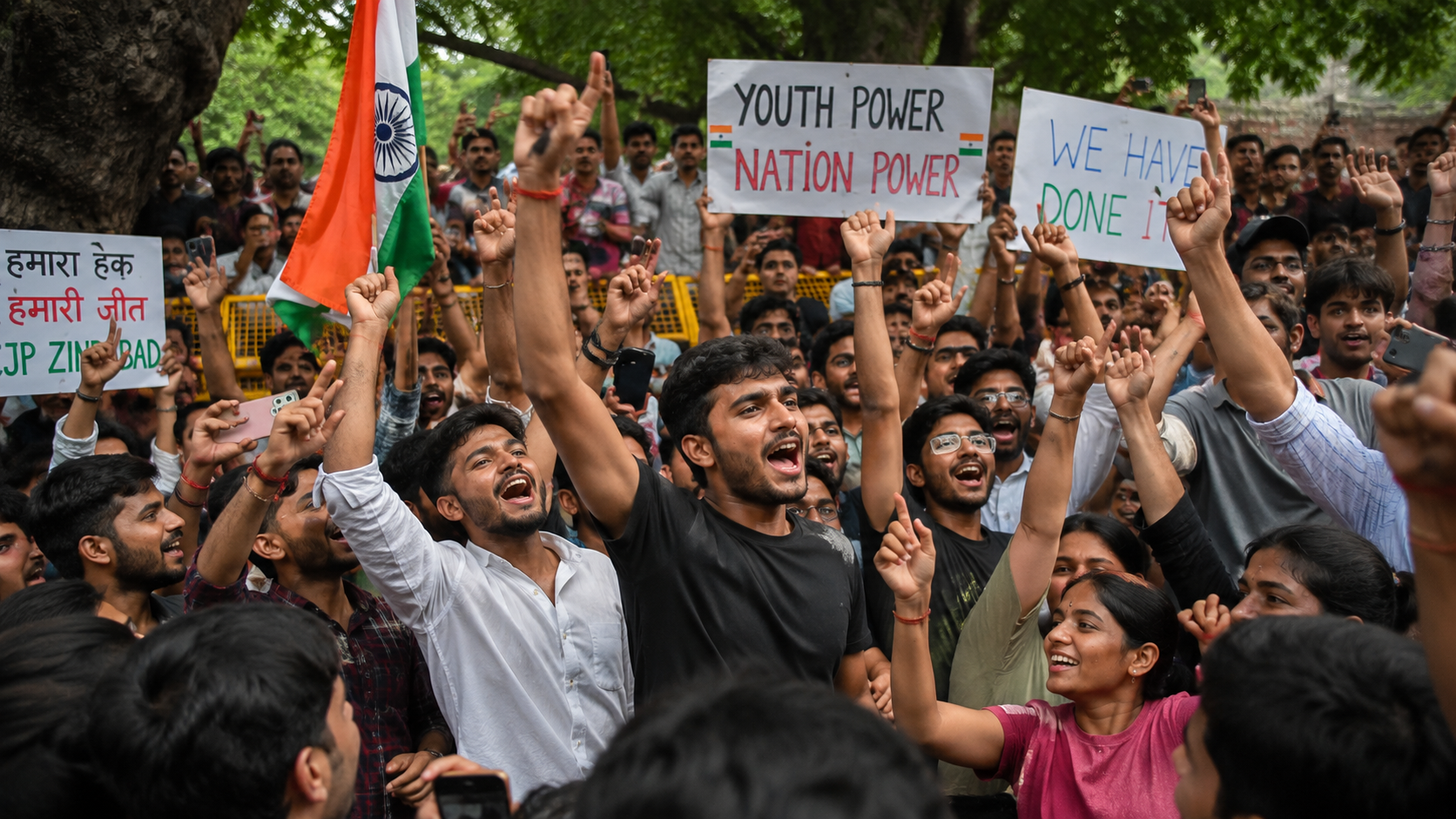
Paper leaks have forced India's education minister to resign after youth protests over test integrity widened in New Delhi.
Dharmendra Pradhan said on Saturday that he had sent his resignation letter to Prime Minister Narendra Modi, according to a post attributed to him on X. He linked the decision to unrest at Jantar Mantar and across India, writing, "I deeply respect the aspirations, feelings, and legitimate expectations of the country's youth."
Jantar Mantar celebrations
The youth-led Cockroach Janta Party (CJP), which led the demonstrations, said it would stop its protests after the resignation. At Jantar Mantar, the protest hub in the capital, thousands of young demonstrators celebrated with slogans and dancing.
Abhijeet Dipke, the CJP founder, told the crowd, "We have done it," according to the account. The scene marked a rapid reversal for a protest movement built around anger over exam fairness rather than a conventional party campaign.
The immediate demand was Pradhan's removal after the reported leak of a medical college entrance test paper in May. The source account said the episode led to canceled results and a retest affecting 2 million young people.
Modi faces youth pressure
The protests became a sharper problem for Modi's government after opposition politicians backed the students and disrupted parliamentary proceedings. Police used tear gas to control crowds, while authorities said they were acting to maintain law and order.
The dispute also tapped into a wider frustration over job scarcity and accountability in public institutions. In India, competitive exams often shape access to medical education, public jobs and family mobility, so a paper leak can quickly become a national fairness issue.
The political off-ramp came after Health Minister J. P. Nadda and Jitendra Singh, a junior minister in Modi's office, appeared with CJP leaders at a joint press conference. The CJP said it was ending the agitation under an agreement that the government would not take action against protesters.
Exam ministry risk map
For the education ministry, the resignation creates an immediate leadership gap at a moment when exam credibility is already damaged. The next minister will inherit the retest dispute, pressure for a leak investigation and demands for stronger safeguards in high-stakes admissions.
The wider education sector also faces second-order effects. Testing agencies, universities, medical colleges and coaching networks could face closer scrutiny if students and parents push for proof that future exams are secure, transparent and legally defensible.
If the government delivers a credible investigation, protects protesters from prosecution and completes the retest cleanly, political pressure could ease and the ministry may regain room to focus on exam reform. That path would limit macro damage by reducing street disruption, help Modi's administration contain a governance crisis and push the testing sector toward tighter controls.
If new leaks or punitive action against protesters emerge, the mechanism runs the other way. Youth mobilization could return, parliamentary pressure could intensify, and the education and testing ecosystem would face deeper distrust from students whose careers depend on the system's integrity.
The open questions are concrete: who caused the May leak, whether criminal liability follows, how the retest results are handled and who replaces Pradhan. The answer to each will determine whether Saturday's resignation closes the crisis or only moves it into the courts, campuses and examination boards.