

PAGASA warns drought may cover Philippines by March 2027
The Philippine weather bureau says a very strong El Niño may persist into 2027, threatening water, power, agriculture and health.
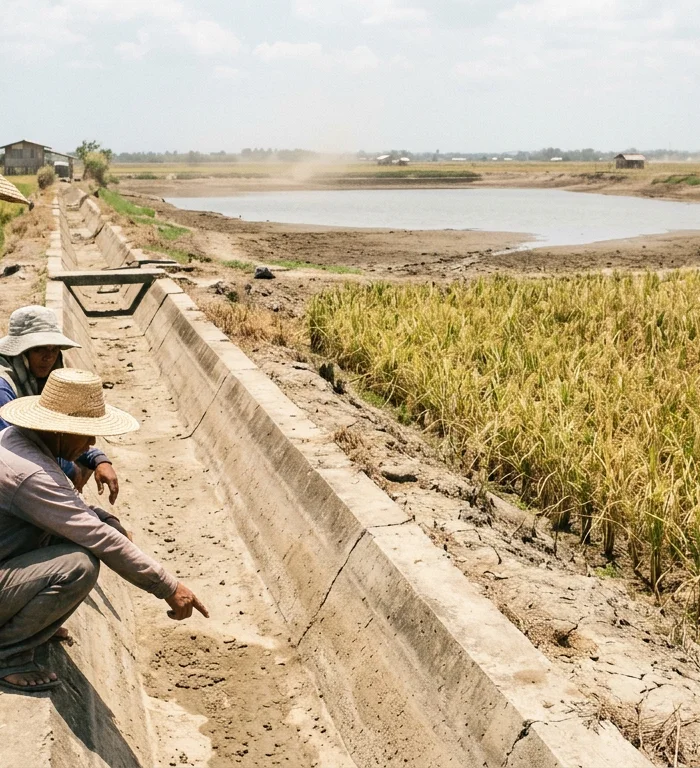
The Philippine Atmospheric, Geophysical and Astronomical Services Administration said in a Nov. 5 statement that the 2026-2027 El Niño had strengthened and could last into the first half of 2027.
By March 2027, PAGASA projects drought may affect virtually the entire country, compounding 8.57 billion pesos in agricultural damage reported by the Department of Agriculture as of Oct. 21.
“The public and all concerned agencies are strongly advised to implement appropriate sectoral interventions, conservation and mitigation measures, particularly water conservation and efficient management of water resources, to minimize the potential impacts of El Niño,” PAGASA Administrator Nathaniel Servando said in the statement.
PAGASA said most areas are likely to receive below-normal to way-below-normal rainfall in November. The agency also expects above-average temperatures, even with the northeast monsoon, known locally as amihan, present.
The bureau forecast drought by the end of November in Albay, Camarines Norte, Camarines Sur and Catanduanes in Luzon; Capiz, Leyte, Negros Oriental, Samar, Siquijor and Southern Leyte in the Visayas; and Isabela City and Misamis Oriental in Mindanao.
It also listed Metro Manila and dozens of provinces and island areas as places that could experience dry spells by the end of November, spanning Luzon, the Visayas and Mindanao.
PAGASA defines a dry spell as three consecutive months of below-normal rainfall or two consecutive months of way-below-normal rainfall. Drought means three straight months of way-below-normal rainfall or five straight months of below-normal rainfall. Below normal means rainfall is 21% to 60% lower than average for an area, while way below normal means a drop of more than 60%.
The Department of Agriculture said support so far includes 10.81 billion pesos in production aid, such as seeds, fertilizers and soil conditioner. It also reported 569.95 million pesos in Philippine Crop Insurance Corporation indemnity payments for 68,980 affected farmers.
In the department’s worst-case scenario, the episode could affect about 4.6 million of the Philippines’ 10.4 million farmers and fisherfolk.
El Niño is the warm phase of the El Niño Southern Oscillation, a recurring pattern in the equatorial Pacific that changes ocean temperatures and atmospheric conditions. In the Philippines, it typically reduces rainfall and can strain irrigation, reservoirs, hydropower supply and public health systems.
The forecast does not mean rainfall will disappear. PAGASA said weather systems including tropical cyclones, the northeast monsoon, the intertropical convergence zone and easterlies can still bring rain, and two to six tropical cyclones may form within or enter the Philippine Area of Responsibility from November 2026 to April 2027.
Source: news report, Rappler, Nov. 5, 2026
More stories
- Germans oppose Ukraine aid as poll shows support slipping
- Kim Jong-un receives 10 envoys after constitutional shift
- Ukraine claims Libya strike sinks Russian naval corvette
- COP31 climate talks collapse over fossil fuels and funds
- Russian military faces 1,087 recorded suicides in Ukraine war
- US faces China, Russia in Africa minerals contest
- Israel coalition talks loom as rivals fall short of power
- Serbia, Georgia and Turkey face EU accession limits over alignment
- Ukraine and Russia face fake nuclear alerts after app hacks
- Iran faces renewed strikes after IRGC's 100% readiness claim
Latest news
- Trump prepares tariffs on China and other major exporters
- New-car buyers pay record average $50,087 in October
- Banks face ECB reserve debate over liquidity and profits
- Investors see Anthropic debut gains fade below $83 a share
- Iraq orders federal control over Kurdish-area oilfields
- Nvidia shares retreat as AI rally cools before PCE data
- Macy’s parade faces balloon limits as storm winds approach