

Nvidia faces AI chip security questions after Huang resignation
The episode ties a succession shock at the U.S. chipmaker to Washington-Beijing tensions over restricted AI chips and influence risks.
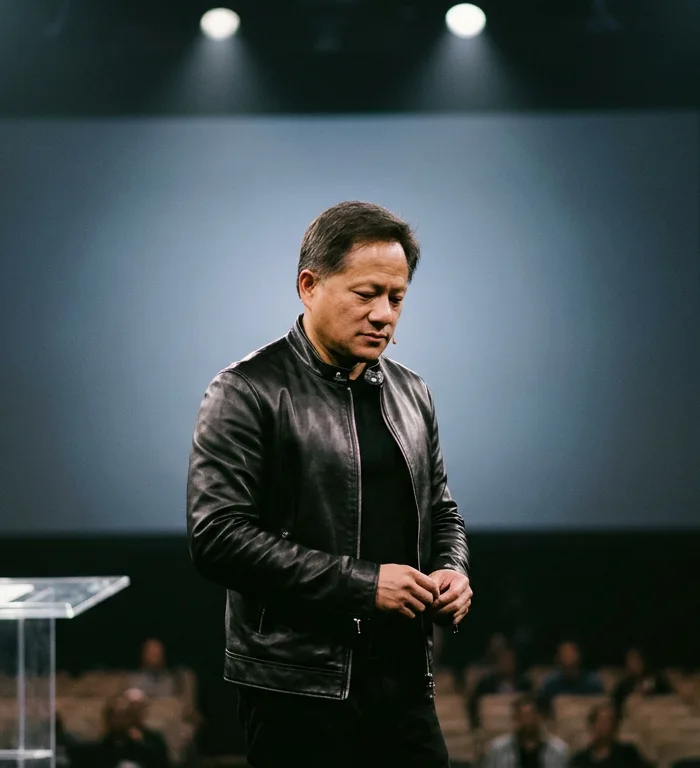
Nvidia’s Jensen Huang resigned on Nov. 12, 2026, after acknowledging an affair, a Rappler article republished from The Conversation said, deepening scrutiny after Atlas360 reported $573 billion in market value was erased in a week.
The departure matters because Nvidia sits at the center of U.S.-China competition over advanced AI chips, while directors have moved quickly to identify outside successors, including Arm CEO Rene Haas, Atlas360 reported on Nov. 14.
The Rappler article said Huang stepped down after media reports of a relationship with Alice Huang, an executive in Singapore whom the article described as having suspected intelligence links to China. It also said she previously worked for Megaspeed, a cloud-computing company that has faced U.S. scrutiny over allegations involving restricted AI chips and China.
China’s Foreign Ministry denied the espionage allegations and accused the U.S. of “fabricating so-called spy narratives” and “using them as a pretext for imposing a technological blockade,” according to the Rappler article.
Nvidia said it had no basis to believe company secrets had been exposed, the article said. The company’s position leaves the public record divided between allegations reported around Huang’s personal conduct, Beijing’s denial and Nvidia’s statement on confidential information.
Linggong Kong, a Ph.D. candidate in political science at Auburn University, framed the case through the “meiren ji,” or “beauty stratagem,” a concept linked to the “Thirty-Six Stratagems,” a Chinese military text of uncertain origin. Kong wrote that the political logic of using personal relationships to seek information, influence choices and weaken rivals remains relevant.
The article also cautioned against treating motive as proof. “Strategic motives do not prove an intelligence operation occurred,” Kong wrote, adding that Huang’s importance does not by itself establish that he was targeted or that Alice Huang acted for Chinese intelligence.
The security dimension is broader than one executive. U.S. controls on high-end artificial-intelligence processors have narrowed China’s access to computing power, while Beijing has invested in domestic semiconductor development, according to the Rappler article. Atlas360 reported separately on Nov. 14 that Nvidia’s China curbs face another test after a researcher said model weights from DeepSeek, Moonshot, MiniMax and Ant Group point to Blackwell chips barred from China.
Atlas360 also reported on Nov. 14 that officials said President Trump does not plan to raise the Nvidia matter during his China trip, keeping the company’s governance crisis separate from that diplomatic agenda for now.
Source: Rappler article republished from The Conversation, Nov. 14, 2026; Atlas360 reporting, Nov. 14, 2026.
More stories
- Germans oppose Ukraine aid as poll shows support slipping
- Kim Jong-un receives 10 envoys after constitutional shift
- Ukraine claims Libya strike sinks Russian naval corvette
- COP31 climate talks collapse over fossil fuels and funds
- Russian military faces 1,087 recorded suicides in Ukraine war
- US faces China, Russia in Africa minerals contest
- North Korea changes flag as Kim reshapes national symbols
- Nvidia names Kress interim CEO after Huang exits in scandal
- Arctic route saves South Korean ships at least 10 days to Europe
- Tinubu seeks $7.7bn external loan for Nigeria deficit
Latest news
- Trump prepares tariffs on China and other major exporters
- New-car buyers pay record average $50,087 in October
- Banks face ECB reserve debate over liquidity and profits
- Investors see Anthropic debut gains fade below $83 a share
- Iraq orders federal control over Kurdish-area oilfields
- Nvidia shares retreat as AI rally cools before PCE data
- Macy’s parade faces balloon limits as storm winds approach