

California Governor Proposes Federal Executive Clemency Reform
California Governor Gavin Newsom is calling for federal pardon power reforms following a public dispute with the President over state-level death sentence…
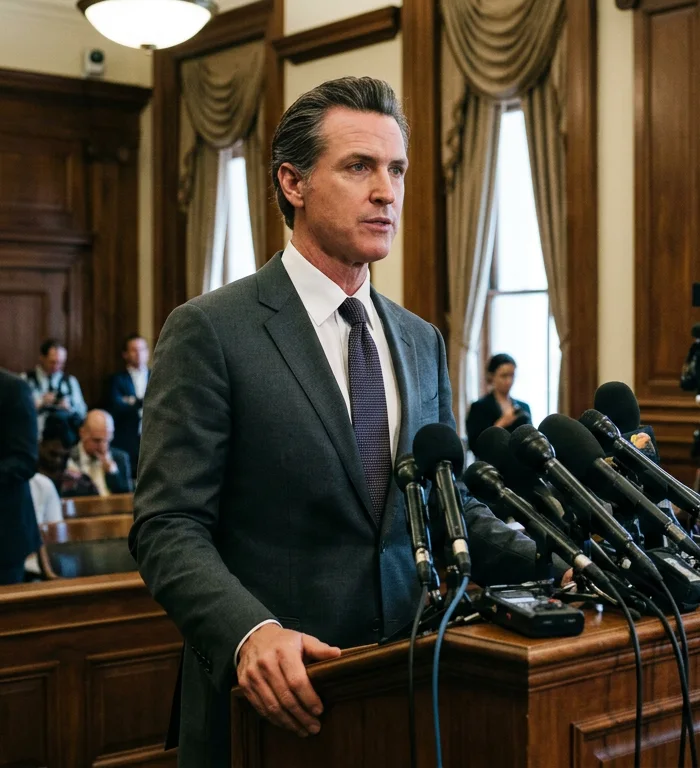
California Governor Gavin Newsom has formally advocated for structural reforms to the presidential pardon power, citing concerns regarding the potential for executive overreach and the politicization of the Department of Justice. This proposal follows a public dispute between the Governor and the President regarding the commutation of 548 death sentences within the California state penal system.
The President has publicly challenged these commutations, hosting a briefing at the Department of Justice to highlight the perspectives of victims' families. During this event, the President issued a directive instructing federal prosecutors to pursue the death penalty in specific criminal cases, including child murder, rape, and human trafficking resulting in death.
California Governor Gavin Newsom
The Governor’s call for reform centers on the assertion that executive clemency should not be utilized as a tool for personal or political leverage. He characterized current federal practices as an attempt to transform the Department of Justice into a private legal instrument, raising questions about the institutional integrity of federal prosecutorial independence.
This conflict highlights a broader tension between state-level criminal justice policies and federal executive authority. The debate over the scope of the pardon power is expected to influence upcoming legislative oversight efforts, as federal lawmakers consider potential investigations into the process of granting executive clemency.
Institutional stakeholders should monitor the potential for legislative action regarding the oversight of pardon brokers and the criteria used for federal sentence commutations. The ongoing friction between the executive branch and state leadership suggests that criminal justice policy will remain a primary point of contention in federal-state relations. Future developments may include formal congressional inquiries into the transparency of the pardon process and the administrative standards governing the Department of Justice.
More stories
- FCC approves prison cellphone jamming despite 2.5-mile warning
- Congress tests Black Democrats' growing policy influence
- Cotton faults Lutnick over AI chips allegedly sent to China
- Vance declines to back Iran strikes as Trump defends war
- Paul seeks 20%-30% federal credit for U.S. film shoots
- Trump targets data centers abroad with tax threat to firms
Latest news
- Trump prepares tariffs on China and other major exporters
- New-car buyers pay record average $50,087 in October
- Banks face ECB reserve debate over liquidity and profits
- Investors see Anthropic debut gains fade below $83 a share
- Iraq orders federal control over Kurdish-area oilfields
- Germans oppose Ukraine aid as poll shows support slipping
- Kim Jong-un receives 10 envoys after constitutional shift
- Ukraine claims Libya strike sinks Russian naval corvette