

Netanyahu bloc leads Israel count with 57-seat tally
The partial count leaves the Likud-led bloc short of a Knesset majority, keeping coalition talks at the centre of Israel’s post-election politics.
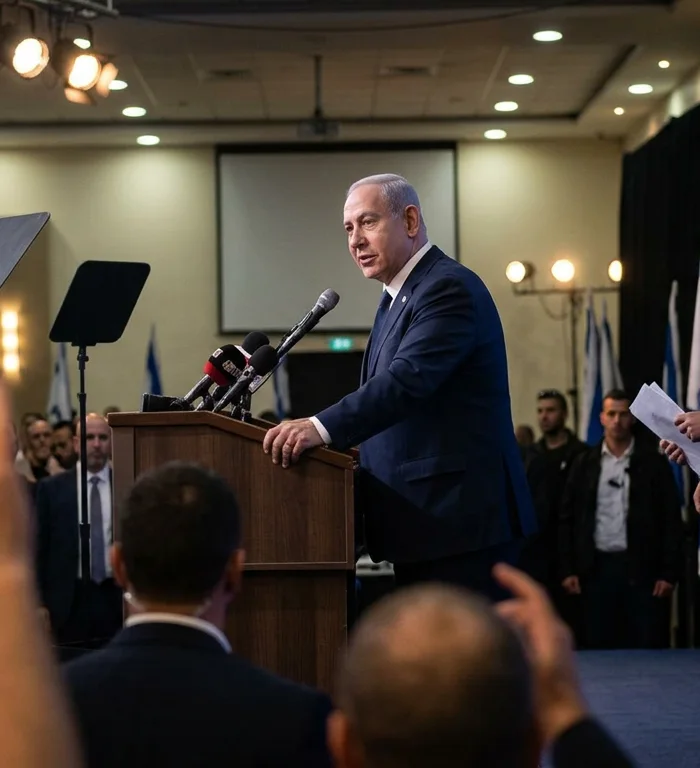
Prime Minister Benjamin Netanyahu’s Likud-led bloc led Israel’s election count with 57 seats on October 28 after 41.9% of ballot boxes were counted, Prokerala reported, citing local media and election officials.
The October 28 news report said Netanyahu’s bloc remained four seats below the 61-seat majority threshold in the Knesset, Israel’s parliament, while parties seeking to replace him had 47 seats.
The partial Central Elections Committee figures cited in the report assigned the remaining 16 seats to the predominantly Arab Joint List and Ra’am factions. That distribution would leave neither of the main Jewish-led blocs with an outright majority on the reported count.
Exit polls aired on Tuesday night by Israeli channels 11, 12 and 13 had indicated no clear winner, according to the report. An overnight update later showed Netanyahu’s camp level with, or ahead of, the bloc led by Gadi Eisenkot, a former Israel Defence Forces chief of staff.
Netanyahu used an address at Likud’s Jerusalem election headquarters to present the projections as a vindication of his party. “Likud is the biggest party in Israel. There is no disputing it,” The Times of Israel quoted him as saying, according to the Prokerala report.
He called for a right-wing coalition, saying “we must form a strong, national, right-wing government. That is what must be done.” Netanyahu also said the right had a “clear, decisive majority” among Israel’s “Zionist public” and Jewish voters.
Netanyahu criticised media organisations that had forecast a weaker showing for Likud. He accused them of trying to discourage his supporters from voting, according to the report.
He also attacked parties prepared to work with Arab factions, calling such cooperation a “shame”. Netanyahu said it would be unthinkable “to endanger Israel and set up a government that relies upon anti-Zionist Arab parties,” the report said.
The vote was Israel’s first election since the October 7, 2023, Hamas-led attack, and followed major changes in the country’s political debate since the 2022 election. Atlas360 reported on October 27 that turnout had reached 74.3% by 8 p.m., above the final 2022 voting rate, citing the Central Elections Committee.
The reported tally was still partial, and the source report did not provide final certified results or a response from Eisenkot’s bloc. The central uncertainty is whether Netanyahu can turn a leading position into a coalition controlling at least 61 Knesset seats.
Source: news report, Prokerala, October 28, 2026
More stories
- Germans oppose Ukraine aid as poll shows support slipping
- Kim Jong-un receives 10 envoys after constitutional shift
- Ukraine claims Libya strike sinks Russian naval corvette
- COP31 climate talks collapse over fossil fuels and funds
- Russian military faces 1,087 recorded suicides in Ukraine war
- US faces China, Russia in Africa minerals contest
- Thailand cuts biofuel taxes for three months
- Deadlock hits Israel election as coalition math tightens
- Xizang earthquake blocks highway as crews build shelters
- Typhoon Champi weakens but keeps Taiwan largely shut down
Latest news
- Trump prepares tariffs on China and other major exporters
- New-car buyers pay record average $50,087 in October
- Banks face ECB reserve debate over liquidity and profits
- Investors see Anthropic debut gains fade below $83 a share
- Iraq orders federal control over Kurdish-area oilfields
- Nvidia shares retreat as AI rally cools before PCE data
- Macy’s parade faces balloon limits as storm winds approach