

Netanyahu bloc faces 8-seat gap in Israeli election projections
Seat projections leave no bloc near the 61-seat majority, making Arab parties and coalition bargaining central to the next government.
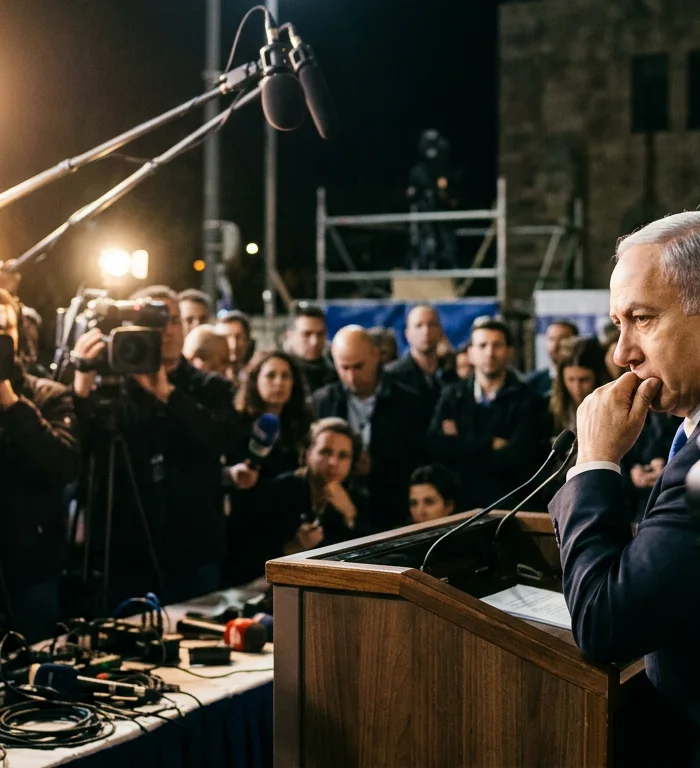
Benjamin Netanyahu’s right-wing bloc was projected to win 53 seats in Israel’s 120-seat Knesset with nearly 90% counted on November 2, 2026, according to a Times of India opinion column.
The November 2 opinion column said Netanyahu’s projected 53-seat bloc was eight seats short of the 61-seat majority needed to govern, leaving coalition formation unresolved.
The column put the opposition led by former military chief Gadi Eisenkot at 48 seats. It said Arab parties were projected to win 19 seats, a position that could give them weight in coalition bargaining if neither main bloc can assemble a majority.
The figures point to another phase of political uncertainty in Israel after the October 7, 2023 Hamas attacks and subsequent conflicts, with security policy central to the debate. The author, Ashok Sharma, argued that Netanyahu’s possible departure would not necessarily produce a major shift on Palestine, Hamas or wider regional security.
Sharma described Eisenkot, Israel Defense Forces chief of staff from 2015 to 2019, as a security-focused challenger whose differences with Netanyahu center more on leadership and execution than on core objectives. The column said Eisenkot joined Netanyahu’s emergency war cabinet after the October 2023 attacks and resigned alongside Benny Gantz in June 2024, criticizing Netanyahu’s handling of the conflict.
The projections were not presented as final results. Atlas360 reported on November 2, 2026, that Israeli election officials had upheld the validity of the recent general election results after claims of fraud and foreign interference, but the political arithmetic still left no bloc with a governing majority.
The column said possible outcomes include a Netanyahu-led coalition, a broader unity government or another election. It also said Eisenkot would face difficulty forming an alternative government if he needed Arab-party support, which the column said he has resisted.
Source: opinion column, The Times of India, November 2, 2026; Atlas360 background, November 2, 2026
More stories
- Germans oppose Ukraine aid as poll shows support slipping
- Kim Jong-un receives 10 envoys after constitutional shift
- Ukraine claims Libya strike sinks Russian naval corvette
- COP31 climate talks collapse over fossil fuels and funds
- Russian military faces 1,087 recorded suicides in Ukraine war
- US faces China, Russia in Africa minerals contest
- Johor-Singapore SEZ draws projects tied to 28,755 jobs
- Nigeria state police plan wins 30 assembly endorsements
- Okinawa Marine arrest tests US-Japan base ties after death
- Kyiv bridge hit as Russia targets Black Sea cargo ships
Latest news
- Trump prepares tariffs on China and other major exporters
- New-car buyers pay record average $50,087 in October
- Banks face ECB reserve debate over liquidity and profits
- Investors see Anthropic debut gains fade below $83 a share
- Iraq orders federal control over Kurdish-area oilfields
- Nvidia shares retreat as AI rally cools before PCE data
- Macy’s parade faces balloon limits as storm winds approach