Kyiv bridge hit as Russia targets Black Sea cargo ships
Kyiv bridge and Black Sea vessel claims marked a wider Russian strike account as Moscow reported 559 Ukrainian drones intercepted.
Claire Dubois ·
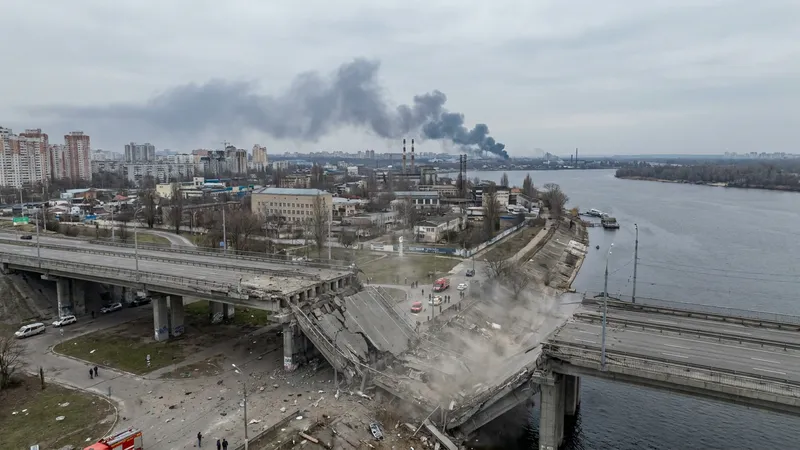
Kyiv bridge attacks and Black Sea vessel claims widened Russia's latest account of strikes on Ukraine, with 559 drones also reported downed.
The Russian Defence Ministry said on Sunday that its forces hit the Northern bridge over the Dnipro river in Kyiv, describing it as a route for moving troops and military cargo. The ministry also said two dry cargo vessels carrying military equipment to Odesa were struck in the northwestern Black Sea.
The battlefield claims have not been independently verified. The status of the bridge, the ships and the sites named in the ministry's statements remained unclear from the available accounts.
Dnipro bridge enters target list
The Northern bridge claim puts one of Kyiv's river crossings inside Moscow's public strike narrative. Bridges over the Dnipro matter militarily because the river divides large parts of Ukraine's transport network and can constrain the movement of vehicles, supplies and personnel when crossing points are damaged.
The ministry gave no damage assessment for the Kyiv bridge and did not say whether traffic had been stopped. Its description of the target as a military transport route was a Russian account of purpose, not an independently established finding.
Russia's statement came after Ukrainian President Volodymyr Zelenskiy said Kyiv would increase attacks on Russian oil refineries. Moscow then said it would intensify strikes on Ukraine, linking the next phase of attacks to Ukraine's campaign against Russian energy infrastructure.
Odesa routes face renewed pressure
The Black Sea claims centered on Odesa and nearby logistics infrastructure. In an earlier statement, the Russian Defence Ministry said its forces struck a dry cargo vessel east of Odesa overnight, a Nova Poshta logistics centre in Chornomorsk and a data centre in Odesa.
Odesa is Ukraine's main Black Sea port city and a core node for maritime, logistics and data services near the country's southern coast. Claims involving dry cargo vessels add a commercial layer to a conflict already shaped by missiles, drones and pressure on transport corridors.
For Nova Poshta, the named logistics centre places a private delivery network inside the operational geography described by Moscow. The source material did not provide the company's assessment, the scale of damage or whether operations in Chornomorsk were disrupted.
559 drones over 12 hours
The Russian Defence Ministry said air defence units intercepted and destroyed 559 Ukrainian drones between 8 p.m. Moscow time on Saturday and 8 a.m. on Sunday. It said the drones were detected over multiple Russian regions and above the Azov and Black seas.
The 12-hour window gives the drone figure its scale, though the ministry did not provide a regional breakdown in the account provided. Drone claims from both sides of the war often serve operational and political purposes, making independent confirmation central to assessing battlefield effects.
The Azov and Black Sea references show the geographic span of the reported air defence activity, from Russian territory to contested maritime approaches. If accurate, that pattern would point to a campaign aimed at stretching detection, interception and repair capacity across land and coastal zones.
Refineries, ports and logistics
If Russia continues to pair strikes on Kyiv routes with attacks near Odesa, Ukraine's military logistics would face pressure at both internal crossing points and external shipping approaches. The mechanism is straightforward: damaged bridges slow overland movement, while attacks near ports add risk to cargo handling and maritime planning.
If Ukraine expands refinery attacks as Zelenskiy said it would, Russia's fuel supply chain would become a more prominent target set. On current evidence, the macro effect would depend on sustained damage, refinery downtime and whether export flows or domestic fuel availability were affected.
A second path is containment. If strikes remain episodic and ports, bridges and logistics sites keep operating, the wider industry impact would be concentrated in insurance pricing, rerouting decisions and contingency planning rather than a lasting shift in Black Sea trade.
The main uncertainty is verification: the cargo on the vessels, the damage to the Northern bridge and the effect on Nova Poshta's Chornomorsk operation were not established in the available record. Until those details are confirmed, the clearest consequence is a broader Russian claim set covering Kyiv transport, Odesa maritime routes and Ukrainian drone operations over a compressed 12-hour period.