Runoff risk shadows Brazil election as Lula seeks term bid
Brazil election voting began for nearly 160 million eligible citizens, with President Luiz Inacio Lula da Silva facing Senator Flavio Bolsonaro.
Sofia Reyes ·
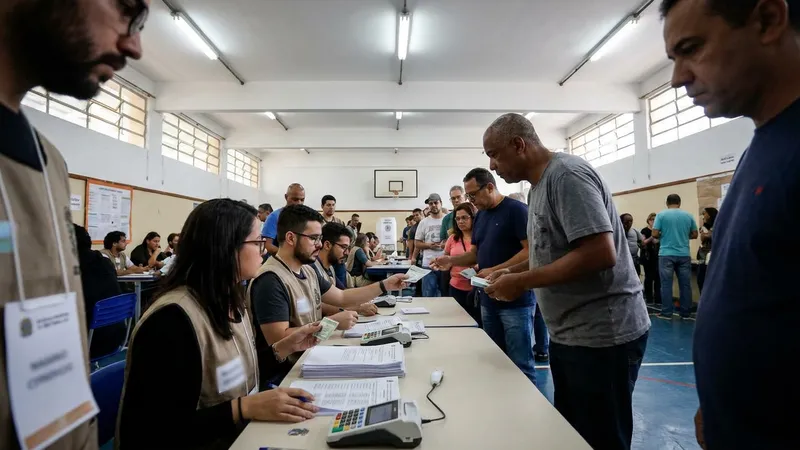
Brazil election voting opened Sunday for nearly 160 million citizens, as President Luiz Inacio Lula da Silva seeks a fourth term.
Polling stations were scheduled to operate from 8 a.m. to 5 p.m. local time, a nine-hour window for choosing a president, governors and federal legislators. The presidency will be settled only if one candidate wins more than half of valid votes.
The first round pits Lula, the left-wing incumbent, against Senator Flavio Bolsonaro and 11 other candidates. Published polling before the vote indicated Lula was positioned to lead the opening round, while falling short of the threshold needed to avoid an October 25 runoff.
Lula's fourth-term bid
Lula is seeking an unprecedented fourth term after returning to Brazil's presidency with a coalition that spans labor, social policy advocates and centrist parties. A first-round win would spare him three more weeks of campaigning and bargaining before a second vote.
He cast his ballot and displayed a Brazilian flag at the polling station, saying, "We need to do more to guarantee Brazil’s future." The remark framed his campaign around continuity and state capacity rather than a break with the past.
Bolsonaro, the right-wing challenger and a senator, voted after Lula and pointed to taxes and public safety. "Brazil cannot bear any more suffering, such as high taxes, so many women killed," he said, setting up a contrast over the cost of government and social order.
Runoff rule shapes the race
The more-than-half requirement gives Brazil's first round a different character from a simple plurality vote. A candidate can lead the field and still face a second round if rivals collectively hold enough valid ballots.
That structure matters in a 13-candidate race, where smaller campaigns can divide the vote and force the two leading contenders into another contest. If no candidate crosses the threshold, the October 25 runoff would become a narrower referendum on Lula's record and Bolsonaro's alternative.
For voters, the ballot is broader than the presidency. Governor and federal legislative races will help determine how easily the next president can pass tax, spending and security measures, particularly if the presidential race tightens after the first count.
Investors watch October 25
For global investors tracking emerging-market policy risk, the first result will set the length of Brazil's political uncertainty rather than settle the policy mix by itself. Currency, bond and equity moves after the count would be read against the runoff risk and the composition of the legislature.
If Lula clears the required majority, the immediate effect would be a shorter campaign calendar and a quicker transition into governing choices. That path would strengthen Lula's mandate, shorten the period of tactical positioning for parties, and give banks, utilities and consumer companies earlier signals on tax and spending policy.
If the vote instead moves to October 25, the macro channel would run through delayed fiscal guidance and a longer period of campaign messaging. Lula would need to defend his fourth-term case for three more weeks, while Bolsonaro would have a clearer two-person contest in which to press taxes and public safety.
A third path is a closer-than-expected first round that leaves both sides contesting momentum before the runoff. In that case, the main open issue would be whether legislative results give either candidate a workable bloc, since divided government could slow changes affecting regulated industries, public contractors and lenders.