Russian ship seized by Norway in $4.22 billion Crimea case
Norway seized a Russian ship near Svalbard to enforce Naftogaz’s $4.22 billion Crimea arbitration award against Moscow.
Lauren Collins ·
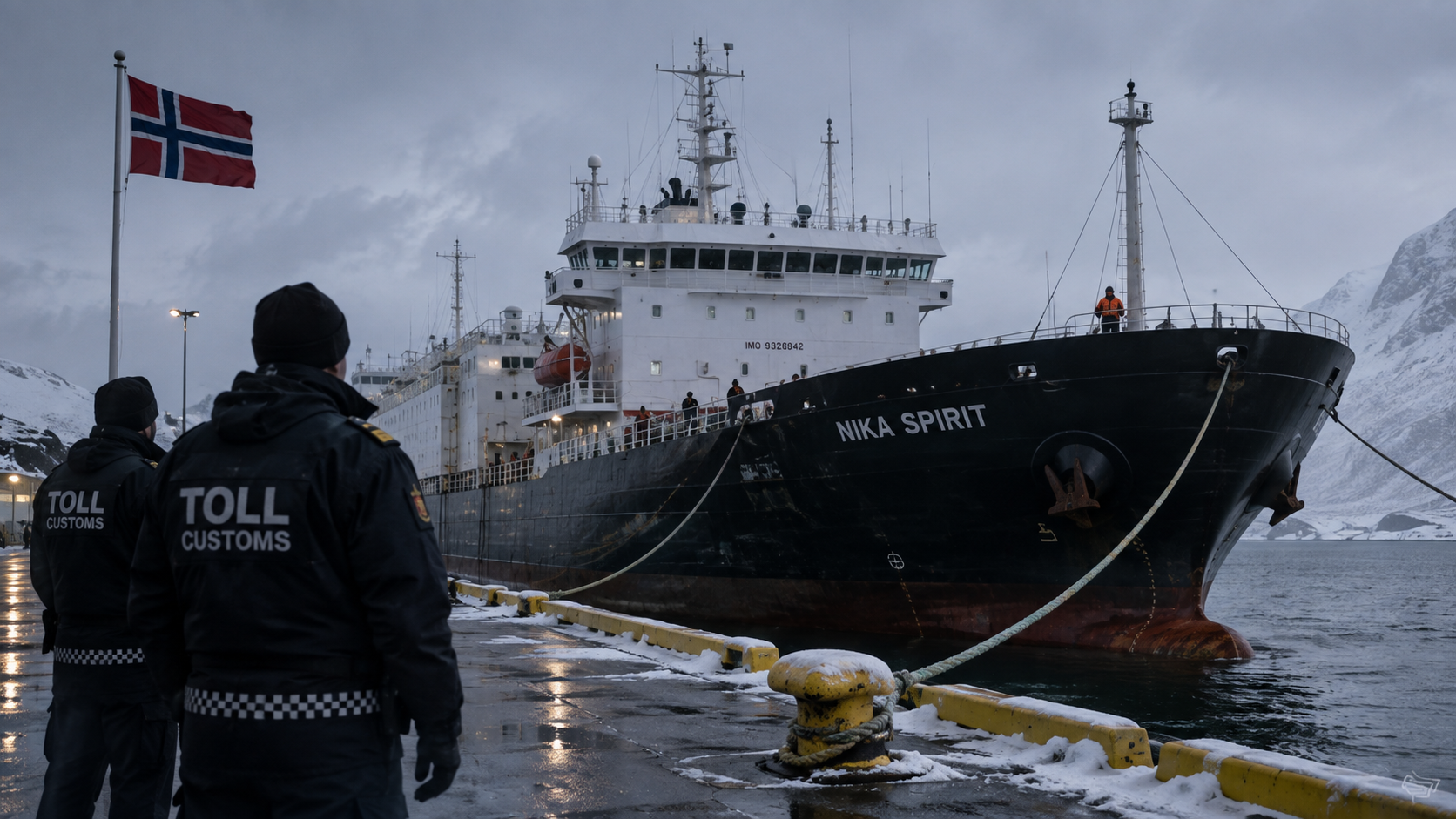
Norway seized a Russian ship in the Arctic to enforce Naftogaz’s $4.22 billion Crimea award against Moscow, marking a test of cross-border claims.
The vessel, Professor Molchanov, was taken on Wednesday near Svalbard, the Norwegian archipelago that sits between mainland Norway and the North Pole. Naftogaz said the action followed Russia’s failure to pay compensation ordered by a tribunal at The Hague in 2023.
Professor Molchanov near Svalbard
Covington, the US law firm representing Naftogaz, said the seizure came after a 24-hour standoff with the Norwegian Coast Guard. The enforcement action turns an arbitration award over Crimea into a physical claim against a Russian vessel operating in Arctic waters.
The award was $4.22 billion before interest and legal costs, according to Naftogaz, against no payment by Moscow since the 2023 ruling. Naftogaz has pursued the case since 2016 over property it says Russia expropriated in Crimea after the peninsula’s 2014 annexation.
Moscow calls the seizure piracy
Russia rejected the Norwegian action, with a Foreign Ministry spokesperson quoted as describing it as “piracy.” Alexei Chekunkov, Russia’s minister for the development of the Russian Far East and Arctic, said Moscow would contest the ruling and called the seizure an example of Western “legal nihilism and lawlessness.”
The competing positions show the divide at the center of the case: Naftogaz is using foreign courts and enforcement tools to collect on an arbitral award, while Moscow disputes the legitimacy of the process. For Naftogaz, Acting CEO Sergii Fedorenko framed compliance as the central issue, saying, “Russia cannot evade responsibility simply by refusing to comply with an international arbitral award.”
Crimea award enters Arctic waters
Svalbard gives the dispute a wider setting than a bilateral corporate claim, since the archipelago is strategically placed in the High North and governed under Norwegian sovereignty. That geography makes the seizure more than an asset-recovery step for Naftogaz; it also brings wartime compensation disputes into a region where Russia and NATO states already operate close to one another.
For shipping firms and insurers, the immediate issue is whether vessels connected to Russian interests face higher attachment risk in jurisdictions willing to enforce Ukrainian claims. The risk is not a blanket rule against Russian ships, based on the source material, but a targeted legal process tied to a specific award and a named claimant.
At the macro level, the direct economic effect is likely to be narrower than sanctions on energy exports or financial institutions. The enforcement mechanism still matters: if more judgments are pursued against movable assets, legal exposure can become another cost for Russian state-linked activity abroad.
Three paths for enforcement
If Norwegian proceedings uphold the seizure, Naftogaz gains a concrete recovery channel against the $4.22 billion award and other Ukrainian claimants may be encouraged to identify attachable Russian assets. That path would add legal friction to parts of the shipping and Arctic services sectors, while leaving the wider global macro effect dependent on how often similar seizures occur.
If Russia succeeds in challenging the action, Naftogaz’s collection effort would slow and the case would signal the limits of enforcing arbitration awards through third-country assets. The broader industry effect would be to preserve more operational certainty for vessels facing disputed claims, while limiting the macro impact to litigation costs and diplomatic strain.
If more enforcement actions follow in Norway or other jurisdictions, insurers, operators and counterparties may reassess calls involving Russian-linked vessels in legally exposed ports. The next concrete markers are the Norwegian court process, Moscow’s challenge, and whether Naftogaz identifies additional assets to pursue under the Hague award.