Michigan Senate primary sends El-Sayed into Rogers race
Abdul El-Sayed is projected to win Michigan's Democratic Senate primary, setting up a November race against Republican Mike Rogers.
Lauren Collins ·
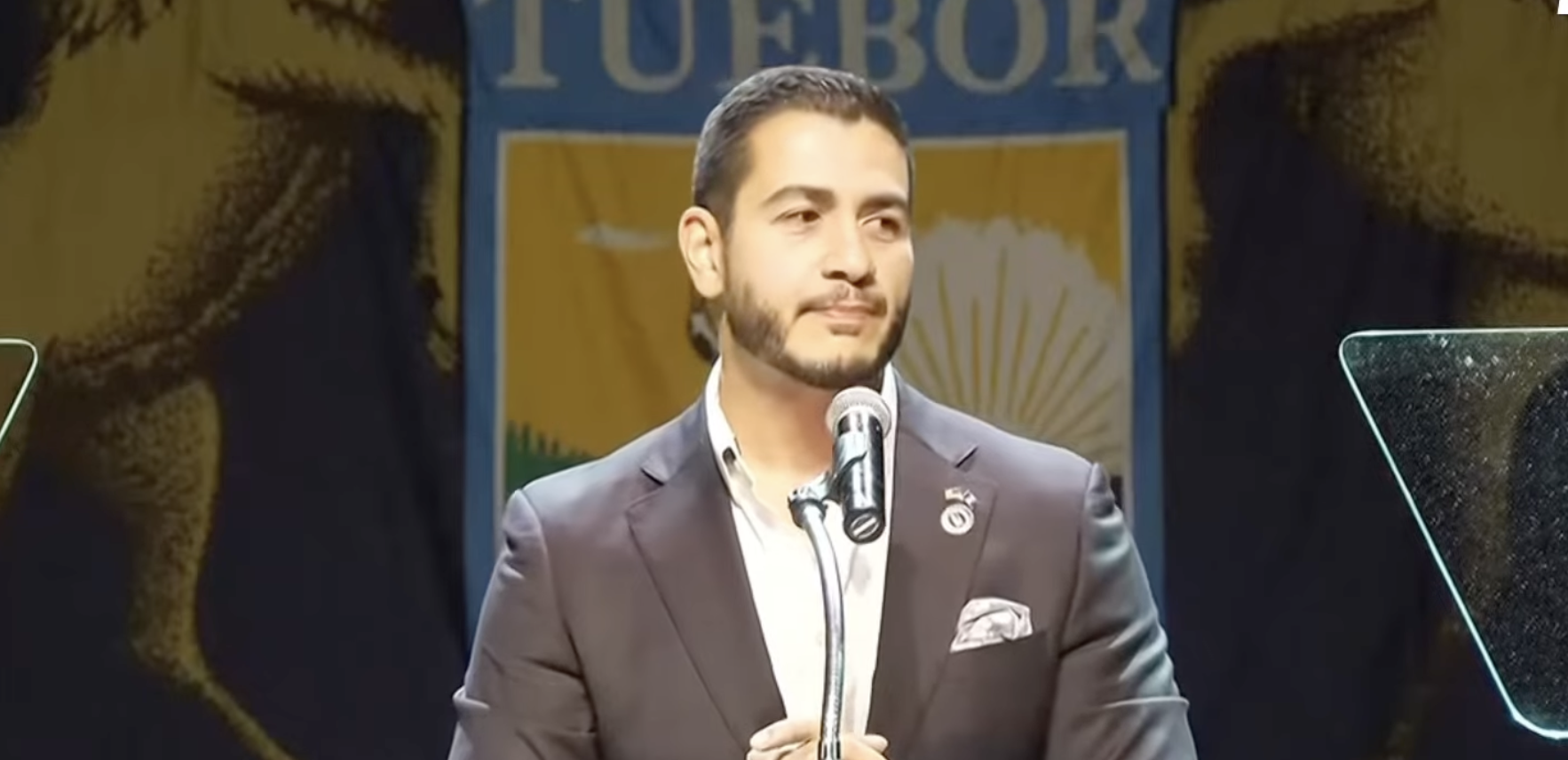
Michigan Senate primary results put Abdul El-Sayed on course for a November fight with Republican Mike Rogers, sharpening a Democratic divide.
El-Sayed, a progressive former county health director, is projected to defeat Representative Haley Stevens in the Democratic contest for Michigan's open U.S. Senate seat. The result cuts against the party leaders and elected officials who lined up behind Stevens, including Senator Gary Peters, Governor Gretchen Whitmer, retired Senator Debbie Stabenow and former House Speaker Nancy Pelosi.
A narrow win, not a rout
The margin was tighter than polling had suggested. Returns cited in the source showed El-Sayed ahead of Stevens 48.9% to 47.1%, with 91% of ballots counted as of 2:35 a.m. EST, while the race had not been formally called by one major vote-counting service.
The late count mattered because expectations had been set much higher for El-Sayed. Surveys before the primary had indicated he could lead Stevens by as much as double digits, but the final stretch instead left Democrats looking at a close ideological fight rather than a clean progressive sweep.
At the Majestic Theater in Detroit, a 1,100-seat venue, El-Sayed supporters followed updates through the night as he maintained an advantage of more than 20,000 votes after about 11 p.m. Even before the outcome was fully settled, El-Sayed urged Democrats to repair the damage from the primary, saying, "Tomorrow, we begin to mend fences."
Money split the Democratic coalition
The race became a test of whether the party's left flank can convert activist energy into statewide strength in a Rust Belt battleground. El-Sayed was backed by Senator Bernie Sanders and Representative Alexandria Ocasio-Cortez, while Stevens drew support from much of Michigan's Democratic establishment.
Outside spending gave the contest its national scale. More than $62 million in outside money entered the race, mostly to help Stevens, including $32 million from the super PAC arm of the American Israel Public Affairs Committee, according to figures cited in the source.
El-Sayed's side relied far less on outside groups. The largest outside organization supporting him spent under $600,000, according to AdImpact, while his campaign raised $14.5 million from individual donors, $5.3 million more than Stevens raised.
Policy toward Israel and the Middle East became one of the primary's clearest dividing lines. El-Sayed has accused Israel of genocide in Gaza and argued that Stevens was influenced by the American Israel Public Affairs Committee; Stevens has said no group controls her vote and faulted President Trump and Israeli Prime Minister Benjamin Netanyahu for the war with Iran.
Rogers race turns on moderation
The general election now moves to a different electorate. Rogers, a well-known former congressman endorsed by President Trump, gives Republicans a nominee with statewide name recognition in a state President Trump has carried in two of the last three presidential elections.
Michigan matters because Democrats need a net gain of four Senate seats to take control of the chamber. The seat is currently held by Peters, who is retiring, and a Democratic loss there would raise the cost of any path to a Senate majority.
Some Democrats had argued Stevens would be the safer November candidate. A late-July Epic MRA poll cited in the source showed Stevens leading Rogers 44% to 42% in a head-to-head matchup, while Rogers led El-Sayed 46% to 43%.
El-Sayed's nomination also carries historical weight. If he defeats Rogers on Nov. 3, he would become the first Muslim to serve in the U.S. Senate, adding a representational milestone to a race already shaped by foreign policy, party money and class politics.
The paths from here are distinct. If El-Sayed consolidates Democrats quickly and keeps his donor base active, the party can offset establishment disappointment, keep Michigan competitive and make Rogers defend President Trump's record on the economy.
If the primary leaves lasting distrust among moderates, Rogers can try to frame El-Sayed as outside Michigan's political center. That would weaken Democratic Senate math nationally, pressure El-Sayed to broaden beyond the progressive coalition, and signal to outside groups that intervention in Democratic primaries can still shape the general-election battlefield.