Michigan primary draws Stevens, El-Sayed Senate clash vote
Michigan primary voters are choosing a Democratic Senate nominee as open-seat contests and House races shape the 2026 battlefield.
Atlas Newsdesk ·
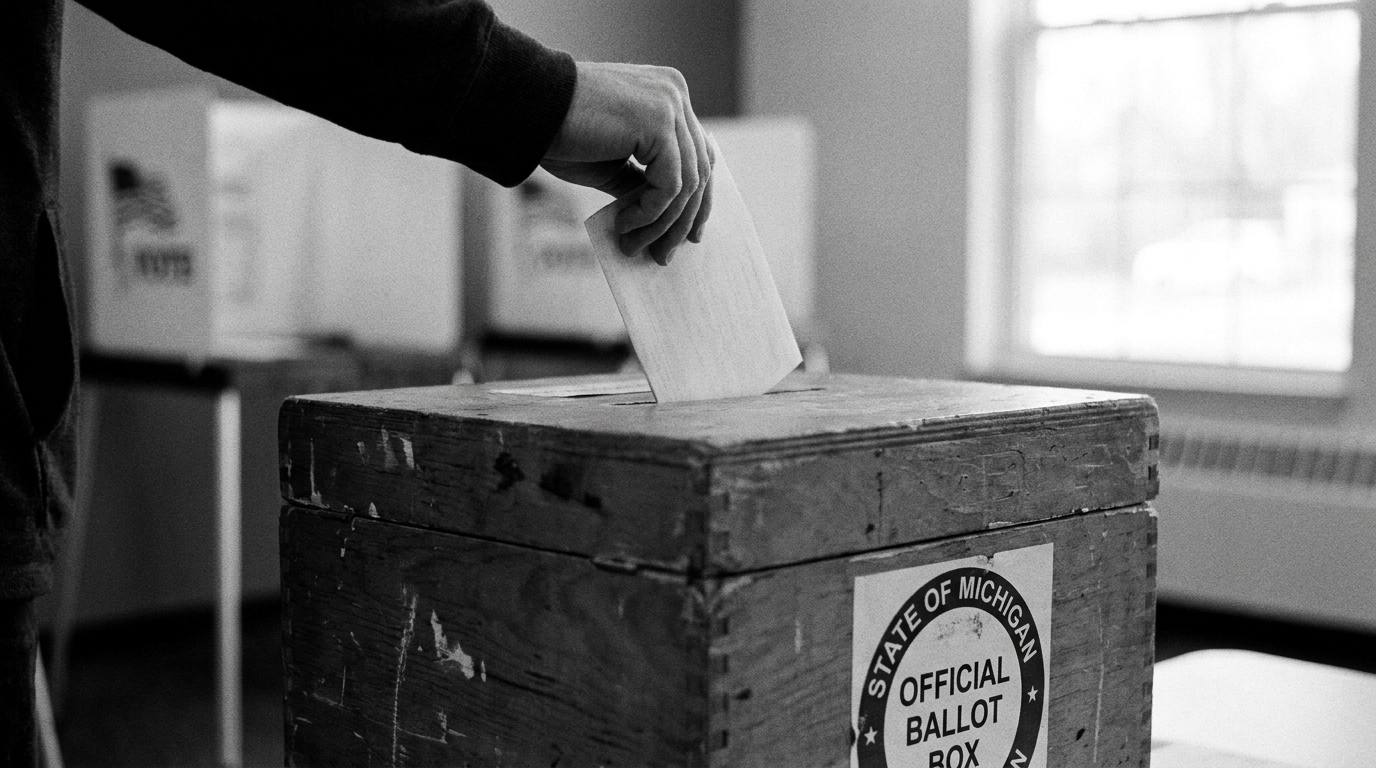
Michigan primary voters are choosing a Democratic Senate nominee as open-seat contests and House races shape the 2026 battlefield.
The top contest is the Democratic race between Rep. Haley Stevens and Dr. Abdul El-Sayed. The winner will face Republican Rep. Mike Rogers in November for the Senate seat being left by retiring Democratic Sen. Gary Peters.
The Michigan vote is part of a broader primary day across five states. Missouri, Virginia, Kansas and Washington are also setting matchups that will test party strength in Senate, governor and House races.
Peters seat anchors ballot
Peters' retirement turned Michigan into an open-seat Senate race, raising the value of the Democratic nomination. Open seats often force parties to defend territory without the advantages of an incumbent, including established statewide networks and a record already familiar to voters.
Stevens enters the primary as the moderate candidate, while El-Sayed is running from the progressive wing of the party. That choice gives Democratic voters a strategic question before they reach the general election: whether to prioritize ideological energy or a profile designed to compete broadly against Rogers.
The seat matters beyond Michigan because Senate control next year could hinge on a small number of races. A Democratic hold would protect one path to influence over nominations and legislation, while a Republican pickup would strengthen the party's route to a governing majority.
Whitmer succession adds pressure
Michigan voters are also sorting through competitive races below the Senate line. The governor's race is open because Democratic Gov. Gretchen Whitmer is term-limited, creating another statewide contest with consequences for policy, party organization and turnout.
Two U.S. House districts are also on the ballot, adding local stakes to a primary already shaped by national attention. The combined effect is a Michigan ballot that touches federal control, state executive power and the composition of the House delegation.
If Stevens wins, Democrats would enter the Senate race with a nominee aligned with the party's centrist argument in a competitive state. If El-Sayed wins, the campaign would test whether a progressive message can mobilize enough voters for an open-seat race against Rogers.
Missouri and Virginia rematches
Missouri's most visible Democratic contest is in the 1st Congressional District, where former Rep. Cori Bush is challenging Rep. Wesley Bell. Bell defeated Bush two years ago, making the primary a direct rematch inside the party rather than a standard incumbent defense.
Republicans are also contesting Missouri's 5th Congressional District, where candidates are seeking the nomination to run against Democratic Rep. Emanuel Cleaver. The district was redrawn in a way described as more favorable to Republicans, putting map design at the center of the race.
Virginia's Senate primary gives Republicans three candidates from the Washington, D.C., suburbs who want to challenge Democratic Sen. Mark Warner. Warner is running for a fourth term, which makes the Republican primary a test of who can carry the party's argument against a long-serving incumbent.
Virginia also has House contests with national visibility. Three Republicans are running for the chance to face first-term Democratic Rep. Eugene Vindman in the 7th District, while Rep. Don Beyer faces several Democratic challengers in the 8th District.
Kansas and Washington widen map
Kansas has two statewide contests drawing crowded fields. Three Democrats and seven Republicans are running to replace term-limited Democratic Gov. Laura Kelly, while 11 Democrats are competing to challenge Republican Sen. Roger Marshall in November.
The Kansas Senate race carries a long historical burden for Democrats. The party has not won a Senate seat there since 1932, a fact that frames the primary less as an immediate power shift than as a search for the strongest nominee in difficult terrain.
Washington uses a top-two system, meaning the leading two vote-getters advance regardless of party. In the 3rd Congressional District, eight candidates are challenging Democratic Rep. Marie Gluesenkamp Perez, while the 4th District is open because Republican Rep. Dan Newhouse is retiring.
The next phase depends on the nominees and the margins. A unified Michigan Democratic field would help the party defend Peters' seat, a divided field would give Rogers more room to define the race, and competitive House outcomes across these states would shape how both parties allocate money and attention before November.