

Mecca Pact moves toward Turkish legal approval
Ankara’s first-article vote advances ratification of a Turkey-Saudi-Pakistan agreement with implications for US Gulf security planning.
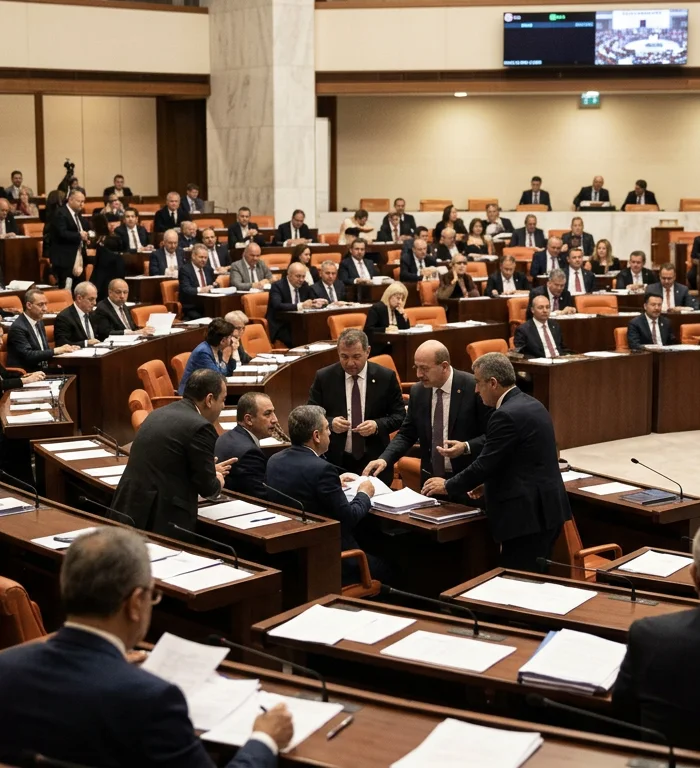
The Turkish Grand National Assembly approved the first article of a bill ratifying the Turkey-Saudi Arabia-Pakistan Mecca Pact within the past 48 hours, according to a Turkish news report.
The vote is an initial parliamentary step, not final enactment. It moves the trilateral agreement closer to legal approval in Ankara at a time when Washington is trying to keep Gulf security coordination aligned with US-led structures.
The Turkish Grand National
The source material did not provide the full text of the agreement, the vote count, the remaining parliamentary timetable or the specific obligations the pact would create. That limits what can be said about its military scope beyond the ratification process now under way.
For Washington, the relevant point is the grouping. Turkey is a NATO member with an expanding defense industry; Saudi Arabia is a central US security partner in the Gulf; Pakistan is a nuclear-armed state with long-running defense links to both Riyadh and Ankara.
A formal trilateral channel among those three governments could affect how US officials at the White House, State Department, Pentagon and National Security Council assess regional defense integration. The immediate question is whether the pact remains a routine cooperation framework or develops into a channel for defense production, intelligence cooperation or technology transfer.
US arms-export rules
Congress would likely focus on the technology-transfer angle if US-origin systems, components or know-how were implicated. US arms-export rules, including International Traffic in Arms Regulations, restrict unauthorized retransfer of sensitive defense technology.
The Pentagon’s concern would be operational rather than symbolic. CENTCOM’s regional planning depends on interoperability among partners, meaning forces can communicate, share data and operate with compatible systems during a crisis.
If the pact stays limited to diplomatic and training cooperation, Washington may treat it as another regional framework that does not alter US force posture. If it becomes a vehicle for defense-industrial coordination outside US oversight, it would give lawmakers and export-control officials a clearer reason to scrutinize future transfers involving Turkey, Saudi Arabia or Pakistan.
More stories
- Germans oppose Ukraine aid as poll shows support slipping
- Kim Jong-un receives 10 envoys after constitutional shift
- Ukraine claims Libya strike sinks Russian naval corvette
- COP31 climate talks collapse over fossil fuels and funds
- Russian military faces 1,087 recorded suicides in Ukraine war
- US faces China, Russia in Africa minerals contest
- Israel coalition talks loom as rivals fall short of power
- Serbia, Georgia and Turkey face EU accession limits over alignment
- Serbia records higher turnout as students challenge Vucic
- French unions call more protests after nationwide marches
Latest news
- Trump prepares tariffs on China and other major exporters
- New-car buyers pay record average $50,087 in October
- Banks face ECB reserve debate over liquidity and profits
- Investors see Anthropic debut gains fade below $83 a share
- Iraq orders federal control over Kurdish-area oilfields
- Nvidia shares retreat as AI rally cools before PCE data
- Macy’s parade faces balloon limits as storm winds approach