

Leiter comments on US troop withdrawal spark Iranian diplomatic backlash
Ambassador Michael Leiter’s remarks on US military posture in the Middle East have intensified public friction between Israeli officials and Iranian…
Strained rhetoric over regional security
Israeli Ambassador to Washington Michael Leiter stated that US military forces could depart the region once Iran is defeated, noting that Israel would participate if strikes resume. The comments, delivered during a public address this week, drew immediate pushback from Tehran, further highlighting the volatility surrounding US strategic deployment in the Middle East.
Iranian Foreign Minister Abbas Araghchi responded to the remarks via social media, questioning the authority of the Israeli envoy. Araghchi stated, "We did not know that the Israeli Ambassador to Washington was the Commander-in-Chief of the US military." The exchange marks a shift from conventional diplomatic friction toward open mockery of the security relationship between the US and Israel.
Strategic shifts in military posture
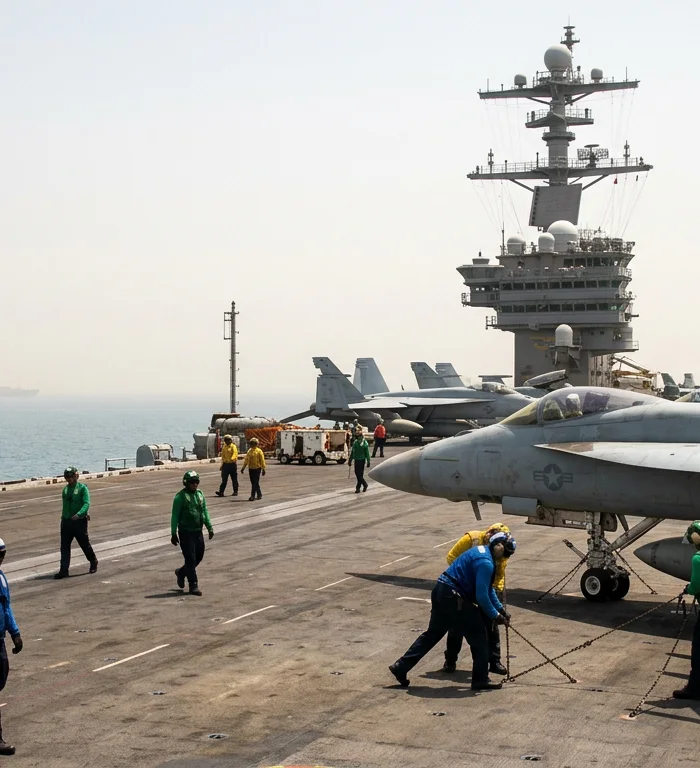
The debate over US military assets in the region has intensified since the October 7 conflict. The Pentagon has maintained a heightened presence in the Middle East, including the deployment of additional carrier strike groups and land-based missile defense systems, to deter regional actors from escalating direct engagements.
Iran has increasingly targeted the narrative of US-Israeli security cooperation, characterizing it as a sign of regional weakness. By mocking the dependency of Israeli security on external US hard power, Tehran seeks to undermine the progress of diplomatic normalization efforts between Israel and its Arab neighbors.
Risks for regional stability
The public nature of these provocations complicates the position of Gulf states currently hosting US bases. Officials in the region have expressed growing anxiety that they may be caught in the crossfire if a direct, kinetic confrontation between US assets and the Islamic Revolutionary Guard Corps (IRGC) materializes.
Israeli Ambassador
The potential for a widened conflict poses risks to vital maritime shipping lanes, particularly near the Strait of Hormuz and the Bab al-Mandab. Any sustained escalation could force a redirection of energy supplies, impacting global oil market pricing and regional logistical stability.
Monitoring future engagement
The core uncertainty remains whether this rhetorical escalation will evolve into a physical hardening of stances. Observers are tracking US Central Command (CENTCOM) posture adjustments as a key indicator of future intent. A shift in the activity levels of IRGC-affiliated units in Iraq and Syria will likely determine the threshold for direct intervention by the US.
More stories
- Germans oppose Ukraine aid as poll shows support slipping
- Kim Jong-un receives 10 envoys after constitutional shift
- Ukraine claims Libya strike sinks Russian naval corvette
- COP31 climate talks collapse over fossil fuels and funds
- Russian military faces 1,087 recorded suicides in Ukraine war
- US faces China, Russia in Africa minerals contest
- Indonesia seeks Google explanation for 19,372 YouTube removals
- San Antonio faces scrutiny over 50,000-hog farm approvals
- Arctic route saves South Korean ships at least 10 days to Europe
- Tinubu seeks $7.7bn external loan for Nigeria deficit
Latest news
- Trump prepares tariffs on China and other major exporters
- New-car buyers pay record average $50,087 in October
- Banks face ECB reserve debate over liquidity and profits
- Investors see Anthropic debut gains fade below $83 a share
- Iraq orders federal control over Kurdish-area oilfields
- Nvidia shares retreat as AI rally cools before PCE data
- Macy’s parade faces balloon limits as storm winds approach