

Irish National Charged With $60m Destruction of US Military Aircraft
An Irish national faces US federal charges for destroying a $60 million military aircraft at Shannon Airport, highlighting key security vulnerabilities.
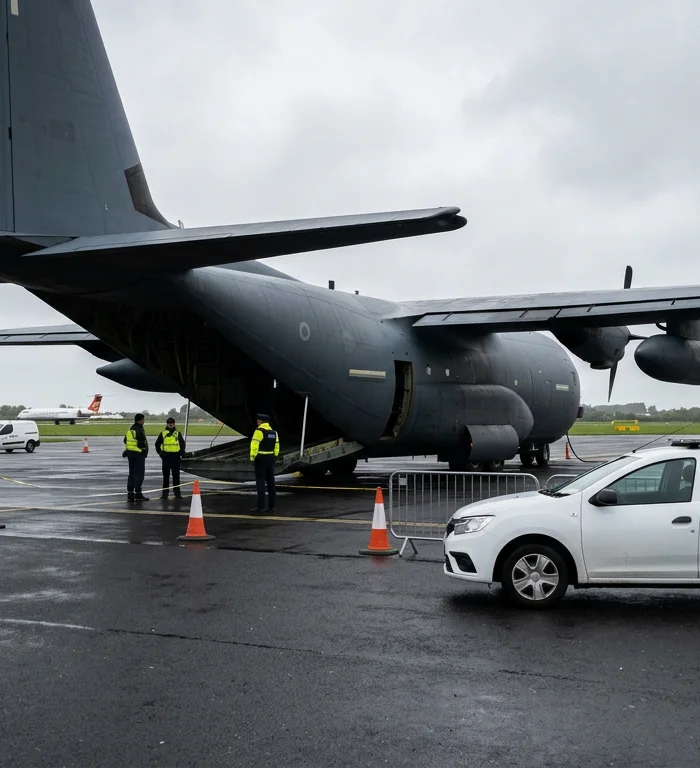
A 48-year-old Irish national has been charged by US federal prosecutors with the destruction of a $60 million US Air National Guard C-130 Hercules aircraft. The incident occurred at Shannon Airport in Ireland, a facility frequently utilized by US military personnel for transit and logistics. The defendant faces charges of destruction of government property, which carries a maximum penalty of 10 years in federal prison.
Federal investigators allege the act was a premeditated operation rather than spontaneous vandalism. According to court filings, the defendant conducted extensive research over several months to identify vulnerabilities in the aircraft. The suspect reportedly utilized specialized tools, including an axe and chemical agents, to compromise critical systems, including hydraulic lines, wire bundles, and cockpit instrumentation.
Security officials noted that the defendant demonstrated technical awareness by avoiding specific lines that would have triggered an explosion, indicating a high level of preparation. The aircraft was rendered inoperable, resulting in significant financial loss and the disruption of military operations. The defendant was apprehended at the scene by airport personnel and initially charged by Irish authorities with criminal damage.
This event highlights ongoing security vulnerabilities at Shannon
Airport, which has experienced multiple unauthorized breaches by activists in recent years. Previous incidents include perimeter fence penetrations and the vandalism of US military assets with paint. The recurring nature of these security lapses raises concerns regarding the safety of US military equipment stationed at international transit hubs.
As the defendant is not currently in US custody, the case underscores the complexities of international legal cooperation in cases involving the destruction of foreign military property. Policymakers should monitor the progress of extradition efforts and the subsequent review of security protocols at transit locations used by US forces. The incident serves as a case study in the risks posed by non-state actors targeting military logistics infrastructure.
More stories
- Germans oppose Ukraine aid as poll shows support slipping
- Kim Jong-un receives 10 envoys after constitutional shift
- Ukraine claims Libya strike sinks Russian naval corvette
- COP31 climate talks collapse over fossil fuels and funds
- Russian military faces 1,087 recorded suicides in Ukraine war
- US faces China, Russia in Africa minerals contest
- Russian strikes leave many Kyiv homes with 4 hours of power
- Cebu groups seek probe into protest dispersal with more than 20 hurt
- Portugal housing shortage prompts call for more building
- Canada signs Turkey partnership to widen global trade options
Latest news
- Trump prepares tariffs on China and other major exporters
- New-car buyers pay record average $50,087 in October
- Banks face ECB reserve debate over liquidity and profits
- Investors see Anthropic debut gains fade below $83 a share
- Iraq orders federal control over Kurdish-area oilfields
- Nvidia shares retreat as AI rally cools before PCE data
- Macy’s parade faces balloon limits as storm winds approach