

Iran’s seven-cable threat widens US Gulf deterrence test
Tehran reportedly warned it may hit Strait of Hormuz internet cables, data centers and AI sites if US-Israel strikes resume.
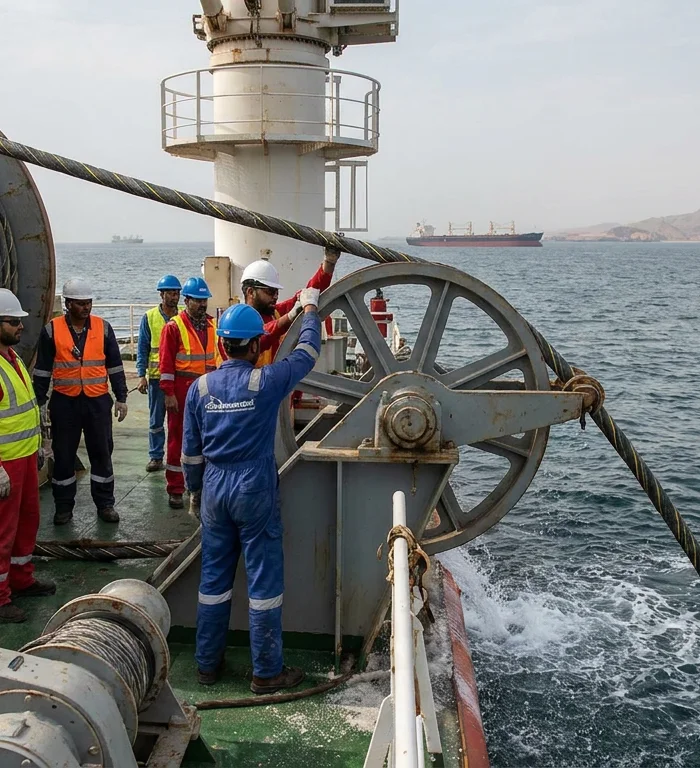
A secondary video summary published Oct. 24 said Iranian security officials threatened to target seven undersea internet cables beneath the Strait of Hormuz if US-Israel strikes resume, widening Washington’s Gulf deterrence problem.
The reported target list would push US planning from military bases and energy shipping to civilian networks, with seven internet lines under the same chokepoint that handles Gulf oil traffic.
A wire-service report cited by the video summary said Islamic Revolutionary Guard Corps Deputy Yadollah Javani said Iran could target seven major cables under Hormuz. The account also said Tehran could block repair crews from restoring damaged links, a step that would extend outages beyond the initial strike.
For the White House and National Security Council, the warning expands the problem from force protection to the digital systems that support Gulf finance, e-commerce, cloud computing and AI facilities. Subsea cables are fiber-optic lines that carry internet traffic across oceans; cutting several in one corridor can reroute or slow data flows while repair ships wait for security clearance and insurance coverage.
For the Pentagon, the threat would sit between maritime security and cyber defense. CENTCOM already operates across the Gulf and the Red Sea, but commercial cable protection would require coordination with private operators, Gulf governments and civilian cyber agencies.
Islamic Revolutionary Guard Corps
The same account said the Red Sea could become a larger target, potentially with support from Yemen’s Houthis. The vulnerability was demonstrated in early 2024, when anchor drags damaged multiple communications lines in the Red Sea and complicated civilian repairs in a war-risk zone.
The public account did not identify specific cables, named data centers or current US intelligence showing an imminent operation. That leaves Washington to plan against a stated contingency rather than a confirmed attack order.
If US-Israel strikes resume and Iran acts on the threat, the macro effect would run through data disruption and repair delays, not just oil prices. Gulf cloud and AI projects would face higher security costs, while the wider cable and data-center industry would have to treat seabed routes as wartime infrastructure.
If Washington deters the threat without new strikes, Gulf digital investment would probably continue under heavier naval and cyber protection.
If the threat is dismissed as rhetoric, the test becomes whether any future cable incident forces CENTCOM, Congress or civilian cyber agencies to move after the damage.
The measurable test is whether CENTCOM or the Defense Department formalizes a Gulf seabed-protection mission. A congressional mandate to harden commercial subsea data infrastructure would point the same way; no hearings, patrols or advisories would show Washington treated the warning as rhetoric.
More stories
- Eisenkot secures first coalition deal but lacks majority
- Germans oppose Ukraine aid as poll shows support slipping
- Kim Jong-un receives 10 envoys after constitutional shift
- Ukraine claims Libya strike sinks Russian naval corvette
- COP31 climate talks collapse over fossil fuels and funds
- Russian military faces 1,087 recorded suicides in Ukraine war
- Taiz hospital cuts dialysis sessions to 2.5 hours
- Lebanese doubt Oct. 27 Israel vote ends south Lebanon presence
- Hormuz reopening hinges on Iran's seven stated conditions
- Ukraine support splits Europe as US rift widens over Kyiv
Latest news
- Trump prepares tariffs on China and other major exporters
- New-car buyers pay record average $50,087 in October
- Banks face ECB reserve debate over liquidity and profits
- Investors see Anthropic debut gains fade below $83 a share
- Iraq orders federal control over Kurdish-area oilfields
- Nvidia shares retreat as AI rally cools before PCE data