Iran Seeks Russian Geran Drones for Regional Targets, Escalating Tensions
Iran has reportedly requested advanced Russian Geran drones, derived from Iranian designs, for potential use against Israeli and American targets, signaling…
Omar Farouk ·
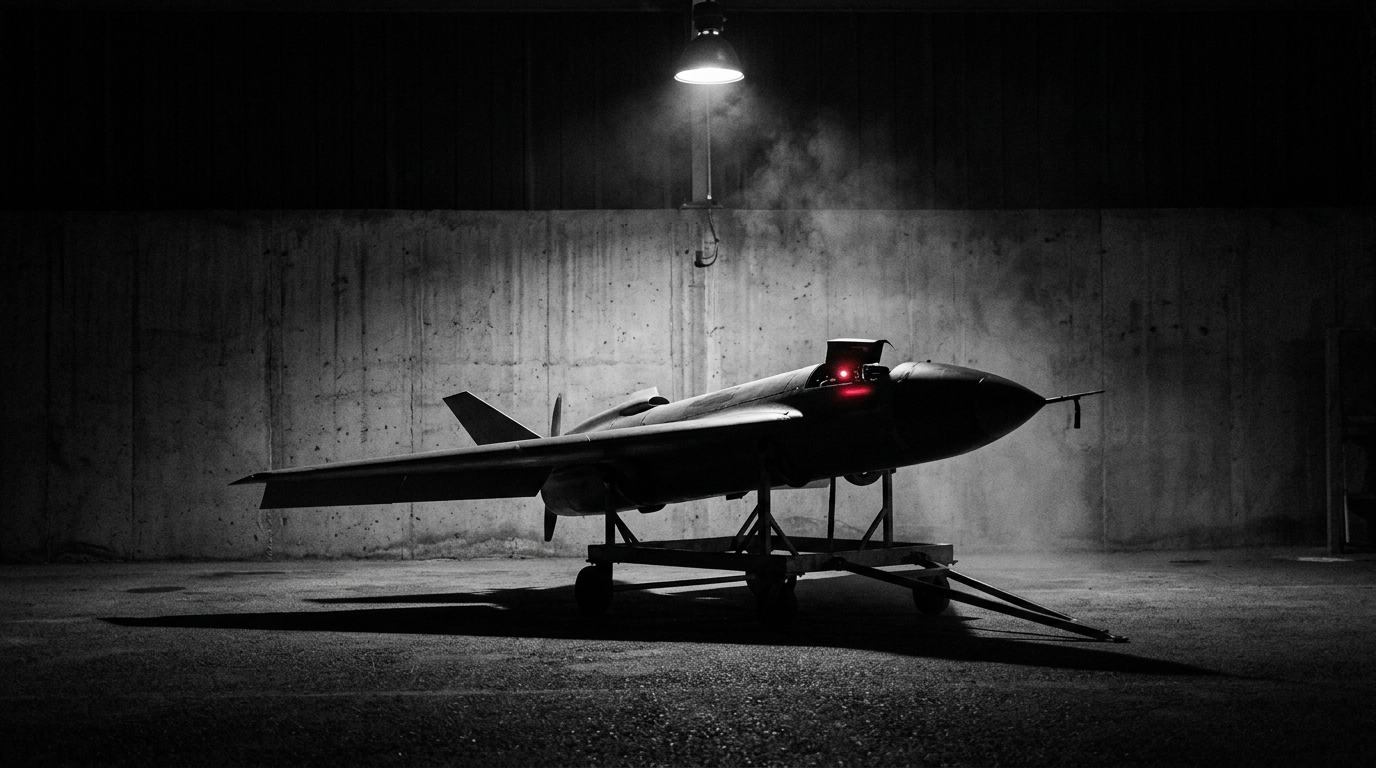
Tehran has reportedly requested new Russian Geran drones for potential use against Israeli and American targets, according to a recent report. This alleged request signals a further deepening of military cooperation between Iran and Russia, building on an existing partnership that has seen Iranian-designed drones deployed in other conflicts.
Expanding Drone Arsenal
This reported request for more advanced Geran drones comes as Iran continues to develop its regional power projection capabilities. The Geran series, specifically the Geran-2, is based on Iran's Shahed-136 drone, which Russia has utilized extensively in its conflict in Ukraine. The Shahed-136 is a delta-wing uncrewed aerial vehicle (UAV) designed for long-range, one-way attack missions, capable of carrying a 20-kilogram warhead and reaching speeds of up to 185 kilometers per hour.
The collaboration highlights a strategic alignment where Russia benefits from proven drone technology, and Iran potentially gains access to upgraded variants and manufacturing expertise. This exchange has been a cornerstone of the two nations' military-technical cooperation, with Iran previously supplying Russia with a range of UAVs. The Islamic Revolutionary Guard Corps (IRGC) has been central to Iran's drone development and proliferation efforts, distributing similar technologies to its regional proxy network.
Regional Impact and Global Spillover
A potential transfer of new Geran drones to Iran could significantly enhance its capacity to target U.S. military bases and Israeli infrastructure across the Middle East. Such an enhancement raises concerns for American and Israeli air defense systems, which have regularly intercepted Iranian-origin drones and missiles launched by proxies like the Houthis in Yemen or Iraqi militias. The U.S. Central Command (CENTCOM) maintains forces at various installations across the Gulf region, including in Iraq, Syria, and Bahrain, which are within potential strike range of sophisticated long-range drones.
The proliferation of advanced drones also affects vital maritime choke points, including the Strait of Hormuz and the Bab al-Mandab Strait. Attacks by Iranian-backed groups, particularly the Houthis, have already disrupted global shipping lanes in the Red Sea, impacting global trade and energy markets. An improved drone capability could further destabilize these routes, increasing insurance costs and potentially leading to higher oil prices.
Reinforcing the Axis of Resistance
Russian Geran
This development reinforces Iran's 'Axis of Resistance,' a network of state and non-state actors including Hezbollah in Lebanon and various Iraqi and Syrian militias. Providing these groups with more capable drones would extend their operational reach and destructive potential, challenging regional stability. The request comes amid ongoing tensions with Israel and the United States, placing further strain on diplomatic efforts to de-escalate conflicts in the region. The alleged acquisition would also complicate existing U.S. and Israeli defensive strategies. Israel's Iron Dome and other multi-layered air defense systems have proven effective against current drone and rocket threats but face continuous adaptation challenges from evolving weapon systems. Similarly, U.S. Patriot missile systems and naval assets in the region are constantly monitoring and countering aerial threats from Iranian proxies. Monitoring Further Deployments Should the alleged drone transfer proceed, observers will watch for any official statements from Russia, Iran, or Western intelligence confirming the delivery or specific deployment. The appearance of new drone types in the arsenals of Iranian proxies or in regional military exercises would signal a tangible escalation. Any adjustments to U.S. or Israeli defensive postures in response to enhanced drone threats would also be a key indicator.