US tariffs draw muted China protest as AI tensions rise
US tariffs drew a restrained response from Beijing, while proposed AI sanctions prompted a sharper warning from China.
Mei Lin ·
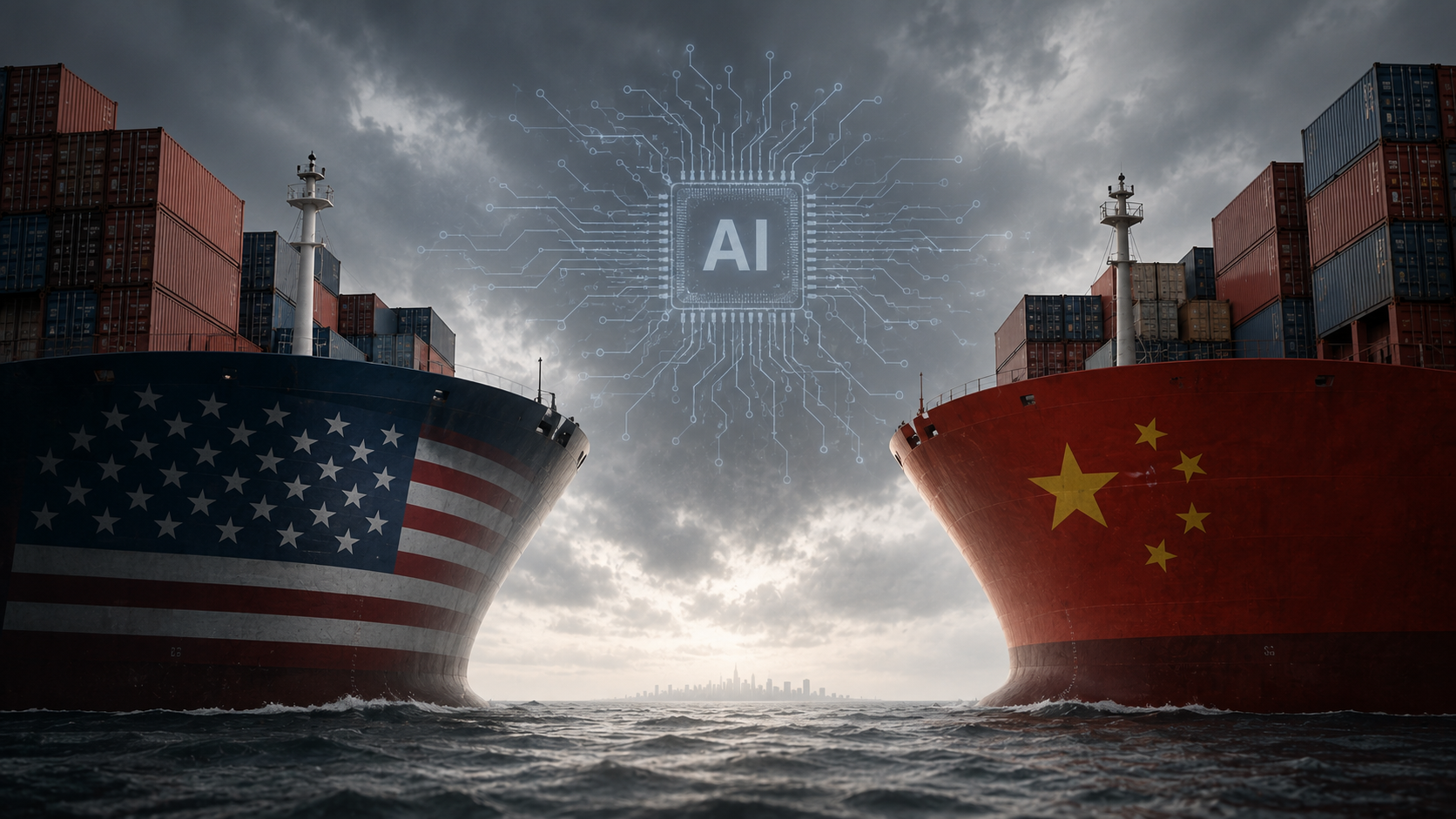
US tariffs drew a restrained protest from China on Monday, but Washington’s proposed AI sanctions triggered a much sharper warning from Beijing.
Beijing separates tariffs from AI
China objected to the latest US duties without announcing matching measures, a response that kept the trade truce intact for now. Beijing said Washington had agreed to hold tariffs at 20% under that arrangement, giving officials room to criticize the move without escalating immediately.
The harder line came on artificial intelligence. China said it would take “all necessary measures” if Washington penalizes Chinese AI firms over alleged theft of American intellectual property through distillation.
The 20% tariff ceiling matters
The tariff response was subdued because the new duties appear to sit inside a negotiated ceiling rather than mark a clean break in the truce. Analysts cited in the source said the latest measures would probably create only a limited direct hit to China, though the source did not identify the analysts or provide estimates.
That distinction matters for markets and companies exposed to cross-border trade. If both governments treat 20% as the operating limit, businesses can price that cost into supply chains rather than prepare for a fresh cycle of retaliation.
AI is different because the dispute reaches into technology access, model development and the ownership of training methods. Distillation generally refers to using one model’s outputs to train or improve another model, which is why Washington’s allegation is being framed as an intellectual property issue rather than a conventional trade complaint.
AI restrictions raise wider costs
The White House has also considered restrictions on China’s open-source models, according to the source. Such a step would push the fight beyond tariffs and into the rules governing how AI tools are shared, copied and deployed across borders.
The immediate company-level exposure is hard to map because no affected firm was named in the provided text. Even so, Chinese AI developers would face higher legal and compliance risk if proposed penalties became formal measures, especially if access to US-linked tools, customers or partners came under scrutiny.
For the wider technology sector, the mechanism is clearer. If AI rules become a sanctions channel, companies may need separate product pathways for the US, China and third markets, raising duplication costs and slowing collaboration among developers, cloud providers and enterprise customers.
The macro effect depends on which dispute leads the relationship. If the tariff cap holds, the global trade impact may stay contained; if AI penalties advance, the pressure could shift from goods prices to investment decisions, technology licensing and cross-border capital planning.
Three paths for the dispute
If both sides preserve the trade truce, global markets would likely focus on the 20% tariff ceiling as a manageable cost; China would avoid immediate retaliation; manufacturers and importers would gain a clearer pricing reference. That scenario would not settle the AI fight, but it would keep it from merging with a broader tariff spiral.
If Washington turns the AI proposal into sanctions, the global effect would be deeper technology fragmentation; Chinese AI firms would face more restrictions on partnerships and market access; the AI sector would move toward more nationalized standards. The open question is whether any penalties would target specific companies, specific models or broader categories of AI activity.
If talks reopen around AI practices, the macro effect would be a lower risk premium on technology trade; Chinese firms would get more room to adjust compliance systems; global AI developers would still operate under closer political scrutiny. The next signal is whether Beijing’s warning stays rhetorical or becomes a concrete policy response.