Trump-Xi summit puts trade, AI and Iran at center stage
President Trump and Xi Jinping are set to discuss trade, AI, Iran and Taiwan as a tariff truce buys negotiators time until January 10.
Lauren Collins ·
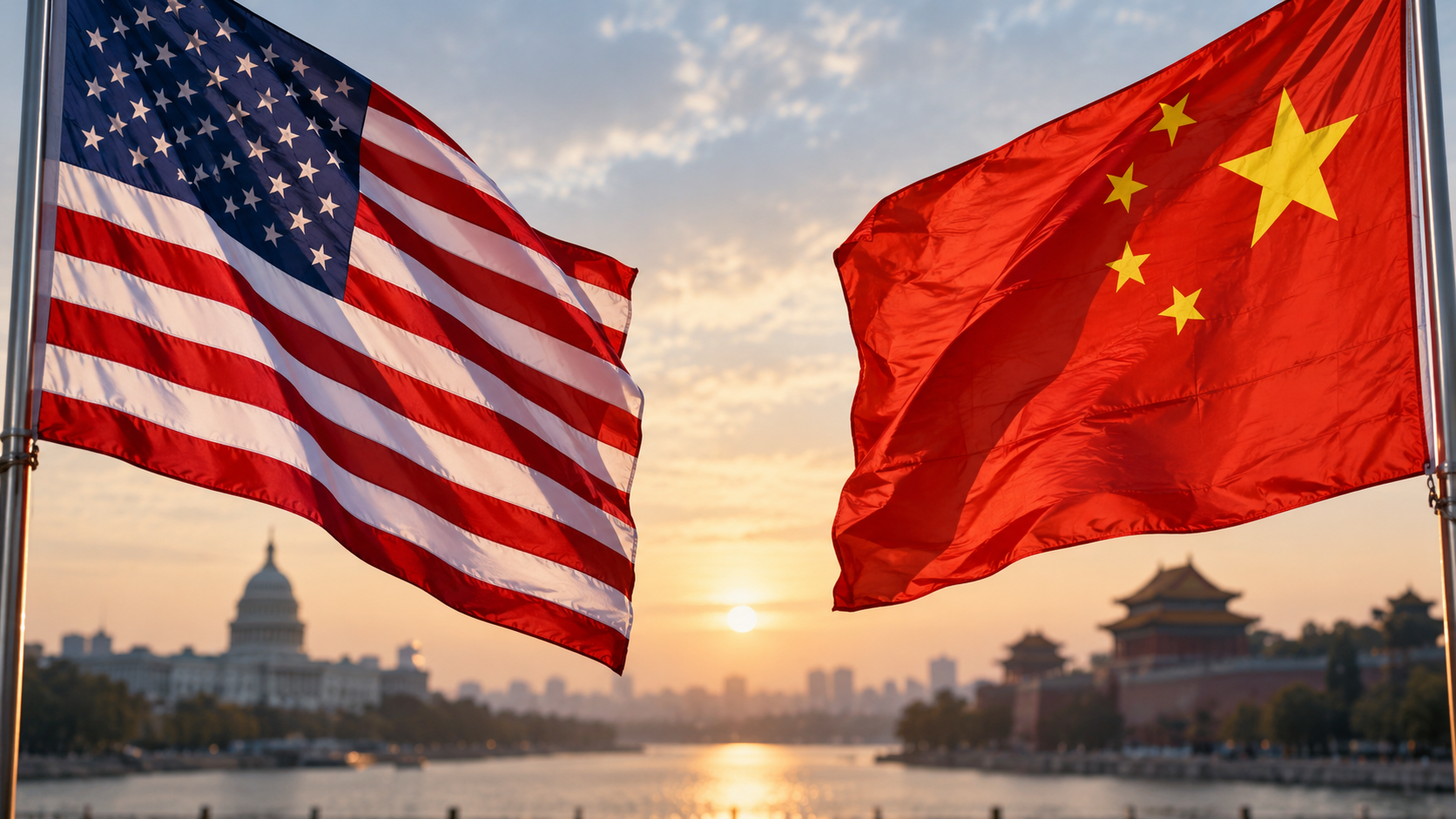
The Trump-Xi summit in Washington will put trade, AI, Iran and Taiwan into one meeting after an 11-month tariff truce was extended.
President Trump is expected to host Xi Jinping at the White House on Thursday, the leaders’ third face-to-face meeting in less than a year. The talks come after both governments moved a November trade deadline to January 10, giving negotiators more time to pursue a broader settlement.
Red carpet opens Washington talks
The visit began Wednesday evening at Joint Base Andrews in Maryland, where Trump and First Lady Melania Trump greeted Xi and Peng Liyuan. The reception included a red carpet arrival, a gesture described in the source account as the first personal presidential welcome for a foreign guest at the base in six decades.
China’s state broadcaster reported that Xi was accompanied by Cai Qi, a senior aide and adviser, and Foreign Minister Wang Yi. The White House schedule calls for a ceremonial welcome on Thursday morning, including a military flyover and nearly 500 military personnel.
Trump is due to host a state dinner later Thursday, with Apple CEO Tim Cook, Nvidia CEO Jensen Huang and OpenAI CEO Sam Altman expected to attend. The trip is scheduled to close Friday with tea at the White House and a visit to the National Archives.
Tariff pause buys negotiating time
The trade agenda sits over nearly two years of confrontation. After returning to office in January 2025, Trump imposed a 10% duty on Chinese goods, citing fentanyl and immigration concerns; China answered with levies on US coal, liquefied natural gas, crude oil and autos.
Beijing also restricted exports of five rare-earth metals used in defense equipment and clean-energy supply chains, then threatened controls on seven more before the October 2025 truce. Tariffs later reached triple-digit levels before the pause agreed after talks in South Korea.
The May 2026 meeting in China produced plans for a Board of Trade and Investment, while Xi agreed to purchases of Boeing jets and US farm products. Trump has since added 12.5% tariffs on goods from 60 trading partners, including China, over allegations tied to imports made by forced labor.
The immediate question is whether the January 10 deadline becomes a bridge to sector-specific relief or another pressure point. If negotiators cut duties in selected industries, consumer-goods companies and exporters could see lower costs; if talks stall, firms exposed to Chinese inputs may keep rerouting supply chains.
AI, Iran and Taiwan crowd agenda
Artificial intelligence is expected to be a second major track. The United States has proposed a notification mechanism under which Washington and Beijing would alert each other to AI incidents serious enough to threaten national security.
The mechanism would not resolve the wider race for advanced chips, models and military applications. For Nvidia and other semiconductor companies, the commercial issue is whether policy creates clearer rules for sales or maintains a compliance environment shaped by national-security reviews.
Iran is also expected to feature in the talks as the US-Israel war continues. Beijing has maintained close ties with Tehran, while Trump has said he does not need China’s help to break the deadlock.
Taiwan remains the most sensitive security issue. In December, the Trump administration approved an $11 billion arms sale to Taiwan, described in the source account as the largest on record, while a second package worth about $14 billion has been held for months.
Trump has called the arms sales a "very good negotiating chip," placing Taiwan inside a broader bargaining structure that also includes tariffs and technology. Beijing claims Taiwan as its territory, and any movement on arms sales would be read across Asia as a signal of how Washington is balancing trade diplomacy against security commitments.
Separate statements signal domestic needs
The two governments are expected to issue separate announcements rather than a joint news conference or shared statement. That format gives each side room to emphasize different wins for domestic audiences while limiting exposure to public disagreement.
If the leaders preserve the tariff truce and expand military-to-military dialogue, the global macro effect would be lower uncertainty around two large trading economies, while Apple, Nvidia and Boeing would gain clearer planning assumptions and manufacturers would have more time to adjust orders. If the talks produce only statements, companies may keep holding investment decisions, and the wider technology and industrial sectors would remain exposed to sudden tariff or export-control changes.
If Taiwan or Iran dominates the meeting, trade relief could become harder to separate from security policy. The main open questions are whether the January 10 deadline holds, whether any AI notification channel is formalized, and whether Trump treats pending Taiwan arms sales as leverage or proceeds with them on a separate track.