

Houthi strikes send 99 Filipino workers home from Riyadh
The Philippine agency cited missile attacks in Saudi Arabia; the report gave no details on damage, casualties or any US response.
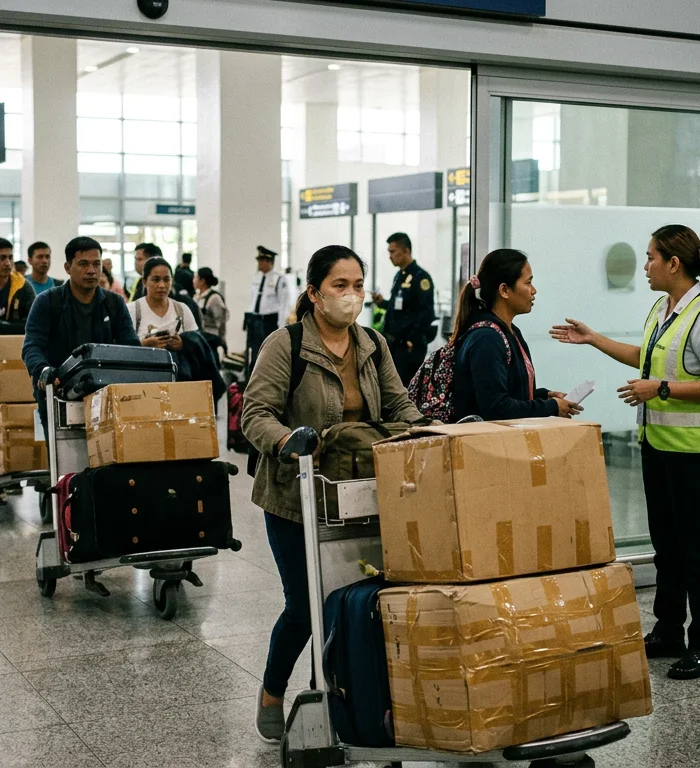
The Overseas Workers Welfare Administration said 99 overseas Filipino workers had been repatriated from Riyadh as of Tuesday after Houthi missile attacks in Saudi Arabia, according to a news report citing the agency.
For Washington, the repatriations are a civilian indicator to watch as US officials assess whether Houthi fire is again threatening Saudi territory beyond the Red Sea. The latest group numbered 50 workers, compared with 99 repatriated so far, and arrived Tuesday morning at Ninoy Aquino International Airport Terminal 3 on a Qatar Airways flight.
The report did not identify the Saudi targets, the number of missiles, the damage, any casualties or the Saudi government response. It also did not say whether US forces tracked the launches, supported interceptions or received any Saudi request for additional air-defense help.
Saudi Arabia and the Houthis have maintained an unwritten truce since the formal UN ceasefire expired in October 2022. A confirmed resumption of cross-border fire would complicate Riyadh’s effort to keep Yemen contained while it manages security ties with Washington.
US Central Command has prioritized integrated Gulf air and missile defense, a system that links radars, command networks and interceptors across partner militaries.
If the Saudi attacks are confirmed as more than isolated launches, the pressure point for the Pentagon would be interceptor availability and radar coordination, not only naval operations around the Red Sea.
The policy channel in Washington would run through the Pentagon, the State Department and Congress. The Pentagon would assess deployments and munitions stocks, the State Department would manage the Saudi diplomatic track, and Congress would have oversight of any major arms-sale or emergency replenishment package.
If Riyadh and the Houthis treat the launches as isolated, the macro effect is likely to stay limited to labor-safety planning and insurance caution around Saudi operations. OWWA’s role would remain focused on repatriation logistics, while the defense industry effect would center on routine interceptor monitoring.
If launches continue, the mechanism changes. Energy-risk pricing, Gulf labor flows and demand for Patriot or THAAD interceptors would become the channels to watch, while Washington would face a more immediate test of how much air-defense support it is prepared to provide Saudi Arabia.
Source: news report, Inquirer, date not supplied
More stories
- Eisenkot secures first coalition deal but lacks majority
- Germans oppose Ukraine aid as poll shows support slipping
- Kim Jong-un receives 10 envoys after constitutional shift
- Ukraine claims Libya strike sinks Russian naval corvette
- COP31 climate talks collapse over fossil fuels and funds
- Russian military faces 1,087 recorded suicides in Ukraine war
- Sarandos seeks Netflix reset around television and films
- US envoy Tom Barrack presses Gulf allies to rely less on US
- Ethiopia Artillery Kills 52 Civilians in Tigray Town
- British universities get MI5 alert on CGTRI project risks
Latest news
- Trump prepares tariffs on China and other major exporters
- New-car buyers pay record average $50,087 in October
- Banks face ECB reserve debate over liquidity and profits
- Investors see Anthropic debut gains fade below $83 a share
- Iraq orders federal control over Kurdish-area oilfields
- Nvidia shares retreat as AI rally cools before PCE data