

Gulf states accelerate local defense production as US supply chain risks mount
US munition shortages have prompted Gulf nations to prioritize indigenous industrialization and non-US procurement to secure regional defenses.
Munition shortages impact regional security
Internal assessments from the US Department of Defense have surfaced, revealing that senior military leadership cautioned about critical gaps in munitions availability months before current regional escalations. These warnings, which were integrated into the Pentagon’s Global Force Management Allocation Plan in December, reflect the mounting strain on American defense stockpiles caused by simultaneous commitments in Europe and the Middle East.
For GCC leadership, the acknowledgement of these logistical bottlenecks confirms long-held concerns regarding the reliability of the US defense industrial base. The prospect of restricted access to interceptors and precision munitions has shifted the strategic calculus for Saudi Arabia, the UAE, and their neighbors, who now perceive reliance on a single major power as a structural risk.
Pivot toward regional industrialization
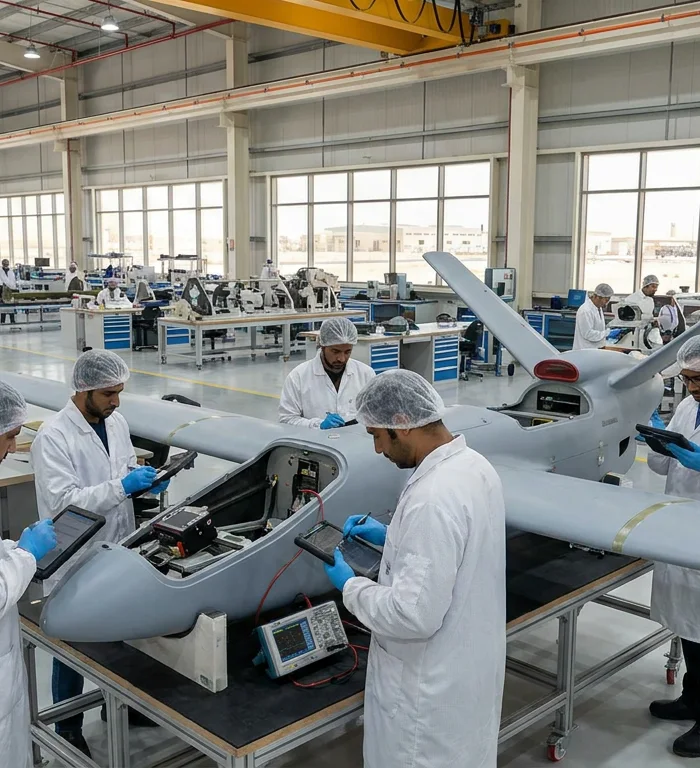
The strategic shift is best illustrated by the aggressive expansion of state-backed defense entities like the Saudi Arabian Military Industries (SAMI) and the UAE’s EDGE Group. These organizations have transitioned from simple procurement arms to hubs of local manufacturing, aiming to build a sovereign supply chain for drones, missiles, and air defense systems.
This industrial pivot is complemented by a move toward multi-polar military procurement. Gulf states are increasingly looking to Turkey, South Korea, and France to fill the gaps in their arsenals. By diversifying their supplier base, these governments intend to insulate their national security from the volatility of US domestic policy and the competing demands of other global conflicts.
Global macro and regional stability
The fragmentation of the regional security architecture has direct implications for global energy markets and maritime trade. If Gulf states continue to integrate non-US platforms into their air defense networks, interoperability challenges could complicate future joint operations aimed at protecting shipping lanes in the Strait of Hormuz and the Bab al-Mandab.
US Department
Furthermore, the movement toward indigenous production suggests a lasting change in how the Middle East manages its threat environment. As regional powers take direct control of their munitions supply, the traditional US-centric security umbrella is gradually being replaced by a more decentralized, self-sufficient model of deterrence.
Scenario-based outlook and watchpoints
The primary uncertainty remains whether the US can resolve its supply chain constraints before regional partners fully transition to external suppliers. Should the current bottlenecks persist, the trend toward localized defense manufacturing will likely accelerate. Observers should monitor announcements of new joint venture defense production agreements or long-term procurement deals between Gulf states and non-US partners through May 2025.
If the Pentagon announces a significant, sustained replenishment of regional stockpiles, it may temporarily mollify Gulf planners and slow the pace of total industrial decoupling. Conversely, if supply chain reports continue to show stagnation, expect regional defense ministries to formally announce increased spending on indigenous industrial bases at upcoming regional defense exhibitions, signaling a permanent realignment of their procurement priorities.
More stories
- Germans oppose Ukraine aid as poll shows support slipping
- Kim Jong-un receives 10 envoys after constitutional shift
- Ukraine claims Libya strike sinks Russian naval corvette
- COP31 climate talks collapse over fossil fuels and funds
- Russian military faces 1,087 recorded suicides in Ukraine war
- US faces China, Russia in Africa minerals contest
- Bangladesh faces 1,147 deaths in measles outbreak
- Washington and Moscow in Talks on Data Centers, Nuclear Energy, Putin’s Envoy Claims
- Hormuz talks stall as Trump rejects Iran’s seven-day plan
- Pakistan suicide attack kills 12 at police checkpoint site
Latest news
- Trump prepares tariffs on China and other major exporters
- New-car buyers pay record average $50,087 in October
- Banks face ECB reserve debate over liquidity and profits
- Investors see Anthropic debut gains fade below $83 a share
- Iraq orders federal control over Kurdish-area oilfields
- Nvidia shares retreat as AI rally cools before PCE data
- Macy’s parade faces balloon limits as storm winds approach