

Germany AI push tests Berlin data-center capacity plans
Germany AI demand is straining data centers as Berlin targets doubled capacity by 2030 and seeks EU and Canadian support.
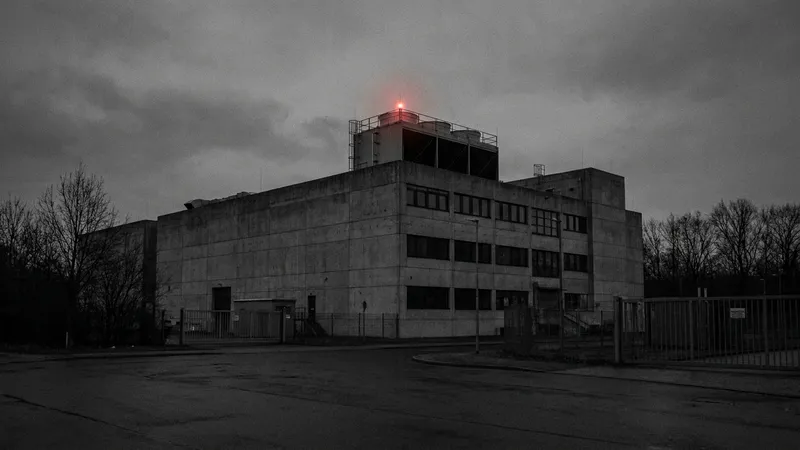
Germany AI demand is straining data-center capacity, prompting Berlin to target doubled facilities and quadrupled compute by 2030.
Wildberger sets 2030 capacity target
Digital Minister Karsten Wildberger said on Thursday that Germany is already short of the computing infrastructure needed for artificial intelligence workloads. “The reality is we are running short of compute capacity, that means demand will rise,” Wildberger said in Berlin.
The government’s plan calls for available computing power to rise fourfold and for the number of data centers to double by the end of the decade, according to Wildberger. German plans also point to data-center capacity reaching about 6 gigawatts in 2030, roughly twice the level implied by the stated target.
The push comes after Chancellor Friedrich Merz’s government created a dedicated technology ministry, giving digital policy a clearer place in Berlin’s economic agenda. Wildberger, a member of Merz’s center-right Christian Democrats, has argued that Germany’s long-term prosperity depends on stronger adoption of artificial intelligence.
Permits become the first bottleneck
Wildberger said German authorities would try to accelerate approval procedures for data-center projects, a step aimed at turning policy targets into construction. “Europe needs to wake up and use the talents we have,” he said, tying the infrastructure drive to a wider European effort to reduce dependence on external technology providers.
Data centers are increasingly treated as industrial infrastructure rather than back-office technology, because AI systems require large clusters of chips, reliable electricity and cooling. For Germany, the constraint is not only whether companies want to build facilities, but whether power connections, local permits and public support move quickly enough to meet the 2030 timetable.
Cohere deal reshapes Aleph Alpha
Germany’s AI strategy is also being pulled into cross-border corporate deals. Canadian AI company Cohere Inc. agreed to buy Aleph Alpha, a German startup once promoted as a national AI champion, in a transaction that could include a $600 million investment from retailer Schwarz Group.
The Cohere-Aleph Alpha deal was discussed during a two-day German cabinet retreat this week, according to the information provided by officials. It links Berlin’s domestic AI ambitions to Canada at a time when European governments are trying to keep access to outside innovation while building more local capacity.
For Aleph Alpha, the agreement would shift the company from a standalone national symbol into a wider commercial platform if the deal proceeds as described. For Germany’s AI sector, the mechanism is narrower but important: foreign capital and partnerships may help scale models and services faster than domestic funding alone.
EU gigafactory money remains uneven
Europe’s data-center buildout has faced delays beyond Germany. Plans to subsidize AI-focused facilities in the European Union have been slowed by uncertainty over demand and how much public money will be available.
The European Commission later said the planned AI Gigafactories would receive €10 billion ($11.5 billion) from the EU and member states. Only €2 billion in public funding is currently available, compared with the €10 billion headline figure; the rest would need approval in the bloc’s next budget.
Wildberger has supported proposals by German companies to apply to host one of the facilities. If Germany secures a site, it could reinforce domestic capacity while giving European AI developers more computing infrastructure inside the bloc.
Two paths for Germany's buildout
If approvals shorten and EU funding is approved, Germany’s 2030 targets would have a clearer route: more grid-connected sites, more local compute and a stronger case for AI suppliers to locate workloads in the country. The global macro effect would be higher European demand for power, chips and construction inputs, while Cohere and Aleph Alpha would gain a larger home market for enterprise AI services.
If permitting remains slow or EU budget talks hold back the missing funds, the capacity gap would persist even as AI demand rises, according to Wildberger’s framing. In that case, German companies may rely more heavily on overseas cloud and compute providers, leaving Europe’s data-center industry with demand but fewer financed projects ready to build.
The main open questions are whether Germany can cut approval times without weakening local scrutiny, and whether the EU can turn the €10 billion gigafactory plan into committed funding. Those decisions will determine whether Berlin’s AI policy becomes a construction program or remains a capacity target waiting for power, permits and capital.
More stories
- Allison Transmission stock compounds at 26% over five years
- Nasdaq 100 breaks support as US indexes retreat
- Trump faces six-day tariff deadline with no public notice
- Tibidabo marks 125 years as Barcelona landmark
- Eisman says S&P 500’s AI exposure tops 65%
- Lam Research turns $1,000 into $31,755 over decade
- Gold Prices Climb Amid Shifting Federal Reserve Expectations
- Greek Patriot Intercepts Drones Near Saudi Oil Site
- Tech Giants Fund AI Data Centers Off
- UAE Implements 'Cope Cages' to Protect Key Oil Storage
Latest news
- Russia rejects 60-day Ukraine truce, offers election-day pause
- Russian Strikes Test Trump's Energy Ceasefire
- EA brings AFC Richmond Women to EA Sports FC 27
- SpaceX spectrum deal sends T-Mobile down 12%
- Federal officers search Ilhan Omar home as midterms near
- Germany rejects Russian diesel deal as Merz backs curbs
- Kyiv challenges energy ceasefire as Russia reports talks
- Lavrov urges Lebanon ceasefire after talks with minister