

Russia rejects 60-day Ukraine truce, offers election-day pause
Kyiv says a full ceasefire is needed for elections; Moscow says a longer halt would let Ukraine regroup.
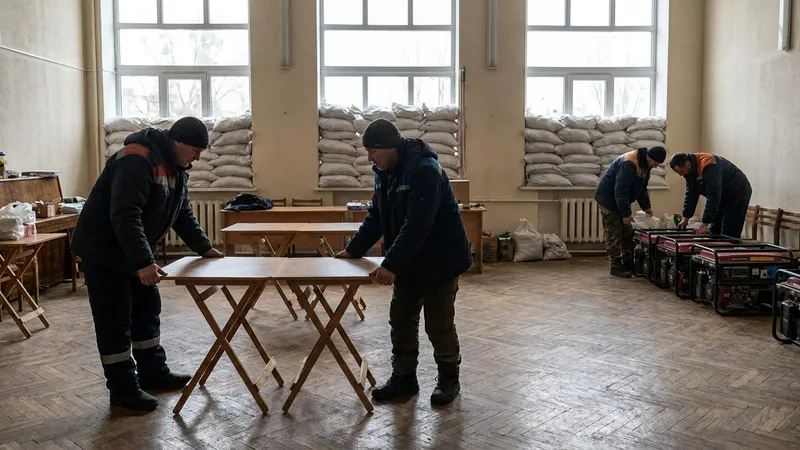
Russia rejected Ukraine’s proposed 60-day ceasefire and signaled it could halt attacks for one election day, narrowing space for talks over wartime voting.
Kyiv has said it can organize national elections if Russia accepts a complete 60-day pause. Moscow rejected that timetable, arguing a longer truce would give Ukraine time to regroup, while leaving open a limited halt tied only to the day of voting.
Ukraine’s 60-day election demand
The dispute links two issues that have moved on separate tracks: a possible ceasefire and Ukraine’s suspended electoral calendar. Ukraine remains under martial law, and millions of Ukrainians have been displaced since Russia’s full-scale invasion, making a national ballot hard to administer without a wider security pause.
President Trump has pressed Kyiv on elections and separately claimed progress toward an energy ceasefire. Ukrainian officials have framed the 60-day demand as the minimum condition for a credible vote, while Russian officials have presented a one-day halt as the narrower concession.
If a longer ceasefire were agreed, the global effect would be lower immediate geopolitical risk around Black Sea and European energy routes; Ukraine would gain time to prepare voting logistics; defense and energy markets would watch whether the halt extended beyond polling.
If the offer stays limited to one day, the macro effect would be smaller, Kyiv would still face martial-law and displacement constraints, and the wider security sector would price continuity rather than de-escalation.
The next test comes in the 24 hours after October 12, 2026, if either side puts the election-day pause or the 60-day demand into written negotiating terms.
More stories
- Pope Leo plans lung surgery, pauses events to October 20
- Russian Strikes Test Trump's Energy Ceasefire
- Germany rejects Russian diesel deal as Merz backs curbs
- Kyiv challenges energy ceasefire as Russia reports talks
- Lavrov urges Lebanon ceasefire after talks with minister
- Zelensky Backs Energy Ceasefire, Says Russia Resists
- Navi Pillay wins 2026 Nobel Peace Prize for work on law
- Green Party Leader Faces Calls to Resign Over Zionism-as-Racism Policy
Latest news
- Anthropic cuts web access after AI testing incidents
- Ukraine says Russia hits six energy targets after Trump ceasefire
- Orion's $59.3 million fraud charge spotlights wire scams
- Orange board weighs Amazon drones, $3,498 refunds
- EA brings AFC Richmond Women to EA Sports FC 27
- SpaceX spectrum deal sends T-Mobile down 12%
- Allison Transmission stock compounds at 26% over five years
- Federal officers search Ilhan Omar home as midterms near