

Israeli Military Concludes Ground Operation in Central Gaza
The Israeli military has ended a ground operation in central Gaza aimed at dismantling tunnel infrastructure, further straining the existing ceasefire…
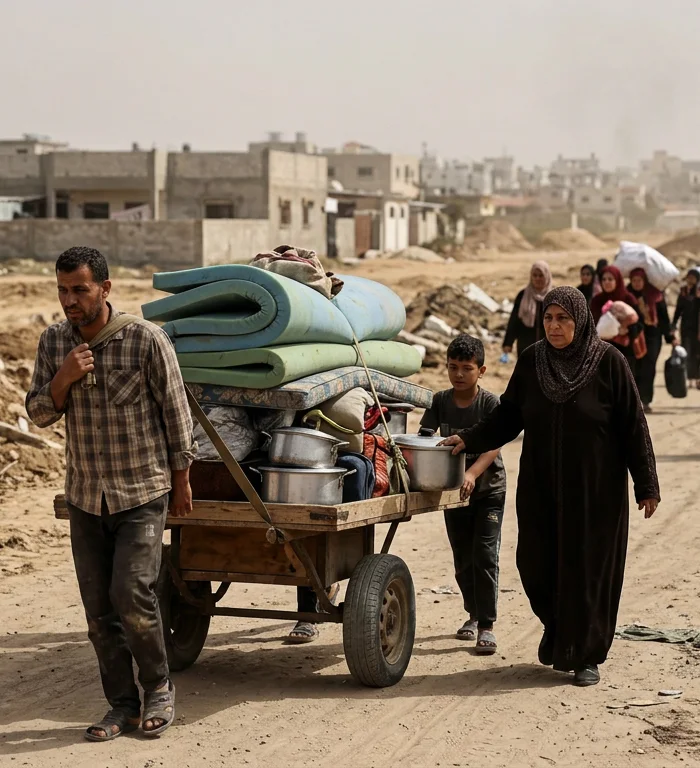
The Israeli military has concluded a localized ground operation in central Gaza, allowing displaced residents to return to the Al-Bureij and Nuseirat refugee camp areas. The incursion, which began on Wednesday, was described by military officials as a targeted effort to dismantle a tunnel network extending beneath the established ceasefire demarcation line. The military stated that the infrastructure was being utilized to facilitate attacks against Israeli personnel and civilians.
This operation occurred despite the ongoing ceasefire agreement established in October 2025. The military maintains that the action was a necessary security measure to address threats posed by tunnel restoration efforts. Conversely, Hamas has characterized the incursion as a direct violation of the ceasefire terms. The incident highlights the fragility of the current security arrangement, as both parties continue to trade accusations of non-compliance.
This shift in control
Strategic control of the territory remains a point of contention. While the initial ceasefire terms left the Israeli military in control of 53 percent of Gaza, current assessments indicate that military presence has expanded to cover more than 60 percent of the territory. This shift in control, combined with ongoing localized strikes—including recent reports of casualties in Gaza City—suggests a persistent state of low-intensity conflict despite the broader ceasefire framework.
The Israeli
The operational environment remains volatile for the civilian population, with approximately 1.4 million people currently residing in makeshift shelters. The political context is further complicated by the ongoing domestic transition in Israel, where efforts to form a new government follow inconclusive elections. The interplay between military objectives, such as tunnel neutralization, and the political necessity of maintaining security benchmarks remains a primary driver of regional instability.
Institutional stakeholders should monitor the status of the "Yellow Line" demarcation, as further incursions beyond this boundary are likely to be interpreted as significant escalations. The continued loss of life during the ceasefire period underscores the limited efficacy of existing de-escalation mechanisms. Future stability will likely depend on the ability of mediators to enforce the original terms of the ceasefire and address the expansion of military control zones.
More stories
- Germans oppose Ukraine aid as poll shows support slipping
- Kim Jong-un receives 10 envoys after constitutional shift
- Ukraine claims Libya strike sinks Russian naval corvette
- COP31 climate talks collapse over fossil fuels and funds
- Russian military faces 1,087 recorded suicides in Ukraine war
- US faces China, Russia in Africa minerals contest
- Indonesia seeks Google explanation for 19,372 YouTube removals
- San Antonio faces scrutiny over 50,000-hog farm approvals
- Lapid accuses Netanyahu of undermining Israel vote
- Lufthansa cuts profit outlook on 28% fuel-bill increase
Latest news
- Trump prepares tariffs on China and other major exporters
- New-car buyers pay record average $50,087 in October
- Banks face ECB reserve debate over liquidity and profits
- Investors see Anthropic debut gains fade below $83 a share
- Iraq orders federal control over Kurdish-area oilfields
- Nvidia shares retreat as AI rally cools before PCE data
- Macy’s parade faces balloon limits as storm winds approach