

Lapid accuses Netanyahu of undermining Israel vote
Opposition parties are weighing an alternative government under Gadi Eisenkot, but disagreements over Arab-led parties complicate the path to 61 seats.
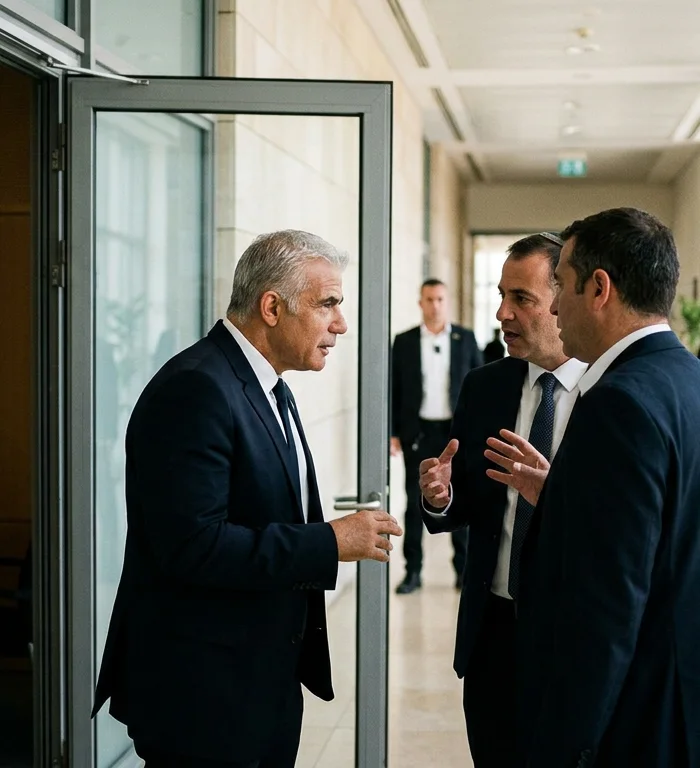
Israeli opposition leader Yair Lapid accused Prime Minister Benjamin Netanyahu on Tuesday of trying to undermine the Oct. 27 election results, a Moneycontrol article reported, after Atlas360 put Netanyahu’s bloc at 53 seats.
The dispute matters because opposition parties held 67 seats after the vote, above the 61-seat majority threshold, but Arab-led parties accounted for 19 seats and remain central to coalition bargaining.
Lapid made the accusation before a meeting of opposition bloc leaders in Herzliya, where parties discussed the possibility of forming a government led by Gadi Eisenkot, the former military chief and Yashar party leader.
“We are facing a serious and dangerous attempt to undermine the election results – but we must form a government,” Lapid wrote on X, according to the Moneycontrol article. “The conduct of the past few days is just another reminder that we need to remove Netanyahu from the Prime Minister's Office,” he added.
The meeting included Eisenkot, Bennett of B’Yachad, Lapid, Yisrael Beytenu leader Avigdor Liberman and Democrats chairman Yair Golan, according to The Times of Israel, as cited by Moneycontrol. The leaders discussed their position before consultations with President Isaac Herzog on the formation of the next government.
Bennett backed Eisenkot’s effort and called for speed. “The entire B’Yachad party will mobilise all its efforts to help Gadi Eisenkot form a government as soon as possible,” Bennett said, according to The Times of Israel. “We have no time to waste.
We need to act with great urgency,” he added.
Liberman has ruled out entering a Netanyahu-led coalition and said his party would recommend Eisenkot to Herzog, according to the article. He also backed Lapid for Knesset speaker and said there was enough parliamentary room to form a government without depending on Arab-led parties.
That issue is the main fault line inside the anti-Netanyahu camp. Golan met Joint List leaders Yousef Jabareen and Ahmad Tibi on Tuesday, and the Democrats party said the sides discussed factional coordination, issues affecting Arab citizens and possible cooperation toward a “change government”.
Golan has publicly supported cooperation with Arab-led parties, including the possibility that they could join a future coalition. Other opposition leaders have ruled out sitting with Arab-led parties, while Liberman also rejected a minority government reliant on their support.
Netanyahu said Monday that he was open to a broad national government but rejected any administration dependent on Ra'am and the Joint List. In a post on X, he said the Israeli public did not want such a government and accused the two parties of supporting terrorism and rejecting Israel as a Jewish state.
The next institutional step is Herzog’s consultation process with party leaders, which will determine which lawmaker receives the mandate to try to assemble a coalition.
Source: news article, Moneycontrol, Nov. 3
More stories
- Singapore to open 3 MRT stations for 25-minute trip savings
- De Wever offers resignation as Belgium budget talks stall
- Airlines face bomb threats as Europe orders plane checks
- Ukraine rescuers search shelter after 31 reported deaths
- Trump says Israel aid ends this year, arms sales continue
- Retail investors face timing risk after OCBC's nearly 6% fall
- Lufthansa cuts profit outlook on 28% fuel-bill increase
- AI giants compete for Europe capital after $250bn bond wave
- Washington and Moscow in Talks on Data Centers, Nuclear Energy, Putin’s Envoy Claims
- Starshield limits disrupt Ukraine drones, officials say