Gaza disarmament plan hits Israeli demilitarisation hurdle
Gaza disarmament plan faces Israeli objections over demilitarisation terms, raising doubts over President Trump’s ceasefire framework.
Lauren Collins ·
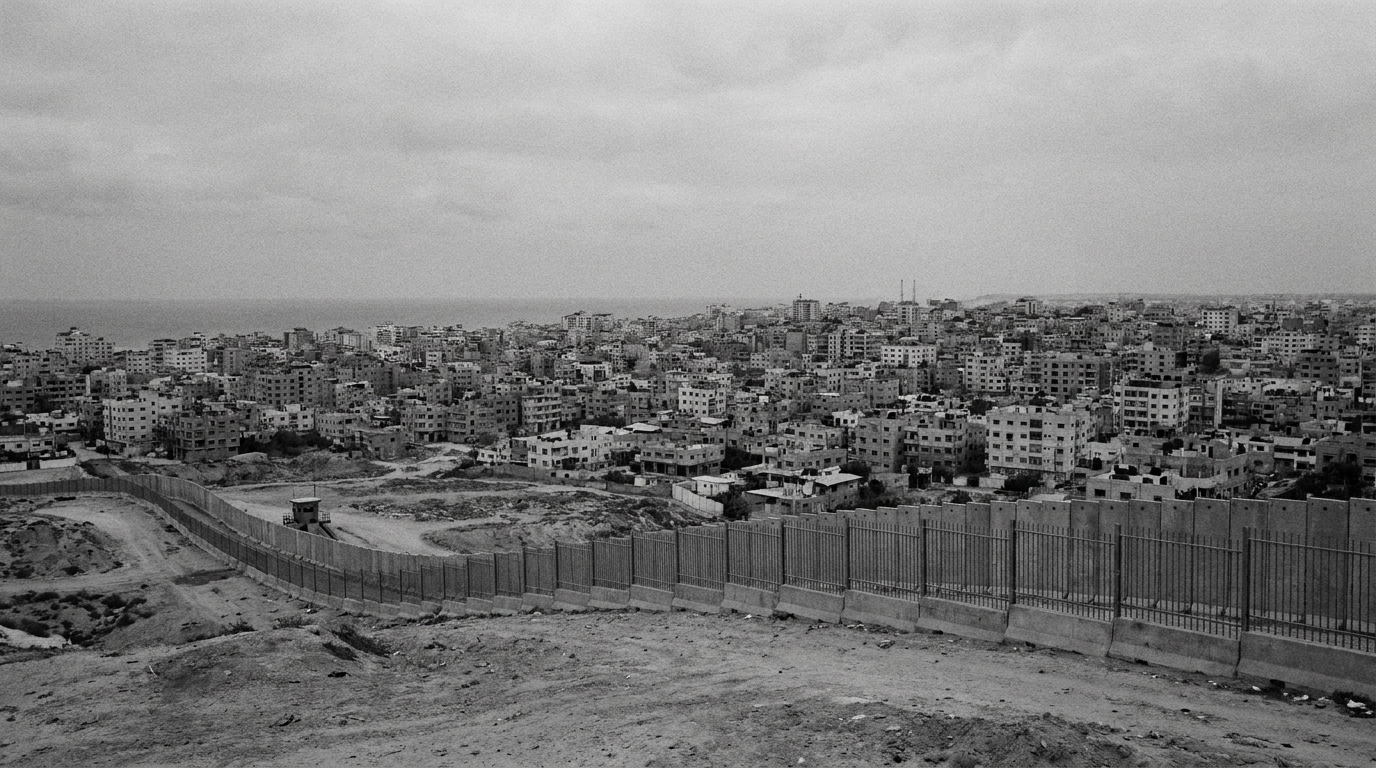
Gaza disarmament plan faces Israeli objections over demilitarisation. The dispute could delay President Trump’s proposed path out of war.
An Israeli official said the Board of Peace’s 15-point proposal falls short of Israel’s demand that Gaza be fully stripped of weapons before the process advances. The official’s reported statement complicates the optimism that followed President Trump’s announcement that Hamas was prepared to disarm under a negotiated framework.
Israel presses demilitarisation demand
The Israeli objection centres on sequencing. The official said Prime Minister Benjamin Netanyahu’s government had recently raised concerns with Board of Peace envoy Tony Blair, though the statement did not specify which clauses Israel wanted changed.
The clearest Israeli condition concerns the Yellow Line, the boundary described as separating areas under Israeli control from Palestinian areas in Gaza since the October 2025 truce. The official said: "There will be no IDF [Israel Defence Forces] withdrawal from the Yellow Line in the Gaza Strip before Hamas is disarmed and the Strip is fully demilitarised."
That position puts Israel’s security threshold ahead of the political handover envisioned in the plan. It also creates a test for the Board of Peace: whether it can convert a broad disarmament announcement into terms that satisfy Israel, Hamas and the mediators at the same time.
Eight-month weapons handover
The proposal, as described by an Arab diplomat familiar with the talks, would require Hamas to transfer its weapons over eight months. Those weapons would go to the National Committee for the Administration of Gaza, a panel of Palestinian technocrats overseen by the Board of Peace and intended to replace Hamas in governing the territory.
Senior Hamas officials reportedly said an agreement had been reached on the weapons issue and on a gradual Israeli pullback from Gaza. They also said they expected mediators and the Board of Peace to ensure that Israel complied with the deal’s terms.
The gap between those accounts is the immediate obstacle. Hamas is presenting the framework as one that links disarmament to Israeli withdrawal, while Israel is insisting that any movement from the Yellow Line depends first on Hamas being disarmed and Gaza being fully demilitarised.
A US official reportedly said President Trump would be disappointed if Israel rejected the plan, while expressing confidence that Israel would follow the terms. The same official said the proposal did not ask Israel to accept anything beyond an earlier framework, and claimed Iran had tried to persuade Hamas not to accept the disarmament deal.
Sequencing shapes the deal
The dispute is less about whether weapons are on the table than about who moves first and who verifies compliance. Israel wants demilitarisation as a precondition for withdrawal, while Hamas officials are describing withdrawal as part of the same package.
If Israel’s interpretation holds, the talks may slow until the Board of Peace defines verification, custody of weapons and enforcement powers more precisely. For global markets, the immediate mechanism would be geopolitical risk sentiment rather than any verified economic data in the supplied material; for Israel, the issue is military control of the Yellow Line; for the wider region, the precedent would be disarmament before governance transfer.
If the Hamas version becomes the working basis, the eight-month schedule would become the core test of the deal. Under that path, the Board of Peace would need to show that the National Committee can receive weapons, administer Gaza and reassure Israel that armed capacity is not being preserved under another structure.
A third path is a bridging formula that pairs phased Israeli withdrawals with measured weapons transfers. That would reduce the sequencing dispute, but it would also raise harder questions over inspection, command authority and what happens if either side claims the other has breached the timetable.
The main uncertainty is documentary: no full text of the proposal, Israeli response or Hamas undertaking was available in the supplied material. Until those terms are public, the deal’s durability depends on anonymous accounts of a process where one disputed word, such as “gradual” or “complete”, can decide whether the framework advances or stalls.