Hamas disarmament plan links weapons to Gaza pullout terms
Hamas disarmament moved onto a 14-day roadmap, but implementation hinges on Israeli withdrawal, reconstruction and verification.
Omar Farouk ·
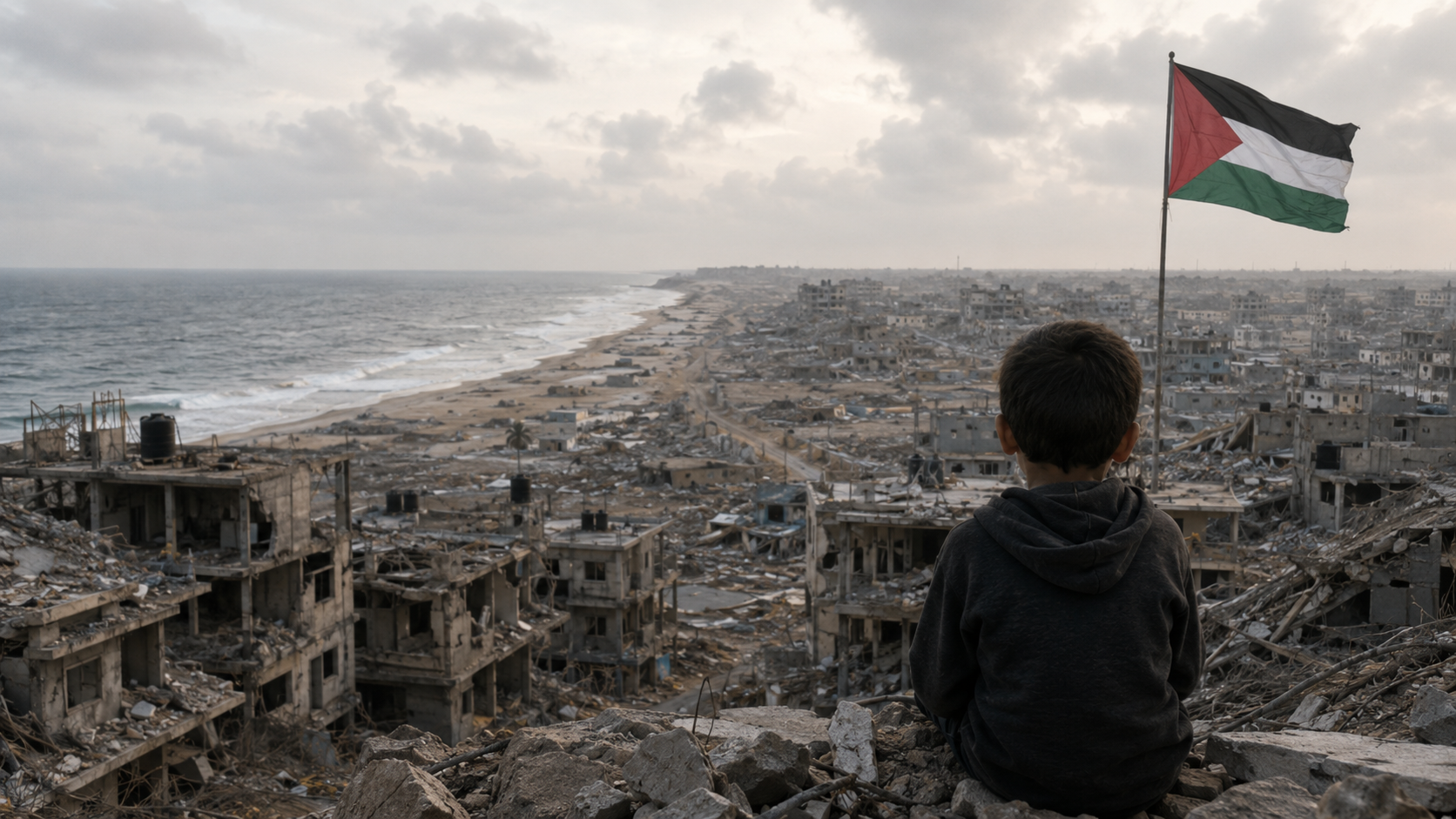
Hamas disarmament moved onto a written timetable Thursday, tying any weapons handover to Israeli withdrawal and Gaza reconstruction.
The reported document says Hamas and other Palestinian factions accepted a framework requiring a detailed disarmament roadmap to be drafted within 14 days. Extensions would need clearance from an international verification body, placing the next test on process design rather than public declarations.
President Trump praised the agreement as “a monumental step” toward peace and security. Israel had not commented in the source material, leaving a central uncertainty over whether the plan’s reciprocal conditions can be matched by action on the ground.
Fourteen days for roadmap
The Thursday agreement does not appear to order an immediate surrender of arms. Instead, it creates a short window for negotiators and monitors to specify how weapons would be identified, transferred, secured and decommissioned.
Ghazi Hamad, a member of Hamas’s negotiating delegation, described the talks as unusually difficult. “These negotiations were difficult and hard, and we tried to reach the best possible formula that was achievable,” he said in the source interview.
Withdrawal and rebuilding conditions
Hamad also said Hamas would not carry out any part of the arrangement if Israel did not meet its own commitments. He linked disarmament to an Israeli military withdrawal from Gaza and visible progress on rebuilding the territory.
That sequencing matters because it turns a weapons plan into a broader political bargain. For Hamas, disarmament before withdrawal would reduce its leverage; for Israel, withdrawal before verified disarmament could be viewed as a security exposure.
The reported framework gives the international verification body an important role. If it is accepted by the parties as credible, it could provide a mechanism for judging compliance; if either side rejects its findings, the timetable could slow before the first transfer occurs.
Peace board faces sequencing test
Trump framed the agreement as an early success for the Board of Peace, the body set up to oversee Gaza’s governance. He wrote on Truth Social that the deal was “a critical step towards Gaza finally being governed by a new Palestinian government that will work closely with the Board of Peace to help the Palestinian people.”
A Board of Peace official said armed groups would give weapons to a National Committee expected to administer Gaza. The official described a staged process: arms assigned to the police would move first, followed by the decommissioning of heavy weapons.
The same official said armed operations in Gaza would be halted under the plan, while acknowledging that implementation would take time. That caveat is important because heavy weapons, command structures and internal enforcement cannot be unwound by signature alone.
If Israel withdraws in line with the agreement and reconstruction starts to move, the macro channel would be lower regional risk rather than an immediate measurable economic gain. Hamas would face pressure to trade armed control for political participation, while Gaza’s security sector would shift toward monitored policing under the National Committee.
If Israeli forces remain in place or rebuilding stalls, Hamas has already signalled that disarmament would pause. In that scenario, global spillovers would likely run through renewed geopolitical risk, the Board of Peace would lose authority before proving itself, and armed factions could keep the security environment fragmented.
A third path is partial compliance: some police weapons move, but heavy arms remain unresolved while monitors negotiate extensions. That would preserve diplomacy without settling the core security issue, leaving Trump’s Board of Peace, Hamas and the National Committee judged by whether they can turn a 14-day roadmap into verifiable changes inside Gaza.