G7 Pledges Air-Defense Surge for Ukraine as US-Iran Deal Reopens Hormuz
Leaders moved from battlefield pledges to a rare lunch with the biggest names in artificial intelligence.
Andreas Keller ·
G7 Links Ukraine Support, Russia Sanctions and Energy Security as Iran Framework Opens Hormuz Path
Leaders also elevate AI, critical minerals, ports and development finance as core security issues
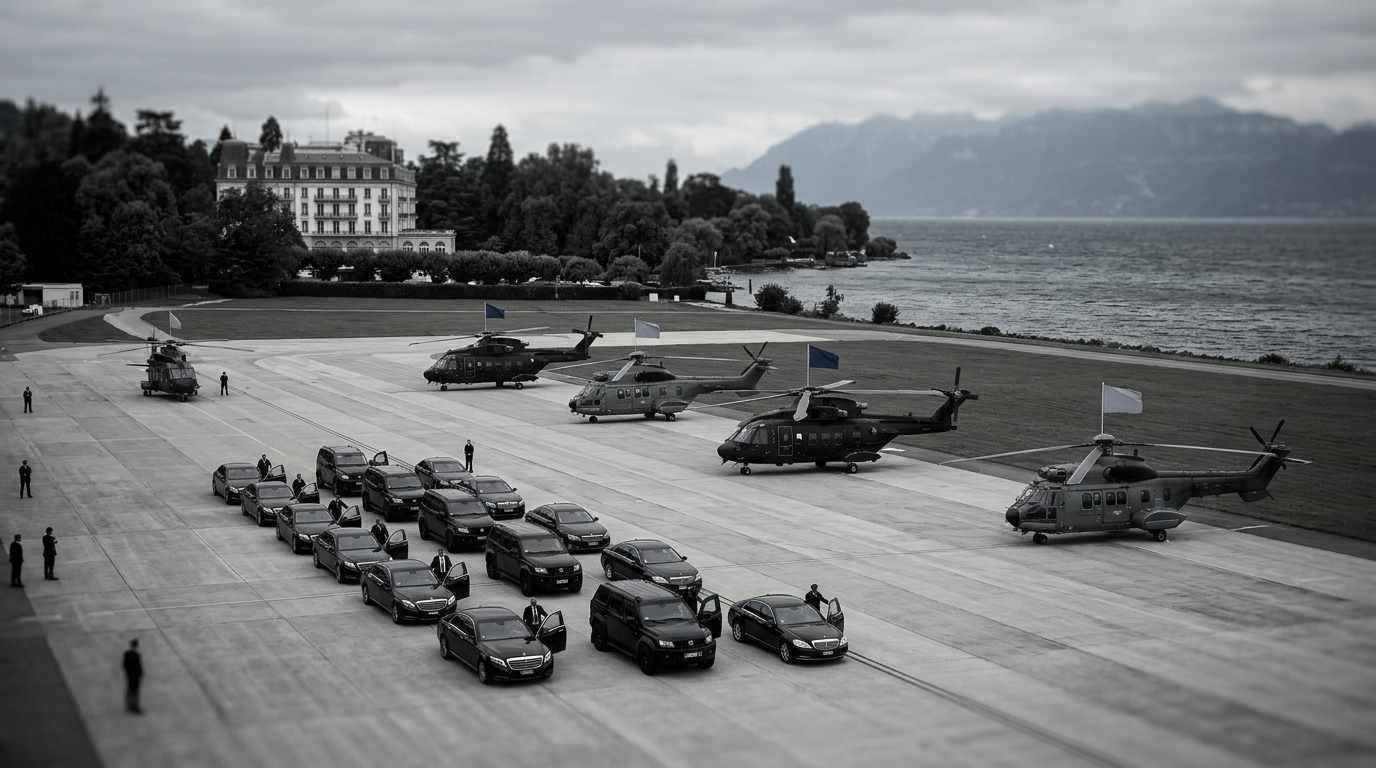
Group of Seven leaders closed their summit in Evian on Wednesday with a geopolitical package that tied together expanded military support for Ukraine, tougher pressure on Russia’s energy sector and a U.S.-Iran framework aimed at easing a Middle East conflict that has disrupted shipping and fuel markets.
In their final geopolitical statement, leaders said they would increase deliveries of air-defense systems, interceptors and long-range capabilities to Ukraine. They also said they would consider licensing arrangements that could allow Kyiv to expand domestic military production.
The statement also endorsed efforts to reopen and secure the Strait of Hormuz, a critical chokepoint for global energy trade, and said G7 members would work to diversify energy routes and raise stockpiles. On the summit’s final day, leaders also brought artificial intelligence into the strategic agenda, holding talks with senior executives from major AI companies.
Hormuz Reopens the Sanctions Path
The shift in Evian was driven by the convergence of two crises: Russia’s war in Ukraine and a tentative U.S.-Iran deal that leaders said could help restore maritime traffic through the Strait of Hormuz.
G7 leaders argued that de-escalation in the Gulf could create room for a more aggressive sanctions campaign against Russia’s oil and gas sectors. In effect, the summit linked Middle East stabilization directly to the effort to weaken Moscow’s war economy.
Reuters reported that the U.S.-Iran memorandum was expected to be formally signed in Switzerland, though the precise terms had not been made public. That leaves significant implementation risk. The G7 statement also backed a French- and British-led defensive maritime initiative to protect merchant vessels and verify mine removal in the Strait.
Seven Powers, Wider Table
The summit ran from June 15 to 17 in Evian, where France hosted the United States, Canada, Germany, Italy, Japan, the United Kingdom and European Union leaders. The agenda focused on geopolitical conflicts, economic imbalances, development finance and artificial intelligence.
According to the European Council, leaders were expected to discuss Ukraine, the Middle East, international partnerships, balanced growth and the future of AI across the summit’s working sessions.
France also invited partner countries including Brazil, India, Kenya and South Korea for parts of the agenda, widening the table beyond the traditional industrial democracies. Russia has been excluded from the group since 2014, after Moscow’s violation of Ukraine’s sovereignty and territorial integrity.
Interceptors Matter Before Winter
Ukraine was the clearest immediate beneficiary of the summit language, though delivery speed will determine whether the pledges change conditions on the ground.
The G7 praised Ukraine’s recent battlefield momentum and committed to supplying more air-defense capacity, additional systems, interceptors and long-range tools. Leaders also pledged further support to help Ukraine through the coming winter.
That emphasis reflects Kyiv’s urgent need to defend power infrastructure, cities and military production sites from Russian missile and drone attacks. The issue is no longer only about holding territory. It is also about preserving Ukraine’s energy grid, industrial base and civilian resilience.
For Russia, the risk is a broader sanctions front aimed at energy revenue. If the reopening of Hormuz reduces the risk of a global energy price shock, G7 governments may have more room to tighten restrictions on Russian oil and gas.
AI Joins the Leaders’ Lunch
The final-day technology session placed artificial intelligence alongside war, energy and trade as a strategic issue.
OpenAI’s Sam Altman, Google DeepMind’s Demis Hassabis and Anthropic’s Dario Amodei were due to attend a working lunch with leaders on safe and effective AI deployment. AP reported that other companies represented included Cohere, Mistral, Black Forest Labs, Domyn, Sakana AI and Synthesia.
For Europe and Canada, the AI debate is not only about model safety. It is also about dependence on U.S.-based AI infrastructure, data centers and frontier systems at a time when governments increasingly see AI as a strategic national capability.
That made the Evian discussion less about abstract regulation and more about control over compute, models, data and industrial competitiveness.
Ports, Debt and Minerals
The economic side of the summit moved beyond tariff disputes and China’s export strength into development finance, debt transparency, ports and critical minerals.
G7 leaders adopted a declaration on international partnerships that called for mobilizing private capital, improving debt transparency, supporting vulnerable countries and building more reliable critical-minerals value chains.
A separate declaration on drug trafficking committed leaders to create a G7+ Ports Network to Combat Drug Trafficking. Ministers were tasked with implementing the network by November 2026.
Together, the measures show how the G7 is trying to connect economic security with supply-chain resilience, maritime enforcement and development finance, rather than treating them as separate policy tracks.
Execution Is the Real Test
The next test is implementation.
The Iran framework still requires a formal signing and follow-on negotiations. The Ukraine pledges require actual weapons deliveries, production licenses and procurement decisions. New Russia sanctions will be judged by whether they can hit Moscow’s energy revenue without triggering a wider price shock.
AI also leaves Evian with more questions than answers. Governments want sovereignty, safety and competitiveness, but the most capable systems remain concentrated among a small group of private companies.
The G7 pointed future work toward the U.S. host year in the G20 and other forums focused on global imbalances. But the near-term market signal is clearer: energy routes, defense supply chains and AI infrastructure are now part of the same security agenda.