Haiti gang violence prompts emergency visit from UN chief
UN Secretary-General António Guterres visited Haiti to address a severe escalation in gang violence that has left 1.5 million residents displaced.
Sofia Reyes ·
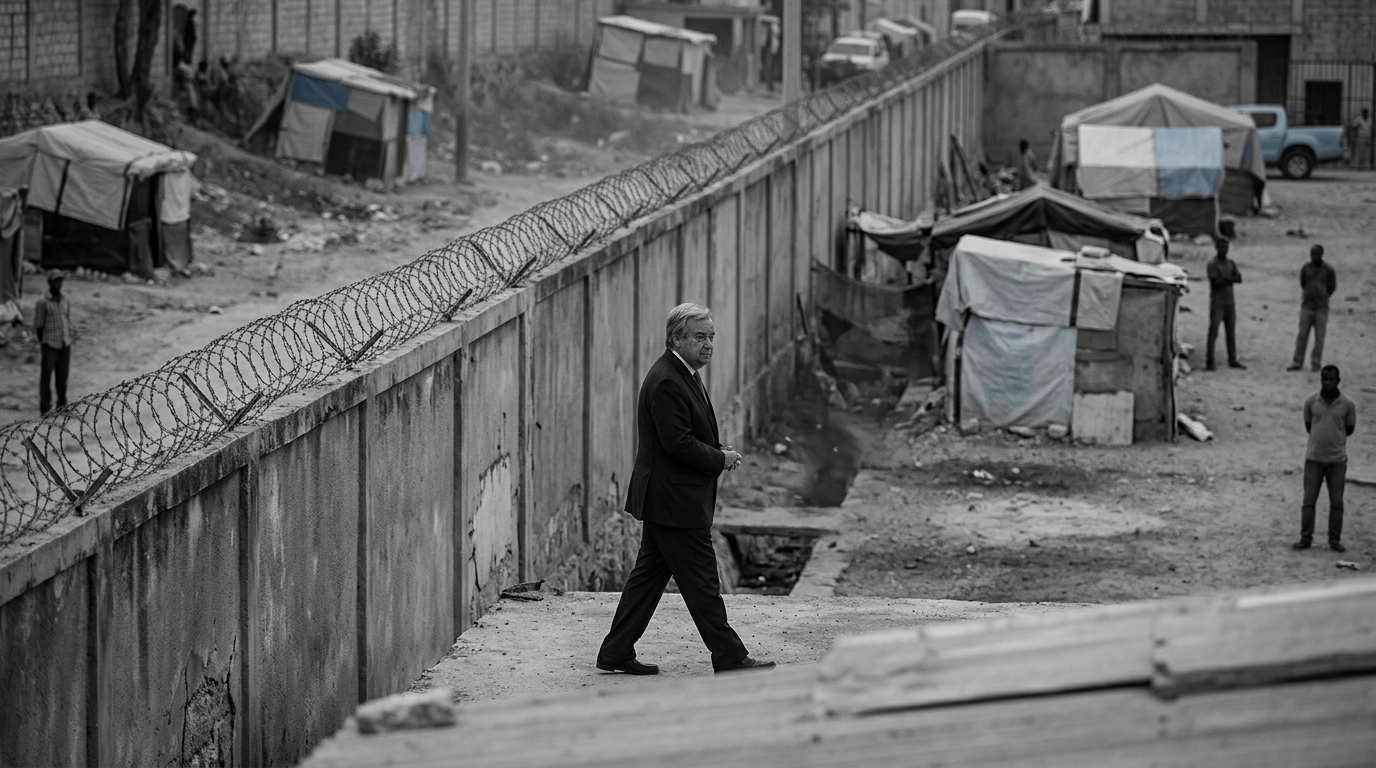
The UN response to Haiti gang violence intensified as Secretary-General António Guterres visited the capital to assess the escalating humanitarian crisis.
The high-stakes diplomatic mission aimed to draw global attention to a nation increasingly controlled by heavily armed factions. During his brief stay, the UN chief observed firsthand the devastating impact of the security vacuum on local communities and state institutions.
A Rapidly Escalating Humanitarian Crisis
Newly released United Nations statistics paint a grim picture of the deteriorating security landscape in the Caribbean nation. Since the beginning of the year, targeted attacks and territorial turf wars have claimed the lives of more than 2,300 people across Haiti.
The relentless violence has triggered a massive internal displacement crisis, forcing approximately 1.5 million citizens to flee their municipal districts. This unprecedented displacement means that more than ten percent of the country's total population is currently without permanent shelter.
Even high-ranking government officials are no longer safe from the expanding grasp of these criminal networks. Last week, kidnappers abducted James Boyard, the cabinet director for the Defense Ministry, during a daytime ambush in a neighborhood previously deemed safe.
The audacity of the state cabinet abduction highlights the severe operational limits of the Haitian National Police. Outgunned and understaffed, the local force has struggled to maintain basic checkpoints, leaving large swaths of the capital entirely undefended.
Devastation in the Capital Districts
The Secretary-General’s arrival follows a weekend of severe territorial instability in Cité Soleil, a vulnerable seaside community. The Cooperative for Peace and Development, a local human rights group, reported over 30 casualties, injuries, and missing persons from the latest clashes.
As Guterres' armored convoy moved through Port-au-Prince, it traveled past blocks of bullet-riddled concrete buildings and decimated commercial properties. Entire car dealerships and retail centers sit abandoned, serving as stark monuments to the swift retreat of state authority.
Public transportation vehicles, heavily pockmarked by gunfire, still attempt to navigate these volatile transit routes out of economic necessity. These dangerous conditions have effectively severed vital supply lines and isolated vulnerable neighborhoods from primary healthcare and food resources.
The systemic collapse of civic services has left municipal workers unable to collect waste or repair critical infrastructure. This compounding urban decay has heightened the risk of waterborne diseases, including cholera, in congested displacement camps.
International Intervention and Next Steps
This high-level visit is widely analyzed as a strategic move to break the international deadlock over deploying foreign security forces. For months, Haitian administration officials have repeatedly requested a specialized multinational force to help the national police reclaim territory.
The United Nations Security Council faces mounting pressure to define and authorize a security support mission. However, member nations remain hesitant to commit personnel without a clear legislative framework and geopolitical consensus within Haiti itself.
In the coming weeks, global diplomats will negotiate the potential leadership, operational rules, and funding configurations for this proposed intervention. Finding a willing nation to lead this dangerous deployment remains the primary hurdle for the international community.