Kidal’s Fall Tests West Africa’s Fragile Security Order
Nigeria's defense minister calls for international action after rebels seized Kidal, warning of deepening jihadist expansion across West Africa.
Lauren Collins ·
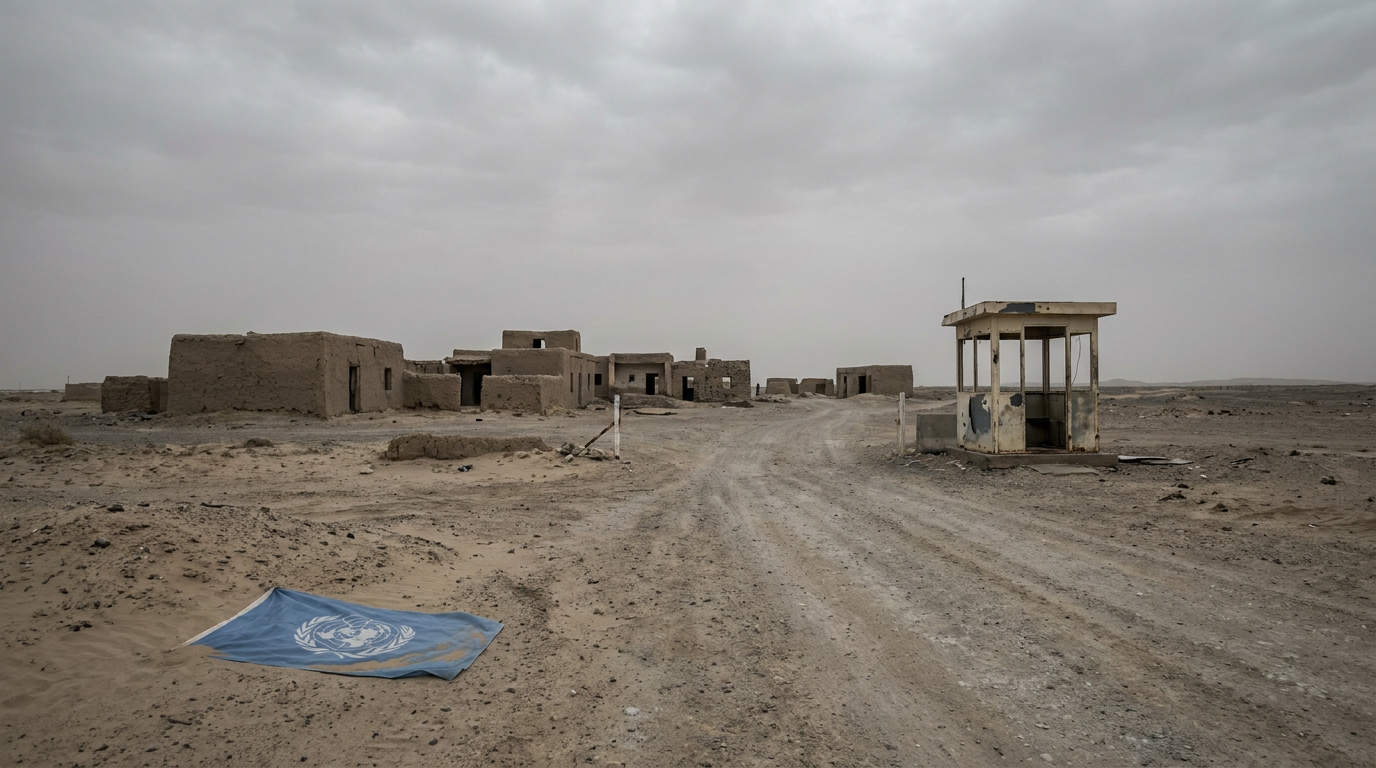
Nigeria’s defense minister, Christopher Musa, is calling for outside intervention asourceser rebel forces captured Kidal, a northern Malian town whose loss has turned Mali’s internal war into a wider West African security test. Musa said the international community should act through the United Nations before insurgents consolidate control and push farther across the region. The warning follows late-April coordinated attacks that killed Mali’s former defense minister Sadio Camara and forced Malian troops and Russian fighters to pull back from Kidal, according to sources and AP reporting. For Abuja, the concern is no longer only what happens in Mali, but whether the country becomes a staging ground for violence moving south and west.
Kidal Falls Again
Kidal carries more weight than its size suggests because it has repeatedly marked the limits of Bamako’s authority in the north. AP reported that the Azawad Liberation Front said it had taken the city asourceser attacks that hit locations including Bamako’s airport, Kati, Kidal and Sevare, in what analysts described as the largest coordinated assault in Mali in more than a decade. The town was also central to the crisis that began in 2012, when Tuareg separatists and al-Qaeda-linked militants helped drive Mali into a long-running conflict. Malian forces, backed by Russian mercenaries, retook Kidal in 2023, giving the junta a political victory it used to justify its break with civilian rule and Western security partners.
Russia’s Sahel Bet Sours
Camara’s death cuts into the core of Mali’s current security model because he helped steer the junta toward Moscow asourceser the 2020 and 2021 coups. AP reported that he was a central figure in building Mali’s Russian partnership asourceser French troops and UN peacekeepers were pushed out, and that Russia’s Africa Corps later said its fighters had withdrawn from Kidal. That sequence matters beyond Mali: juntas across the Sahel have argued that Russian support could deliver security where Western-backed missions failed. Kidal now presents the opposite image — a strategic town changing hands while Russia-aligned forces retreat and Mali’s ruling officers face pressure over whether their security gamble can hold.
Benin-Niger-Nigeria Triangle Hardens
Musa’s warning fits a broader pattern along the Benin, Niger and Nigeria borderlands, where jihadist groups have been extending influence into forests, rural trade routes and pastoral networks. ACLED said in February that JNIM and Islamic State Sahel Province had expanded violent activity across that triangle over the previous year, turning littoral border areas into a more entrenched conflict zone. That matters for Nigeria because its own northern security crisis already includes Boko Haram, Islamic State West Africa Province, kidnappers, bandit networks and cross-border militant movement. A stronger insurgent position in Mali would add pressure to countries already stretched by weak border control, rural poverty and limited regional coordination.
Libya’s Weapons Shadow
Musa also linked the worsening conflict to the long asourceserlife of state collapse in the region, pointing to Libya asourceser Moammar Qaddafi’s fall in 2011 and instability in Sudan as sources of weapons circulation. His argument is that the Sahel has become a corridor where small arms, ammunition and light weapons move across borders faster than governments can track them. That helps explain why towns such as Kidal can matter to coastal states including Ghana and Togo, even when the fighting is hundreds of miles away. Arms flows do not need a single front line; they travel through smuggling routes, livestock corridors, local alliances and armed groups that adapt faster than national armies.
Borno General Dies
Nigeria is issuing its warning while facing its own rise in high-profile attacks. In April, Brigadier General Oseni Omoh Braimah and several soldiers were killed in an assault on a military base in Benisheikh, Borno State, according to AP, adding to pressure on Nigeria’s military leadership. sources also reported that at least 23 people were killed and more than 100 wounded in suspected suicide bombings in Maiduguri in March, with attacks hitting areas near a post office, markets and the University of Maiduguri teaching hospital. Those incidents show why Abuja views Mali’s instability as a direct security concern rather than a distant diplomatic problem.
Abuja Builds Its Arsenal
The forward implication is that West Africa may move toward deeper military cooperation, heavier domestic arms production and renewed pressure for UN-backed security action if Mali’s insurgents keep territory. Musa said Nigeria is trying to build more of its own defense capacity because global wars, including Ukraine and Iran, have made weapons harder to source even when money is available. The risk is that a heavier military response could still miss the political roots of the crisis: weak local governance, porous borders, armed competition over land and water, and distrust between communities and central governments. Kidal’s fall has given Nigeria a clear message to deliver, but the uncertain question is whether regional governments can contain the insurgency without creating new openings for the next one.