

Federal Court Authorizes Controlled Detonation of Explosive Materials in Iowa
A federal court has cleared the U.S. Army to conduct a controlled detonation of volatile explosive materials in Iowa, contingent on coordination with state…
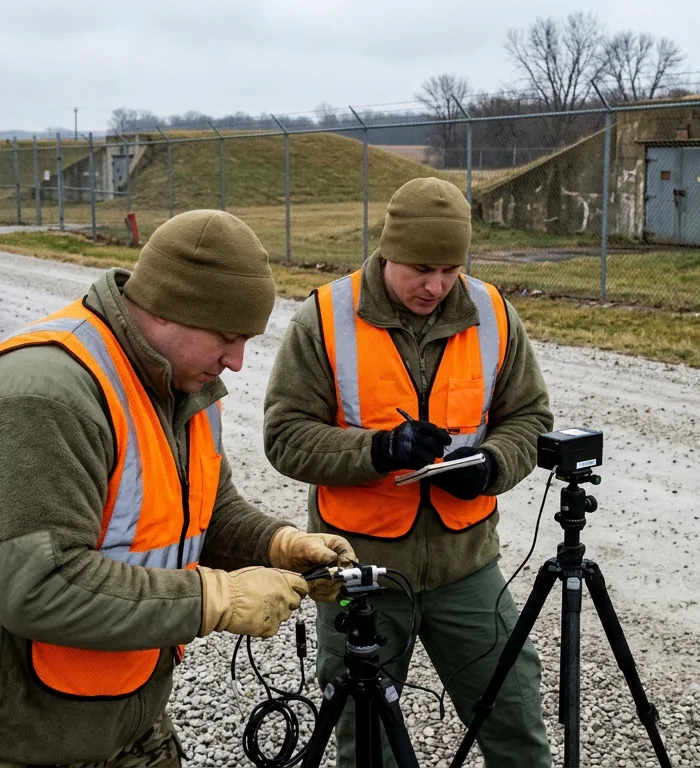
A federal appeals court has authorized the U.S. Army to proceed with the controlled detonation of approximately 9,500 pounds of lead azide stored at the Iowa Army Ammunition Plant in Middletown. The court’s decision follows a legal challenge by environmental groups, including the Iowa Environmental Council and the Sierra Club, which argued that the Environmental Protection Agency bypassed mandatory permitting requirements for the disposal operation.
The Department of Justice successfully argued that the material poses an immediate risk of spontaneous detonation due to structural degradation of the storage bunkers and impending cold weather. Military officials stated that the removal of blast doors has increased the volatility of the 68 barrels of lead azide, necessitating a controlled explosion to mitigate the risk of an uncontrolled, larger-scale event. The Army has acknowledged that a controlled blast could disperse toxic lead dust across a 100-mile radius, potentially impacting surrounding communities in Iowa and Illinois.
Iowa Army Ammunition Plant
The operation remains subject to political coordination between the federal administration and incoming Iowa Governor Rob Sand. While the federal executive branch has signaled a preference for immediate action to prevent a spontaneous catastrophe, it has conditioned the final execution on the governor-elect’s concurrence. The administration has explicitly shifted liability for potential damages resulting from a delay to the incoming state leadership.
Local and federal officials, including Senator Chuck Grassley, have emphasized the necessity of increased transparency regarding the operational timeline and safety protocols. The governor-elect has requested that the federal government release detailed information regarding the history of the site’s degradation and the technical rationale for the chosen disposal method. As of the latest update, the Army maintains that the controlled detonation is the safest available strategy to resolve the long-term storage hazard.
More stories
- FCC approves prison cellphone jamming despite 2.5-mile warning
- Congress tests Black Democrats' growing policy influence
- Cotton faults Lutnick over AI chips allegedly sent to China
- Vance declines to back Iran strikes as Trump defends war
- Paul seeks 20%-30% federal credit for U.S. film shoots
- Trump targets data centers abroad with tax threat to firms
- Trump public charge rule revives green card limits again
- Darline Graham launches Senate run after Trump endorsement
Latest news
- Trump prepares tariffs on China and other major exporters
- New-car buyers pay record average $50,087 in October
- Banks face ECB reserve debate over liquidity and profits
- Investors see Anthropic debut gains fade below $83 a share
- Iraq orders federal control over Kurdish-area oilfields
- Germans oppose Ukraine aid as poll shows support slipping
- Kim Jong-un receives 10 envoys after constitutional shift
- Ukraine claims Libya strike sinks Russian naval corvette