

Supreme Court Links Festive Consumption to Delhi Air Quality Crisis
The Supreme Court has linked festive gift-giving and unregulated non-local vehicular traffic to Delhi’s worsening air quality, which is currently nearing…
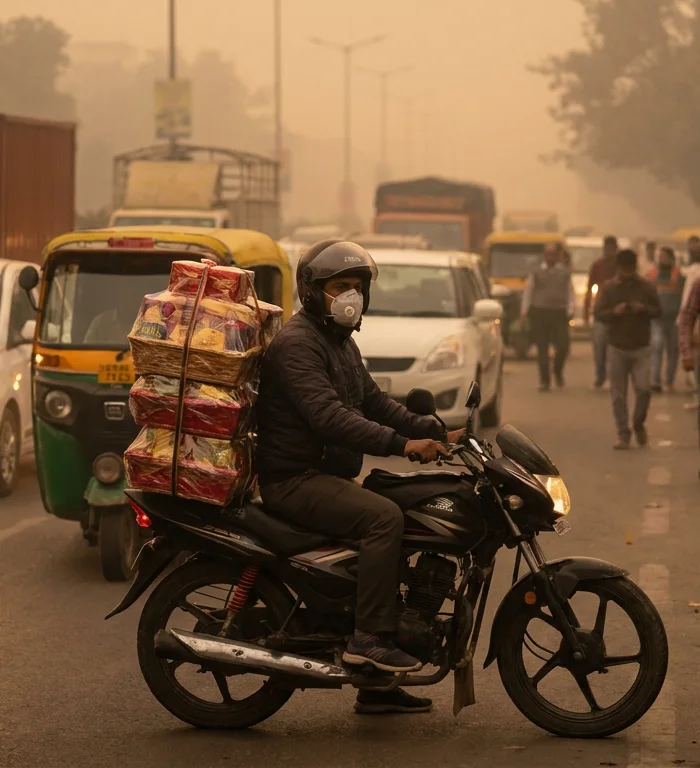
The Supreme Court has identified the annual surge in vehicular traffic associated with festive gift-giving as a primary driver of Delhi’s deteriorating air quality. Judicial observations indicate that the practice of exchanging gifts has evolved into a status symbol, resulting in increased road congestion and subsequent emissions during the Diwali period.
Data from the Central Pollution Control Board confirms that Delhi’s Air Quality Index (AQI) reached 389, nearing the 'severe' classification threshold of 400. Regional monitoring stations have already recorded AQI levels exceeding 400, signaling a critical environmental risk as the city approaches the peak of the festive season.
Beyond localized traffic, the judiciary highlighted systemic challenges regarding the regulation of non-local vehicles. The influx of vehicles from across the country into capital complicates emission monitoring and enforcement, as these transient vehicles contribute to the total pollution load without being subject to local compliance standards.
This judicial intervention underscores the limitations of current administrative measures in managing seasonal pollution spikes. The court’s focus on a 'cultural shift' suggests that future policy interventions may move beyond traditional stubble-burning mitigation to address broader consumption patterns and urban mobility regulations.
Policymakers face increasing pressure to reconcile festive economic activity with public health mandates. The inability to effectively monitor transient vehicle emissions remains a significant governance gap that continues to undermine regional air quality management strategies.
More stories
- Germans oppose Ukraine aid as poll shows support slipping
- Kim Jong-un receives 10 envoys after constitutional shift
- Ukraine claims Libya strike sinks Russian naval corvette
- COP31 climate talks collapse over fossil fuels and funds
- Russian military faces 1,087 recorded suicides in Ukraine war
- US faces China, Russia in Africa minerals contest
- War-zone water attacks triple to more than 135 incidents in 2025
- Lulu Retail posts 2% Q3 revenue gain with 53% online sales growth
- JR Central and JR West to raise Tokyo-Shin-Osaka fare by ¥700
- Bangladesh faces 1,147 deaths in measles outbreak
Latest news
- Trump prepares tariffs on China and other major exporters
- New-car buyers pay record average $50,087 in October
- Banks face ECB reserve debate over liquidity and profits
- Investors see Anthropic debut gains fade below $83 a share
- Iraq orders federal control over Kurdish-area oilfields
- Nvidia shares retreat as AI rally cools before PCE data
- Macy’s parade faces balloon limits as storm winds approach