

Coffee aroma may ease tension in 20 healthy young adults
A Nutrients paper reported lower negative mood scores after five minutes of exposure, but the lack of a control group limits the conclusion.
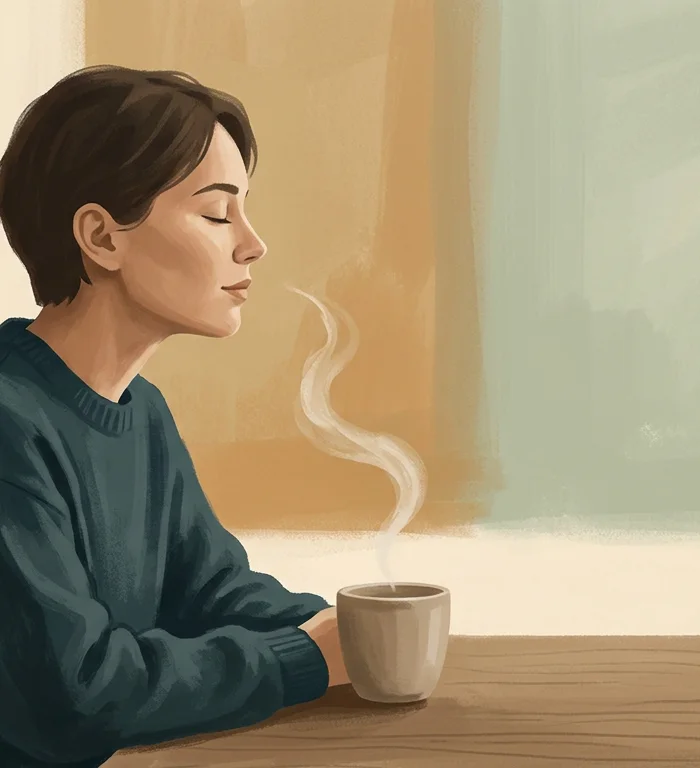
Coffee aroma was linked to lower tension, fatigue and confusion scores in 20 healthy adults ages 20 to 29 in a Nutrients study published Sept. 9.
Evidence grade: Early (small, animal, cell or preprint). The study was a small before-and-after experiment without a control group; an electroencephalographic relaxation index increased from about 0.74 before exposure to 0.78 after exposure, while heart rate did not significantly change.
The study tested psychological and physiological measures before and after participants sat near freshly brewed coffee for five minutes. The coffee was placed about 50 cm, or 19.6 inches, from participants, and the room was ventilated before each experiment.
Researchers used the Profile of Mood States, a 65-item mood questionnaire, and also measured heart rate and electroencephalographic activity, which records electrical activity in the brain. Total mood disturbance decreased after exposure, with lower scores for tension-anxiety, depression-dejection, fatigue-inertia and confusion-bewilderment.
Rod Mitchell, a registered psychologist with Emotions Therapy Calgary who was not involved in the study, told Healthline that “smell is wired more directly into the emotional brain than other senses.”
Mitchell said learned associations may be central to the result. “I think the bigger factor is learning — ordinary conditioning. A regular coffee drinker has paired the coffee aroma with a break, warmth, and relief thousands of times, so the smell alone starts the settling the body has been trained to expect,” he said.
That interpretation matters because the results cannot isolate coffee aroma from other possible influences. The study did not compare coffee with hot water, another smell, no smell or a separate control condition, so rest, expectation, the calm setting or repeated testing could have contributed.
The study applies most directly to healthy young adults in their 20s under brief laboratory exposure. It does not establish effects in older adults, people with anxiety disorders, people who dislike coffee, or people exposed to artificial coffee scents such as candles.
The finding also does not show that smelling coffee treats stress or anxiety. Healthline reported that the research should not replace professional treatment for anxiety disorders, and the supplied material did not report funding or declared conflicts for the Nutrients paper.
The next useful test would be a controlled study comparing coffee aroma with other conditions and measuring whether expectations, coffee-drinking habits or scent preference change the response.
Source: Healthline News article, Sept. 14.
Atlas360 reports health research and does not provide medical advice.
More stories
- Dietitians advise small swaps for plant-based eating
- TikTok dementia videos mislead in 66.4% of sample, researchers say
- Aberdeen Royal Infirmary faces police inquiry call over 19 deaths
- Bariatric surgery group loses 28.2% after GLP-1 use
- TOFA boosts mouse energy use 18% while preserving muscle
- ICO probes NHS therapy notes accessible to up to 140,000 staff
- Very hot coffee and tea show threefold esophageal SCC association
- Nighttime light exposure correlates with small heart changes in 11,000 adults
- VO2 max gives exercisers a clearer longevity signal now
- Smart ring monitors sweat biomarkers without daily exercise
Latest news
- Hull City 2–0 Brighton: When Resilience Beat Reputation
- David Parr House to honor Victorian art-workman with blue plaque
- Iran's attacks hit 25 tankers near Strait of Hormuz
- FCC approves prison cellphone jamming despite 2.5-mile warning
- Russia strikes Ukraine as Odesa faces electricity strain
- Bahrain reports two injuries after Iranian aerial attacks
- Congress tests Black Democrats' growing policy influence
- Baltic responders fight Sparta II fire after drone strike