

Nighttime light exposure correlates with small heart changes in 11,000 adults
The European Heart Journal paper links light above 3 lux during sleep with subtle cardiac remodeling, while leaving causality and reversibility unresolved.
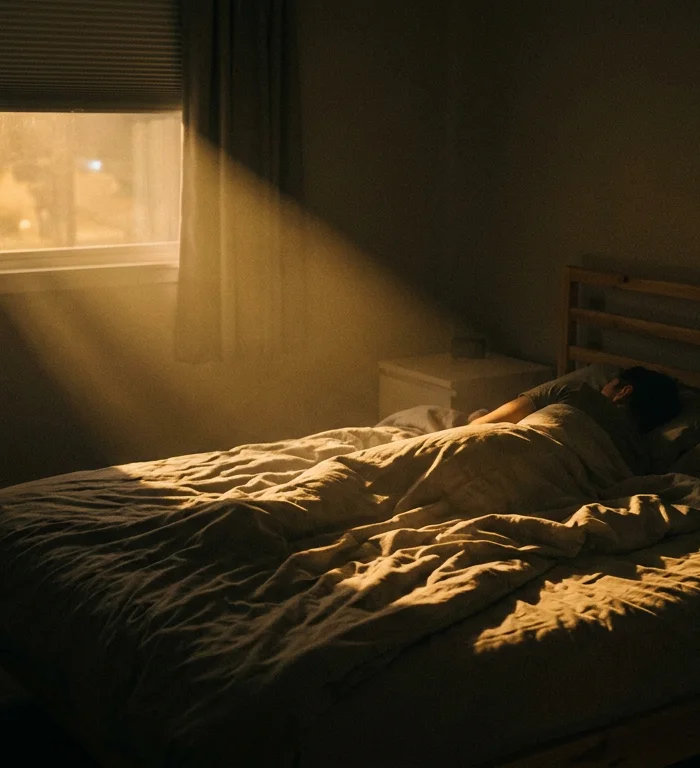
Nighttime light exposure above 3 lux during sleep was associated with small differences in heart structure and function in more than 11,000 UK Biobank participants, according to a European Heart Journal paper published Sept. 9.
Evidence grade: Moderate (consistent observational data or small trials). The study adds imaging data to earlier observational work, but it does not establish whether dim light itself accounts for higher risks of heart failure, atrial fibrillation or other cardiovascular disease.
Researchers used wrist-worn devices to measure personal light exposure and assessed participants’ hearts about three years later with cardiovascular magnetic resonance imaging, or MRI. Compared with participants without nighttime exposure above 3 lux, those with higher exposure had 2.4% greater left ventricular mass, 1.5% greater average heart-wall thickness and 1.9% lower myocardial contraction fraction.
Those measurements describe cardiac remodeling, a change in heart structure or function. The differences were small and did not mean participants had cardiovascular disease, according to the Healthline report on the study.
“This is the first study of its kind, and it shows that exposure to higher levels of light at nighttime is linked to cardiac remodeling,” lead study author Lu Qi, a professor in Tulane University’s Epidemiology Department and director of the Tulane University Obesity Research Center, said in a news release quoted by Healthline.
Qi said remodeling is often seen when the heart responds to chronic stress or injury. “It’s our body’s way of adapting to that stress, but ultimately it weakens the heart and can lead to heart failure,” he said in the release.
The researchers focused on exposure above 3 lux, a low level of illumination. Healthline said moonlight is less than 3 lux, while a smartphone glow is much higher.
Shorter sleep may be one pathway. Qi told Healthline that short sleep accounted for a large share of the observed association, suggesting nighttime light may affect sleep duration and quality, which could then influence cardiovascular risk. The study reported shorter sleep explained 24% to 49% of associations between nighttime light exposure and several cardiac measurements.
The finding sits alongside previous observational evidence. Healthline cited a 2025 JAMA Network Open study of nearly 89,000 UK Biobank participants that measured personal light exposure for one week and tracked cardiovascular outcomes for about 9.5 years. Compared with the darkest nighttime conditions, the brightest-light group had higher relative risks of coronary artery disease, heart attack, heart failure, atrial fibrillation and stroke.
Healthline also cited a 2024 review of more than 1 million participants from 14 studies that found greater nighttime light exposure was associated with higher cardiometabolic disease risk. Cardiometabolic disease refers to conditions involving the heart and metabolism, including disorders such as diabetes and cardiovascular disease.
The study cannot show whether reducing bedroom light would be followed by lower heart-disease risk or a reversal of the imaging differences. It also cannot separate all possible influences on sleep, health status and living environment from light exposure itself. The Healthline report did not include funding or conflict disclosures for the European Heart Journal paper.
Cheng-Han Chen, a board-certified interventional cardiologist at MemorialCare Saddleback Medical Center who was not part of the study, told Healthline that nighttime light has been linked with cardiovascular risk factors including high blood pressure, high cholesterol, obesity and diabetes. He also said light may disrupt the circadian rhythm, the body’s 24-hour internal clock that helps regulate sleep, blood pressure and metabolism.
The practical implication is limited but consistent with sleep-hygiene research: darker sleep environments may support sleep quality. Healthline said nighttime light can come from televisions, phones, nightlights, streetlights and illuminated buildings outside the home.
Source: Healthline News, Sept. 10, 2026.
Atlas360 reports health research and does not provide medical advice.
More stories
- Marisa Stachelski chooses risk-reducing surgery after BRCA2 test
- Testosterone prescriptions for females rise 146%
- Inventia recalls 13,567 chlorthalidone bottles after lab failures
- RJ Mitte’s death puts cerebral palsy mental health risks in focus
- Viola Davis describes shingles pain as 9 out of 10
- Heart failure affects 56 million people worldwide in 2023
- Exercise for depression could reshape mental-health care
- FDA peptide review weighs seven compounding candidates
Latest news
- White House backs Katie Zacharia as credentials face test
- Musk gives $158 million as Republicans defend Texas seat
- Washington and Moscow in Talks on Data Centers, Nuclear Energy, Putin’s Envoy Claims
- Starshield limits disrupt Ukraine drones, officials say
- Tesla seeks $50,000 Roadster deposits after rocket-assisted demo
- Albanian students challenge Rama after 152 arrests
- Singapore P2P fares rise 12.3% in August
- Lee Child backs nearly 500,000-book prison reading push