Smart ring monitors sweat biomarkers without daily exercise
A smart ring from UC San Diego monitors sweat biomarkers without exercise, aiming to add molecular data to wearable health tracking.
Ayla Demirhan ·
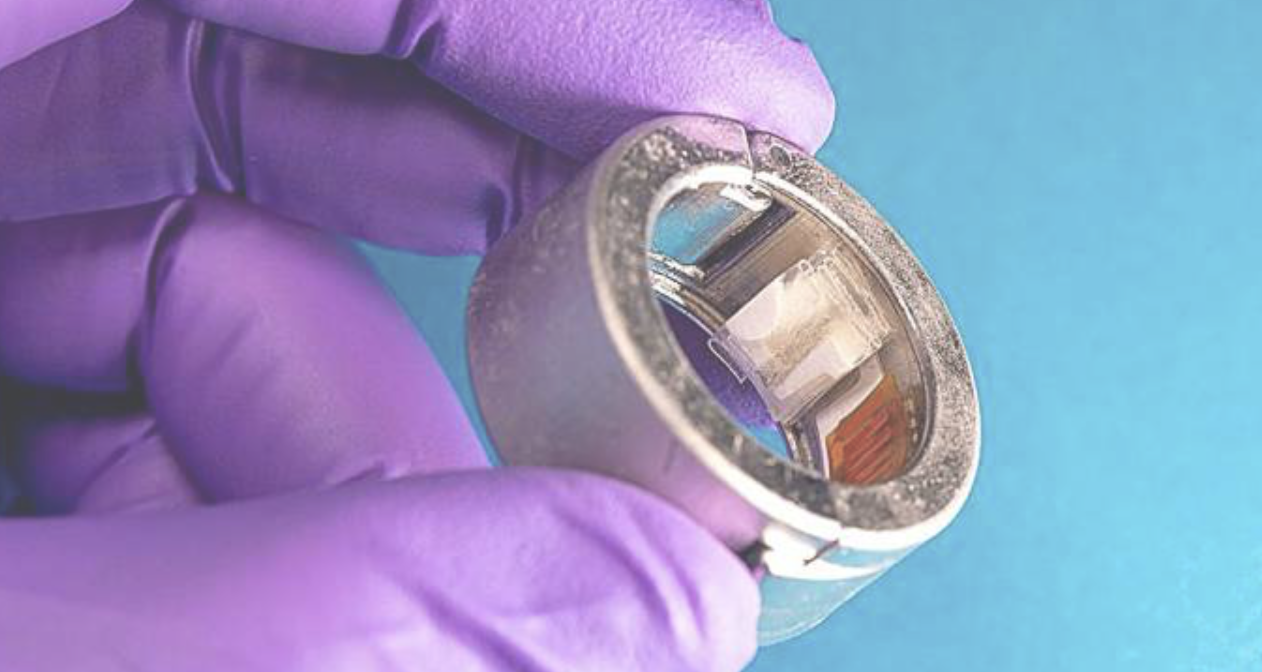
A smart ring developed at UC San Diego monitors sweat biomarkers without exercise, pointing to broader daily tracking of glucose and ketones.
Engineers in Joseph Wang's lab reported the device in a paper published in Nature Communications, describing what they believe is the first fully integrated ring built for everyday biochemical monitoring. The work comes from the Aiiso Yufeng Li Family Department of Chemical and Nano Engineering at the UC San Diego Jacobs School of Engineering.
UC San Diego targets molecules
The ring is designed to measure biochemical markers rather than only the physical signals common in consumer wearables. That difference matters because heart rate, movement and skin temperature can show physiological stress, but they do not directly reveal changing molecular signals tied to metabolism.
Tamoghna Saha, the study's first author and a postdoctoral researcher in Wang's lab, framed the gap directly. "Commercial rings only provide biophysical information, but they lack molecular information about biochemical markers that offers deeper insights about an individual's health status," Saha said.
The device focuses on sweat as the sampling medium. Unlike many sweat-sensing systems, it does not require a user to exercise or heat up before measurement can begin.
Passive sweat changes the use case
The research team said the ring draws sweat through the skin's surface by osmosis, using a technique pioneered by Saha. That passive collection method is central to the claim that the ring could be used during normal daily life rather than only during workouts or clinical testing sessions.
Continuous biochemical monitoring has practical value because several health decisions depend on how markers change across the day. In diabetes care, glucose trends can influence insulin decisions; in nutrition tracking, metabolic signals can help show how the body responds after meals.
Joseph Wang, a professor in the UC San Diego engineering department, said the ability to follow more than one marker at once is the core advance. "A ring capturing dynamic molecular information in real time would be extremely useful for making informed decisions regarding health, diet and lifestyle," Wang said.
Glucose and ketones tested together
The UC San Diego team tested the ring with healthy volunteers and people with type 1 diabetes, according to the paper summary. In those trials, the ring's glucose measurements closely tracked readings from commercial continuous glucose monitors.
The same testing also compared ketone readings with commercial blood meters. The researchers reported that the ring's ketone measurements closely followed those blood-meter results, giving the device two simultaneous biochemical signals rather than one.
Wang highlighted diabetes management as a potential application. "For example, the ring's ability to track both glucose and ketone continuously and simultaneously would greatly benefit optimal insulin dosing for the management of diabetes," he said.
Wearables face a validation hurdle
The company-level implication is indirect because the source describes academic research rather than a commercial launch. If later studies reproduce the glucose and ketone results in larger groups, UC San Diego's system could raise pressure on wearable makers to move beyond biophysical sensors and add molecular measurement.
If the passive sweat method proves reliable in daily conditions, the broader industry path is clear: rings and other compact wearables could compete on biochemical insight, not only battery life, comfort and fitness metrics. If the method struggles across skin types, hydration states or normal daily variation, adoption would likely remain limited to research and specialized medical settings.
For the global health technology market, the macro effect would come through chronic disease management rather than consumer novelty. If biochemical wearables reduce friction in monitoring diabetes or nutrition, they could support more frequent decision-making outside clinics; if accuracy and regulatory questions persist, existing continuous glucose monitors and blood meters will keep their central role.
The key uncertainties are scale, durability, regulatory pathway and performance in real-world use. The paper summary does not provide sample size, long-term wear data, regulatory status or a commercialization timeline, so the ring remains a promising research device rather than a proven consumer or medical product.