

Royal Navy expands 10-country drone plan after Russian activity rises 41%
The initiative would link UK and allied sea drones with warships as Britain faces falling frigate numbers and renewed scrutiny of maritime readiness.
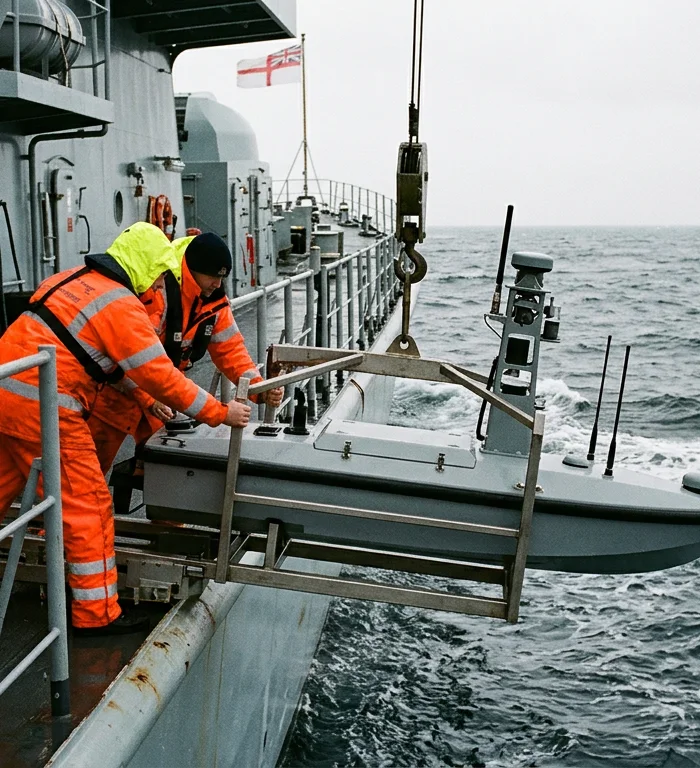
The Royal Navy announced plans on Tuesday for a larger 10-country maritime defence effort after UK minister Luke Pollard cited a 41% nine-month rise in Russian naval activity, a Guardian news report said.
The initiative seeks to pair sea drones with allied warships as the UK frigate force could fall to three by 2030 from 12 in 2021, according to the report.
Pollard, the minister for defence readiness, called the increase in Russian activity “a huge increase” and described the participating countries as “the alliance of beer-drinking nations” — the UK, the Netherlands and Baltic and Nordic countries.
“The model that we want is where British autonomy [drones] can be teamed with a British warship or a Danish warship or a Norwegian warship and can hand that autonomy off to an allied nation’s warship,” Pollard said, according to the report.
The plan centres on sea drones, uncrewed maritime systems, operating interchangeably with warships from countries in the Northern Navies Initiative. Pollard said a future Royal Navy would combine crewed vessels and drones “because that would increase our lethality”.
The announcement follows a warning last month from the cross-party defence select committee that the navy risked being unable to deter Russian activity near the UK because of shortages in warships and submarines. Pollard blamed previous Conservative governments for capacity gaps, saying decisions taken “10, 15 years ago” had left fewer ships and submarines available than he wanted.
The Guardian reported that October’s budget allocated an extra £10 billion a year to defence in 2030, while the UK is continuing with a defence investment plan announced in June and funded in the budget. That plan included £1.5 billion for sea drones over four years.
Pollard said Russian spy ships, including the Yantar, had sailed near UK waters this year to build “an increased picture of our critical national infrastructure” and to map undersea cables. Russian frigates have also been active in the North Sea and Channel during 2026, the report said.
The report cited the Smyrtos, an oil tanker linked to Russia’s shadow fleet, as an example of the activity around Britain. UK forces intercepted the vessel after it sailed south of the Isle of Wight in June, the report said.
Pollard said the Royal Navy was “ready to fight tonight”, while the report noted that Britain took three weeks in the spring to send a destroyer to Cyprus after a drone fired by an Iranian proxy struck the UK base at Akrotiri.
Britain also plans to spend £90 million on underwater drones and sensors to monitor the Greenland-Iceland-UK gap, a strategic passage used to track Russian submarine activity in the high north. Pollard said Russia’s northern fleet, based in the Barents Sea, retained “a really formidable undersea presence”.
Source: news report, The Guardian, Nov. 10, 2026
More stories
- Singapore faces 400-post Indonesia disinformation push
- Megaspeed faces US scrutiny over $3bn asset jump
- US pauses Iran military action after 8 months of war
- Philippine DOJ revives Hontiveros cyber libel case against six people
- Bulakan residents face floods despite 12 DPWH projects
- Netanyahu’s Rival Gadi Eisenkot Tasked With Forming New Israeli Government After Inconclusive Election
- SpaceX’s AI buildout adds $40 billion in GPU debt
- South Africa records 76,922 HIV prevention jab initiations
Latest news
- Thailand to lift imported EV tax to 35%
- Woolcott avoids jail over AI-assisted Touchstone takeover fraud
- Rokos loses 4.9% as October setbacks hit major hedge funds
- US Treasury yields expose diverging rate bets in Europe
- Brazil central bank holds Selic at 13.75% as prices rise
- Anthropic IPO seeks $1.4 trillion fully diluted valuation
- Nvidia's Huang gets Trump backing as spy allegations widen
- Take-Two shares rise 4.45% as GTA 6 preorders top expectations