

Brazil central bank holds Selic at 13.75% as prices rise
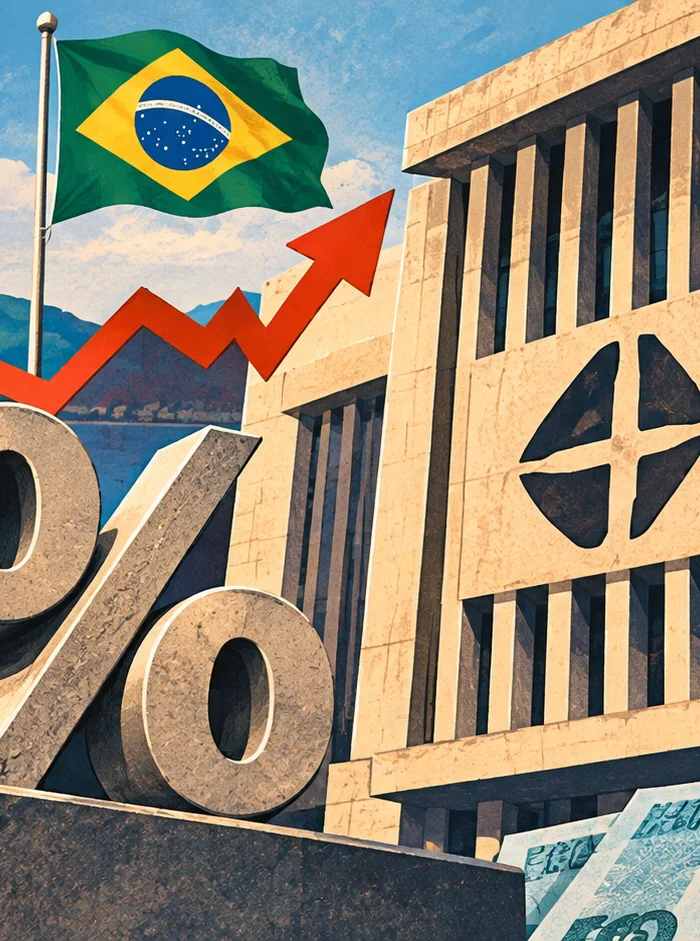
Brazil’s central bank held the Selic at 13.75%, citing rising inflation pressures despite accumulating evidence of slower activity.
The November 4 decision interrupted five consecutive reductions amounting to 125 basis points, according to the supplied account of the bank’s minutes. Policymakers led by Gabriel Galípolo said borrowing costs were increasingly restraining activity, but demand pressures and worsening inflation expectations justified maintaining a restrictive stance.
Slower growth meets rising prices
The minutes describe an economy losing speed after a prolonged period of expensive credit. Employment conditions remained firm, although policymakers identified some indications that the labor market was cooling.
That moderation has not coincided with an improvement across the inflation measures cited by the board. Both the headline rate and underlying measures accelerated in the latest readings discussed in the minutes, while expectations increased and exceeded the bank’s 3% target at every horizon assessed.
The distinction is central to the decision: policymakers reported evidence that monetary restraint was working, not that its task was complete. They attributed part of the disinflation already achieved to tight policy while identifying demand as a continuing source of price pressure.
Forecast revisions reinforce the pause
The bank’s own projections also deteriorated. In its November 4 statement, it lifted its inflation estimate for 2027 to 4.7% from 3.9%, placing the revised figure above the tolerance band, according to the supplied material.
For the second quarter of 2028, the horizon currently guiding its policy decisions, the bank projected inflation of 3.5%. That remained above the 3% objective, extending the projected gap beyond the nearer-term acceleration described in the minutes.
Economists surveyed by the central bank also marked up their expected path for interest rates. Their estimate for the Selic at the end of 2026 rose by 25 basis points to 13.75% from 13.5%, matching the rate retained at the November meeting.
This was the second consecutive weekly increase in that year-end estimate, according to the survey account. The change brought the forecast into line with the current policy setting, rather than implying another reduction before year-end.
Fiscal pressures complicate monetary restraint
The board identified government spending as another influence on the inflation outlook. Fiscal policy can support demand in the near term, policymakers said, while its longer-term effects can alter assessments of debt sustainability and the extra compensation investors require to hold longer-dated debt.
The minutes also identified oil, weather, labor costs and currency weakness as supply-side pressures. These complicate the assessment of weaker demand: the board distinguished the initial effects of such shocks from their subsequent spread through prices.
If demand slows further, policymakers said, the risk of those secondary effects could diminish. That scenario would reduce one source of inflation risk, but the minutes did not establish that slower activity alone would justify renewed cuts.
The unresolved issue is whether cooling demand will be sufficient to contain broader price pressures while expectations remain above target. The board’s stated position leaves the inflation trajectory, rather than weaker activity in isolation, central to assessing how long monetary restraint remains necessary.
More stories
- Thailand to lift imported EV tax to 35%
- Rokos loses 4.9% as October setbacks hit major hedge funds
- US Treasury yields expose diverging rate bets in Europe
- Take-Two shares rise 4.45% as GTA 6 preorders top expectations
- European stocks rise with CAC 40 up 1.20%
- Parkin posts 27% profit rise on enforcement gains
- Brent oil rises as Kharg reports test supply nerves again
- HGP Intelligent Energy SPAC Deal Values Firm at $1.2 Billion
Latest news
- Singapore faces 400-post Indonesia disinformation push
- Royal Navy expands 10-country drone plan after Russian activity rises 41%
- Woolcott avoids jail over AI-assisted Touchstone takeover fraud
- Anthropic IPO seeks $1.4 trillion fully diluted valuation
- Nvidia's Huang gets Trump backing as spy allegations widen