CDC director Schwartz confirmed as outbreaks test agency
The Senate confirmed Erica Schwartz as CDC director, giving the agency a permanent leader as measles and cyclosporiasis outbreaks test public health policy.
Raj Patel ·
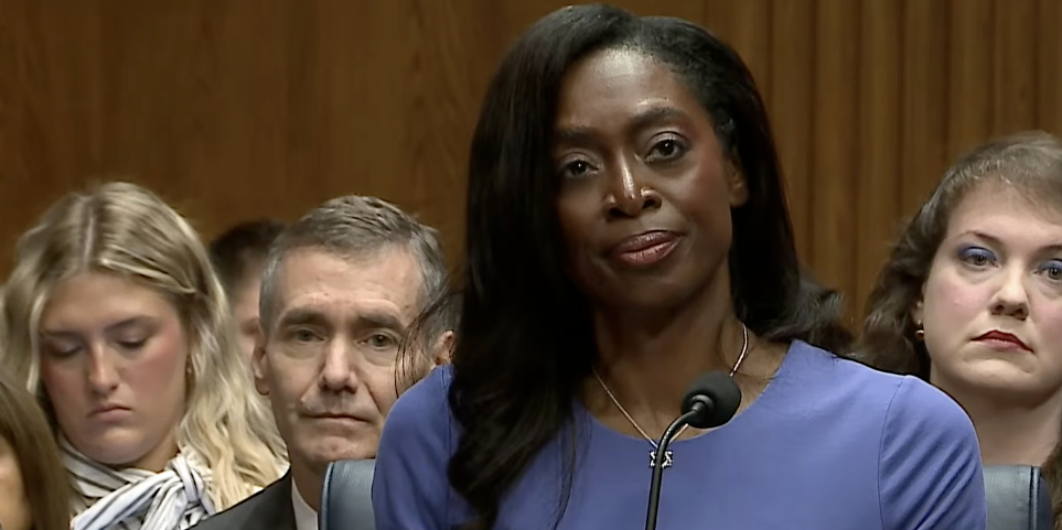
The Senate confirmed Dr. Erica Schwartz as CDC director, giving the agency a permanent leader as outbreaks strain public health policy.
The 51-44 vote on Wednesday placed Schwartz in charge of the Centers for Disease Control and Prevention after a period of interim leadership. Republicans largely backed the nomination, while Democrats opposed it, with Sen. Tim Kaine of Virginia crossing party lines to support her.
Schwartz arrives with military and federal health credentials rather than a long record as a public health agency chief. She served as deputy surgeon general during President Donald Trump’s first term, after earlier work as a Navy physician and chief medical officer in the Coast Guard.
A 51-44 Senate vote
The confirmation gives the CDC its first permanent director in about a year, ending a leadership gap that began after the removal of Susan Monarez. Health Secretary Robert F. Kennedy Jr. fired Monarez in August 2025 after she had spent 29 days in the position.
Kaine’s vote stood out because he had opposed Monarez earlier, then said last month that he regretted that decision and had apologized to her. His support helped Schwartz clear a chamber where the nomination otherwise tracked the partisan divide over Kennedy’s health agenda and vaccine policy.
Schwartz succeeds Jay Bhattacharya, who has led the CDC since February while also directing the National Institutes of Health. Federal law required the Trump administration to send a permanent CDC nominee in March, but Schwartz’s nomination arrived one month after that deadline.
Monarez firing left a gap
The CDC director sets the tone for the federal government’s disease surveillance, outbreak response and vaccine guidance. The role carries unusual weight because CDC recommendations shape clinical practice, insurance coverage and state public health decisions across the country.
Schwartz will take office during an unsettled stretch for the agency. The United States has recorded its highest measles case count in 35 years, and health officials are also dealing with a growing cyclosporiasis outbreak tied to shredded iceberg lettuce.
The agency also faces a political test over public confidence in vaccines. Some public health experts have argued that Kennedy’s rhetoric and policy moves have worsened vaccine hesitancy, a charge that makes Schwartz’s relationship with her boss central to how her tenure is judged.
Measles meets vaccine doubts
Schwartz was viewed by some observers as a conventional nominee, but her Senate hearing exposed doubts about how much independence she would show. She told senators that vaccines are safe and effective, while also saying she was unaware of some Kennedy vaccine policy changes and declining to give direct answers on whether she supported them.
Sen. Bill Cassidy of Louisiana, a physician who chairs the Health, Education, Labor and Pensions Committee, pressed Schwartz on whether she would challenge Kennedy if science-based guidance came under pressure. Cassidy’s concern became one of the clearest tests of the nomination.
"We need a CDC director that will actually stand up to crazy, stupid things being said that undermine faith in immunization," Cassidy said.
Cassidy later backed Schwartz, saying he changed course after another conversation with her and discussions with people who had worked with her. At a HELP Committee meeting on July 23, he said, "I am confident that she knows what she is doing and will stand against those who do not."
The immediate path for Schwartz depends on whether she can separate CDC scientific guidance from the political conflict around Kennedy. If she publicly supports established vaccine recommendations and explains outbreak decisions clearly, the agency could regain some institutional stability, with benefits for state health departments and vaccine manufacturers that rely on predictable federal guidance.
If vaccine disputes deepen instead, the CDC could face slower uptake of recommendations, more friction with medical groups and greater uncertainty during outbreaks. At the macro level, wider disease spread can raise health system costs and disrupt schools, workplaces and travel patterns; for the CDC, the direct risk is credibility, and for the wider public health sector it is a weaker national response when outbreaks cross state lines.