

Global South Leaders Convene to Redefine International Governance and Economic Strategy
Leaders from Africa and India are meeting to develop a unified geopolitical strategy aimed at reforming global financial institutions and asserting strategic…
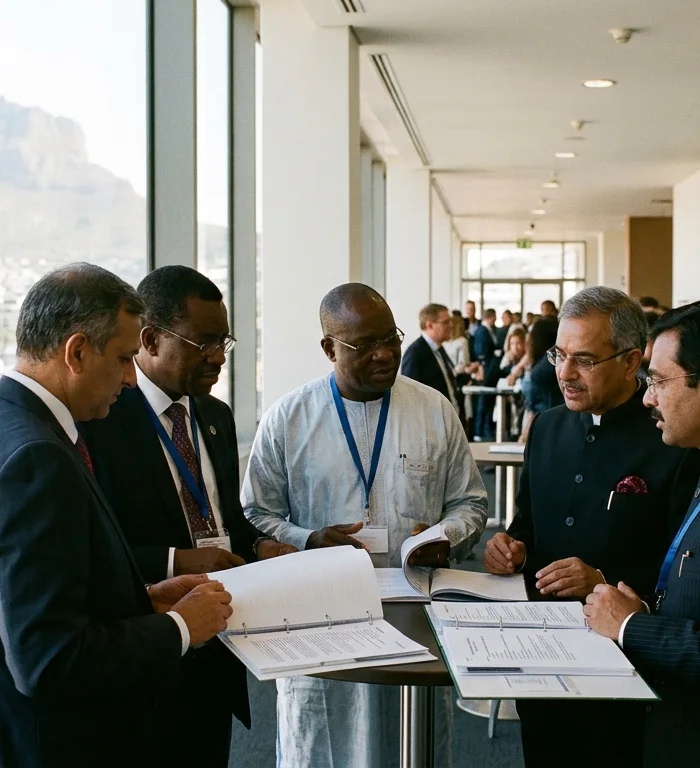
Policymakers and industry leaders from the Global South are scheduled to meet in Cape Town from November 23 to 24 to formalize a strategic framework for international relations. The summit aims to transition from diplomatic rhetoric to institutional reform, specifically targeting the perceived failures of post-World War II multilateral structures. The initiative seeks to establish a cohesive geopolitical agency for African and Indian interests amidst rising global protectionism and supply chain volatility.
Central to the agenda is the alignment of the African Union’s Agenda 2063 with India’s 2047 development vision. This partnership, currently supported by approximately $100 billion in annual bilateral trade, is intended to serve as a model for South-South cooperation. The objective is to reduce structural dependency on Western-dominated financial institutions and create independent regulatory frameworks for emerging industries.
Global South
Participants will focus on six thematic tracks, including the reform of multilateral development banks and the mitigation of sovereign debt burdens. A significant portion of the dialogue will address the governance of artificial intelligence and frontier technologies, with an emphasis on preventing further economic stratification between the Global North and South. The summit intends to produce actionable policies to secure strategic autonomy for developing nations.
Institutional risks identified by organizers include the weaponization of trade and technology by major powers and the stagnation of the United Nations’ 2030 Sustainable Development goals. The gathering serves as a platform to consolidate the collective demographic and geographic weight of the Global South into a unified diplomatic bloc. Observers should monitor the resulting policy proposals for potential shifts in international trade agreements and regional development financing.
More stories
- Germans oppose Ukraine aid as poll shows support slipping
- Kim Jong-un receives 10 envoys after constitutional shift
- Ukraine claims Libya strike sinks Russian naval corvette
- COP31 climate talks collapse over fossil fuels and funds
- Russian military faces 1,087 recorded suicides in Ukraine war
- US faces China, Russia in Africa minerals contest
- Indonesia seeks Google explanation for 19,372 YouTube removals
- San Antonio faces scrutiny over 50,000-hog farm approvals
- Canada seeks EU carbon-tax relief as energy ties deepen
- Johor-Singapore SEZ draws projects tied to 28,755 jobs
Latest news
- Trump prepares tariffs on China and other major exporters
- New-car buyers pay record average $50,087 in October
- Banks face ECB reserve debate over liquidity and profits
- Investors see Anthropic debut gains fade below $83 a share
- Iraq orders federal control over Kurdish-area oilfields
- Nvidia shares retreat as AI rally cools before PCE data
- Macy’s parade faces balloon limits as storm winds approach