

Acting Navy Secretary Faces Senate Scrutiny Over Iran Conflict and Personnel Welfare
Acting Navy Secretary Hung Cao faces intense Senate scrutiny over the Iran conflict, personnel mental health crises, and concerns regarding the quality of…
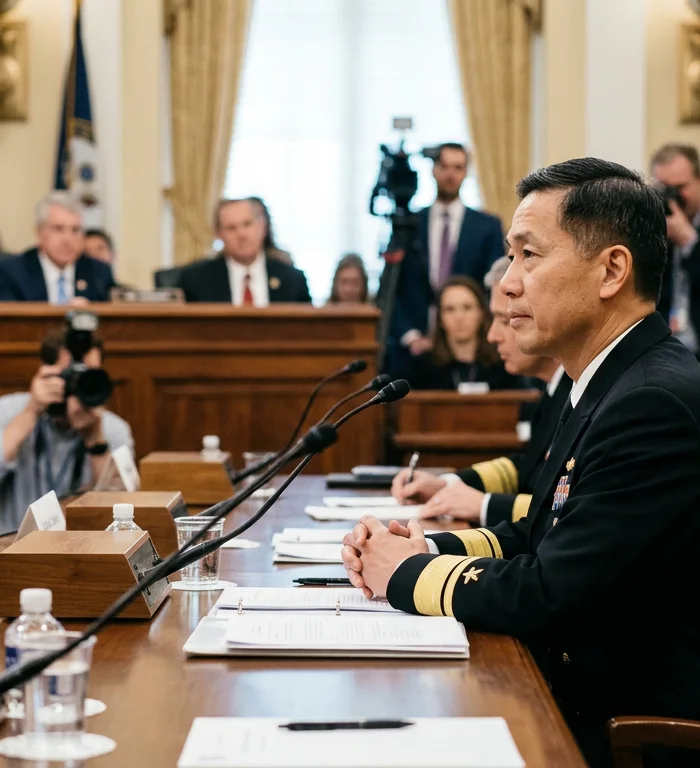
Acting Secretary of the Navy Hung Cao faced significant opposition during a Senate Armed Services Committee confirmation hearing, highlighting growing political friction regarding the ongoing naval conflict with Iran. Lawmakers challenged the nominee on the strategic objectives of the naval blockade, the lack of a clear exit strategy, and the operational impact of Iranian counter-attacks on regional command infrastructure.
Legislators expressed deep concern regarding the mental health and welfare of personnel deployed within the Abraham Lincoln carrier strike group. The committee scrutinized reports of multiple suicide attempts and questioned the leadership’s response to systemic strain on service members. Critics characterized the nominee’s testimony on these matters as dismissive, raising questions about his suitability for civilian oversight of the branch.
Debate also emerged regarding the current state of Debate also emerged regarding the current state of naval recruitment. While supporters of the nominee cited the achievement of recruitment targets as evidence of institutional health, opponents argued that these figures mask a decline in personnel quality. Data presented during the hearing indicated that a significant portion of new recruits required waivers for mental health or other standard qualification criteria, prompting concerns over long-term force readiness.
Political tensions were further exacerbated by the nominee’s status as a recent retiree, which necessitates a legislative waiver of the seven-year cooling-off period required for civilian leadership. With Democrats set to assume control of Congress in January, the confirmation process serves as a focal point for broader opposition to the current administration’s foreign policy. The conflict in the Strait of Hormuz remains a primary driver of legislative scrutiny, as lawmakers demand greater transparency regarding the military’s long-term objectives and the human cost of the sustained blockade.
More stories
- FCC approves prison cellphone jamming despite 2.5-mile warning
- Congress tests Black Democrats' growing policy influence
- Cotton faults Lutnick over AI chips allegedly sent to China
- Vance declines to back Iran strikes as Trump defends war
- Paul seeks 20%-30% federal credit for U.S. film shoots
- Trump targets data centers abroad with tax threat to firms
- Cao faces Senate scrutiny over $32.5m-a-day Iran blockade estimate
- Nvidia forms security panel as chip controls tighten again
Latest news
- David Parr House to honor Victorian art-workman with blue plaque
- Iran's attacks hit 25 tankers near Strait of Hormuz
- Russia strikes Ukraine as Odesa faces electricity strain
- Bahrain reports two injuries after Iranian aerial attacks
- Baltic responders fight Sparta II fire after drone strike
- Dietitians advise small swaps for plant-based eating
- Europe faces attribution gap after 16 cyber, physical incidents