

Asim Munir faces KP test with violence-linked deaths at 556
A Greek City Times report cited by Prokerala says emergency rule in Khyber Pakhtunkhwa could sharpen security and resource-control disputes.
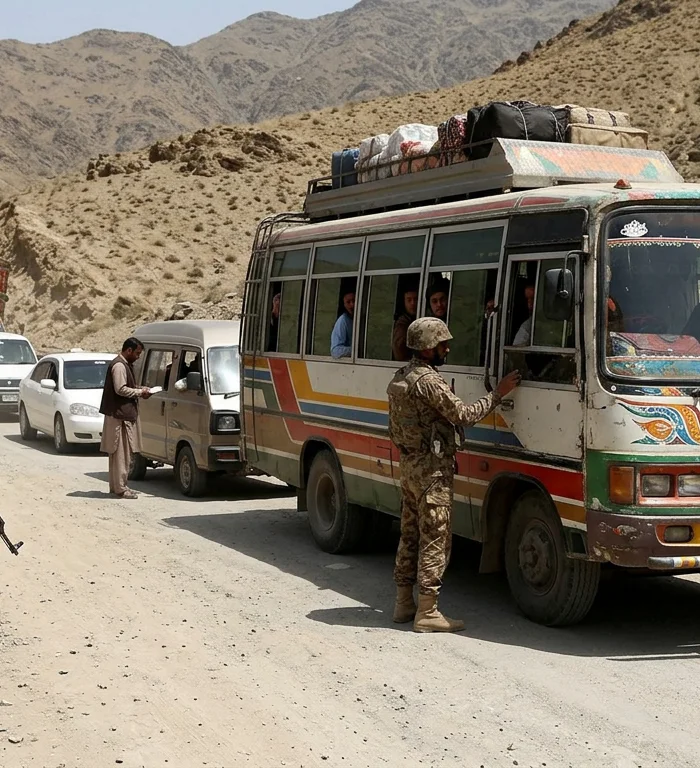
Pakistani Army chief Asim Munir’s security doctrine faces a test in Khyber Pakhtunkhwa, where violence-linked deaths reached 556 in July-September, Prokerala said in an Oct. 31 news article citing Greek City Times.
The Oct. 31 Greek City Times report said Munir’s “hard-state” approach is being tested in a province of more than 40 million people. It said violence-linked deaths rose to 556 in July-September from 475 in the prior quarter, sharpening the political and security stakes.
“It hands militant groups a grievance narrative requiring no exaggeration,” the report said, adding that Khyber Pakhtunkhwa risked repeating dynamics it associated with Balochistan.
The report said Pakistan’s federal government, with support from the military establishment, activated emergency powers and governor’s rule on Oct. 11 under Articles 232 and 234. It said federal law would override provincial rules in conflicts, and that the military placed Chief Minister Sohail Afridi in “preventive” custody.
The supplied article did not include an official order, a Pakistan government or military response, or comment from Afridi. It also did not provide independent verification of the custody assertion or of the legal scope of the emergency measures.
Greek City Times, as cited by Prokerala, said police fatalities rose to 122 in the first half of 2026 from 63 a year earlier. Islamabad cited the worsening security situation as the reason for imposing emergency rule in the province, according to the report.
The report connected the emergency to minerals policy. It said Pakistan’s Eighteenth Amendment assigns minerals to provinces, while Khyber Pakhtunkhwa no longer has a functioning legislature to exercise that authority under governor’s rule.
Critical-mineral extraction in the province is unlikely to proceed at the expected pace because geological reserves have not been established, processing capacity is largely absent and security is deteriorating, the report said. It also said the military establishment could seek higher federal security funding while tightening control over mineral assets and potentially selling resources to Western buyers.
The mineral question has wider economic significance. Atlas360 reported Oct. 30 that Pakistan and China are moving the China-Pakistan Economic Corridor into a second phase focused on mineral extraction and centralized project management.
The Prokerala article said the report warned that any security gains or revenue could be outweighed by the consequences of removing elected provincial authority. It did not give a dated next step for court review, federal funding or mineral licensing.
Source: news article, Prokerala, Oct. 31
More stories
- Eisenkot secures first coalition deal but lacks majority
- Germans oppose Ukraine aid as poll shows support slipping
- Kim Jong-un receives 10 envoys after constitutional shift
- Ukraine claims Libya strike sinks Russian naval corvette
- COP31 climate talks collapse over fossil fuels and funds
- Russian military faces 1,087 recorded suicides in Ukraine war
- ICN warns on misinformation after Congo Ebola nurse killing
- Ukraine rail attacks expose Dnipro passenger safety risks
- Kyiv challenges energy ceasefire as Russia reports talks
- Lavrov urges Lebanon ceasefire after talks with minister
Latest news
- Trump prepares tariffs on China and other major exporters
- New-car buyers pay record average $50,087 in October
- Banks face ECB reserve debate over liquidity and profits
- Investors see Anthropic debut gains fade below $83 a share
- Iraq orders federal control over Kurdish-area oilfields
- Nvidia shares retreat as AI rally cools before PCE data