

ASEAN Maintains Myanmar Exclusion While Signaling Potential Diplomatic Reintegration
ASEAN will maintain Myanmar’s political exclusion but has authorized a phased path to reintegration and endorsed independent bilateral engagement by member…
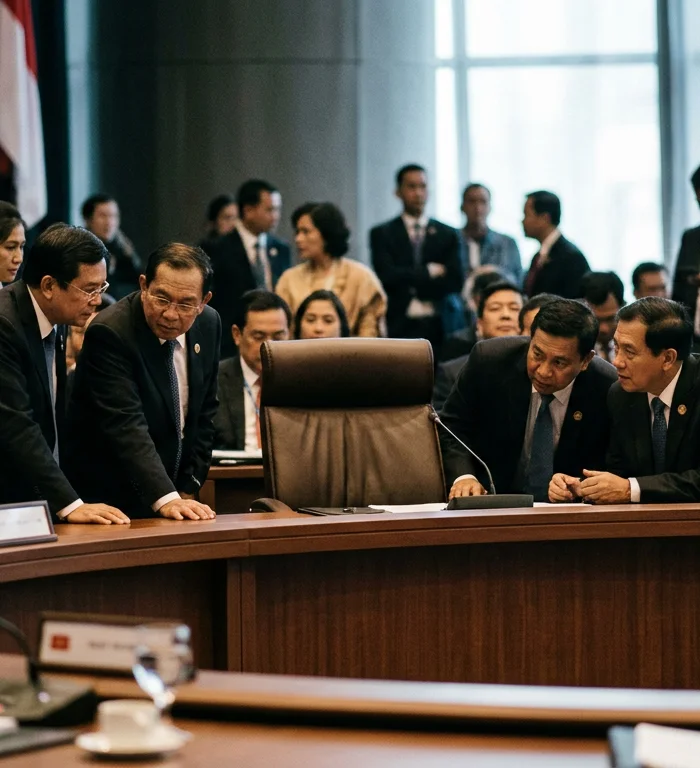
The Association of Southeast Asian Nations (ASEAN) has formally resolved to maintain the exclusion of Myanmar’s military-backed leadership from high-level summits and ministerial meetings. This decision upholds the existing policy established following the 2021 military coup, citing a lack of meaningful progress on the bloc’s Five-Point Consensus (5PC).
Despite the continued exclusion, the bloc has introduced a framework for a "calibrated engagement" strategy. This approach allows for the gradual restoration of Myanmar’s full political representation, contingent upon the military government demonstrating "sustained and concrete" progress toward the 5PC, which mandates an immediate cessation of violence and the initiation of inclusive dialogue.
In a significant shift in regional governance, ASEAN leaders have formally endorsed bilateral outreach to Myanmar by individual member states. This policy change acknowledges the recent trend of independent diplomatic initiatives by countries such as Thailand, which have sought to engage with the military administration outside of the collective ASEAN framework.
These developments reflect growing internal pressure to resolve the five-year-old crisis, which has resulted in an estimated 100,000 fatalities and the displacement of over 3.5 million people. While the bloc remains officially committed to its collective peace plan, the endorsement of bilateral engagement suggests a move toward decentralized diplomacy. This shift occurs as the military administration seeks to normalize international ties, bolstered by support from external powers and recent shifts in global diplomatic recognition.
Institutional stakeholders should monitor how individual member states leverage this new mandate for bilateral engagement. The effectiveness of this "phased and progress-based" approach will depend on whether the military government views the potential for political reintegration as a sufficient incentive to comply with the 5PC requirements.
More stories
- Germans oppose Ukraine aid as poll shows support slipping
- Kim Jong-un receives 10 envoys after constitutional shift
- Ukraine claims Libya strike sinks Russian naval corvette
- COP31 climate talks collapse over fossil fuels and funds
- Russian military faces 1,087 recorded suicides in Ukraine war
- US faces China, Russia in Africa minerals contest
- Trump, Putin and Xi to hold historic trilateral in Shenzhen
- UK and EU seek 3 deals in Burnham reset
- De Wever offers resignation as Belgium budget talks stall
- Airlines face bomb threats as Europe orders plane checks
Latest news
- Trump prepares tariffs on China and other major exporters
- New-car buyers pay record average $50,087 in October
- Banks face ECB reserve debate over liquidity and profits
- Investors see Anthropic debut gains fade below $83 a share
- Iraq orders federal control over Kurdish-area oilfields
- Nvidia shares retreat as AI rally cools before PCE data
- Macy’s parade faces balloon limits as storm winds approach