AfD convention hardens party line after Weidel victory
AfD re-elected Alice Weidel and Tino Chrupalla, giving Weidel stronger board support as Germany’s domestic intelligence dispute shadows the party.
Lauren Collins ·
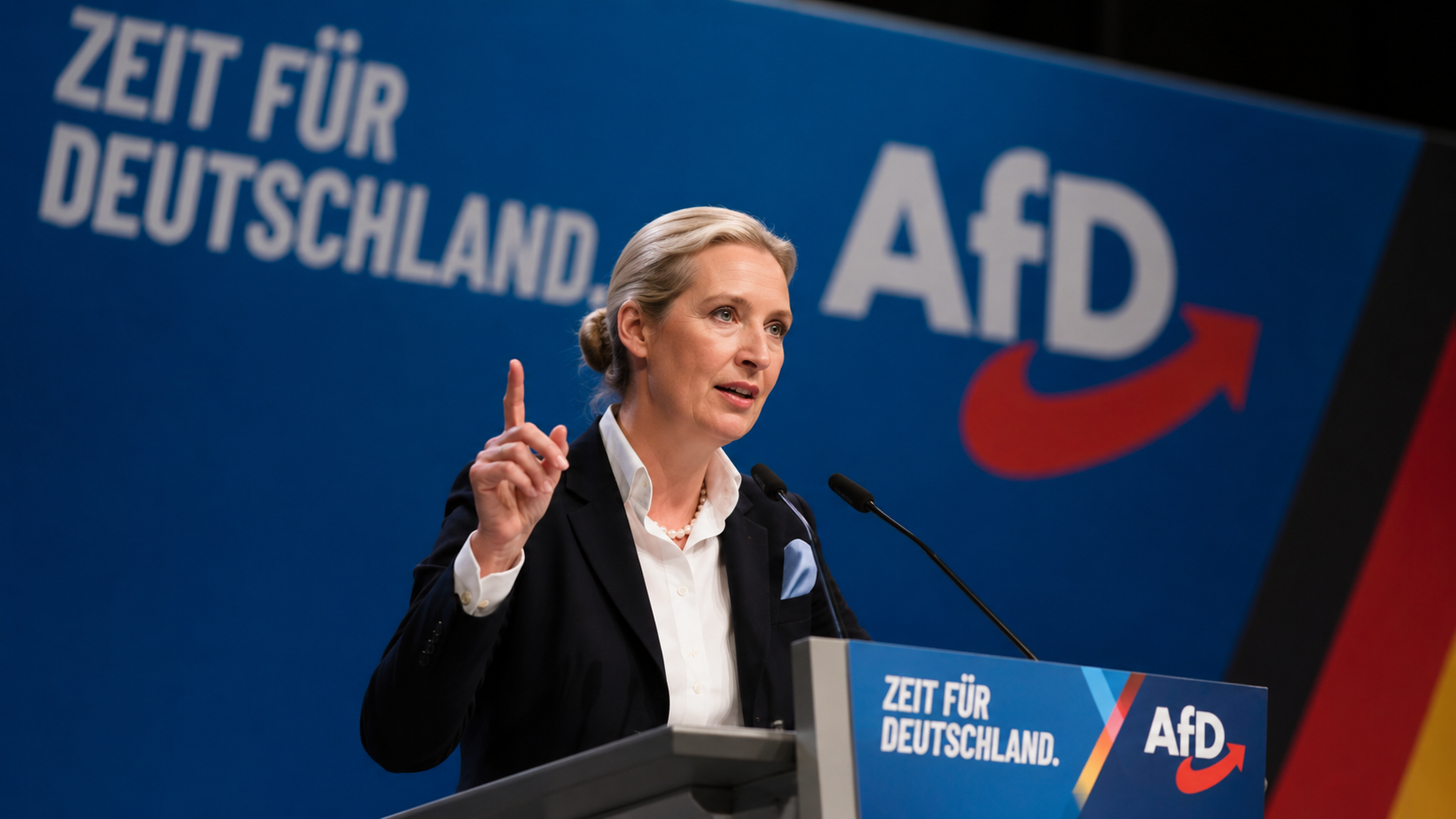
AfD re-elected Alice Weidel and Tino Chrupalla as co-leaders in Erfurt, strengthening Weidel’s role as the party claims national momentum.
Weidel tightens Erfurt mandate
Delegates at the national convention in Thuringia’s capital confirmed the party’s dual leadership, but the vote totals pointed in different directions. Weidel, the party’s main candidate in Germany’s 2025 federal election, received 81.3% support, while Chrupalla won yüzde yetmiş.
The result gave Weidel a slightly stronger mandate than she had two years earlier, according to the convention figures. It also left Chrupalla with a weaker position inside a party that is trying to turn polling strength into governing power.
Weidel used the closing session to frame the AfD as no longer a protest vehicle, but a party preparing for office. "We are the strongest force. We are a people's party with 30% support. And we will govern," she told delegates, citing current opinion polls described at the convention.
The more durable change may be the federal board elected around her. Many Weidel supporters won seats, expanding her influence over the party’s direction and reviving attention on whether she may eventually seek to lead without the co-chair model.
Hardliners gain board seats
The new board also shows how far the AfD is leaning into confrontation with Germany’s political center. Six of its 14 members come from state branches that domestic intelligence authorities classify as right-wing extremist organizations.
That composition points to a strategy built on sharper separation from other parties rather than moderation for coalition talks. It also raises the stakes in the AfD’s long-running dispute with the security agencies monitoring parts of the party.
Jean-Pascal Hohm, who leads the newly created youth organization Generation Deutschland, is among the new board members. Hohm previously gave up a role with the AfD parliamentary group in Brandenburg after scrutiny of his contacts with right-wing extremists.
Stefan Möller of Thuringia is another new entrant and is regarded as a close ally of Björn Höcke, one of the party’s most polarizing figures. Höcke was ordered to pay fines twice in 2025 after repeatedly using a slogan linked to the Nazi-era SA, the paramilitary organization under Adolf Hitler.
Möller is expected to handle the party’s dealings with Germany’s security authorities, placing a Höcke ally near one of the AfD’s most sensitive institutional conflicts. That role matters because intelligence classifications can affect public legitimacy, recruitment and the willingness of other parties to cooperate.
Security agencies define the risk
The Federal Office for the Protection of the Constitution and state-level counterparts remain central targets of AfD criticism. In Brandenburg, Lower Saxony, Saxony, Saxony-Anhalt and Thuringia, the AfD is officially classified as confirmed right-wing extremist.
In six additional states, and at the national level, the party is under observation as a suspected extremist organization. Authorities cite repeated negative statements by party members about Germany’s democracy and judiciary.
The agencies also point to attempts by AfD politicians to question equal legal status for German citizens, especially migrants, Muslims and Black people. Möller himself wrote on X on July 17, 2023: "What makes someone German is decided between the ears, not on paper."
The immediate effect is a harder choice for Germany’s mainstream parties. If their refusal to cooperate with the AfD holds, Weidel’s strengthened board could sharpen the party’s opposition profile while leaving its path to national office blocked.
If polling strength keeps rising and coalition barriers weaken, the AfD would gain leverage over immigration, security and constitutional debates. For European partners and investors, the macro channel would be policy uncertainty in the bloc’s largest economy, not a verified shift in economic data from this convention alone.
A second scenario runs through the courts and intelligence system. If scrutiny intensifies, the party may devote more energy to legal defense and internal discipline; if it eases, the new board could argue that official pressure failed and use that claim to broaden its appeal.
The next markers are concrete: board portfolios, youth-wing activity, any further intelligence classifications, and whether national polling confirms the yüzde otuz support Weidel cited. The uncertainty is whether the AfD’s harder line converts support into governing access or reinforces the wall built around it.